
It starts with a tree. Not just any tree, but a towering coast redwood that gave its name to a city defined by the technology it eventually helped spawn. Palo Alto sits on the western edge of San Francisco Bay, roughly 35 miles south of San Francisco and 14 miles north of San Jose. If you look closely at the ground near San Francisquito Creek, you might imagine Gaspar de Portolá’s 1769 expedition camped there. They called the spot El Palo Alto. It means “the tall tree.” The original specimen is still around today. It stands as a quiet landmark in a city that moved fast.
The town itself was built on rules. In 1891, when Stanford University opened its doors, this place was carved out as a “dry” village. You couldn’t sell liquor within a mile of the campus. The name came from Senator Leland Stanford’s sprawling farm, Palo Alto. He wanted a community that reflected his values. It worked. The university drew people in. Then the urban growth of the west bay shore did the rest.
Soon, research-oriented light industries moved in. Aerospace. Communications. Electronics. It wasn’t just about education anymore. It was about manufacturing. And it happened right here.
The Birthplace of Silicon Valley
You can stand in a garage in Palo Alto and touch history. The Hewlett-Packard Garage is where William Hewlett and David Packard started their company. It is widely considered the “birthplace of Silicon Valley.” That label might feel heavy for a single shed-like structure, but the high-technology manufacturing center extending southeast from this point changed the world.
Why does this matter to you as a traveler? Because Palo Alto isn’t just a suburb. It is the anchor of a region that redefined global tech. When you visit, you are walking through the literal soil of the modern digital age. The density of innovation here is unmatched.
Cultural Anchors and Art
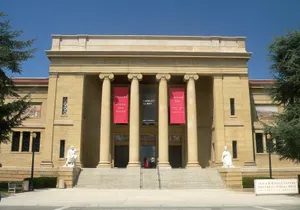
Beyond the tech pedigree, there is art. Stanford University’s Iris and B. Gerald Cantor Center for Visual Arts (formerly the Stanford Museum) holds a massive collection. Specifically, it houses one of the largest collections of works by French sculptor Auguste Rodin. The only collection larger than this one is the Paris-based Musée Rodin.
If you are planning a trip, don’t skip this. It offers a stark contrast to the silicon and code that dominates the area. You get bronze and marble alongside startup stories.
The Numbers and the Vibe
Palo Alto incorporated in 1894. The population grew from 58,598 in 2000 to 64,403 in 2010. It is small by major city standards but dense with influence. The cost of living reflects its status. Housing is expensive. Real estate is premium. But the proximity to both San Francisco and San Jose makes it a strategic hub.
Visiting Palo Alto means understanding the layering of history. You have the Spanish expedition era. The university founding era. The dry village era. The tech boom era. All of it sits within a few square miles on the bay shore.
What remains is the redwood. It survived the development. It survived the prohibition. It survived the invention of the transistor.