If you picture Brazil as just samba, football, and beaches, São Paulo will shatter that image instantly. It is a city of 16 million people that does not offer immediate charm. The streets are often dirty. The high-rises are gray. At first glance, it feels like the soul of the country has been traded for asphalt.
Many visitors leave early. They want the sun and the sand. But staying long enough to see past the surface reveals a different truth. You start to see why millions call this place home.
“São Paulo is not the most beautiful city in the world. But Paulistas would never trade their lives here for anything else.”
The architecture tells its own story. Look up at the skyscrapers. Some residents lean out of windows to spray-paint graffiti on adjacent walls. They do this because reaching those heights without existing infrastructure is impossible. The art is born out of necessity and vertical ambition. It is raw. It is real.
This is often called the “New York of South America.” The comparison holds water. It is a trading hub. It is a cultural engine. The energy here is not relaxed. It is pulsing.
Locals will tell you the truth immediately. They know the city is gritty. They know the traffic is terrible. They know the noise never stops. Yet, they stay. They love it. The beauty is not in the postcard view. It is in the complexity. It is in the life that refuses to be ignored.
Once you stop looking for a beachside resort, you start seeing the city for what it is. A place of intense contrasts. A place where culture and commerce collide every day. You might not fall in love on the first day. But the second look? That is where the hook sets in.
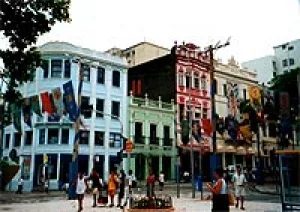
If you skip the Museum of Art of São Paulo (MASP), you haven’t really started. It’s not just a building on Avenida Paulista. It’s the anchor. The collection is massive. We are talking about the largest Latin American archive of European art. Tizian hangs next to Goya. Rubens shares wall space with Monet and Renoir. That alone is worth the trip.
But here is the twist. The Brazilian specialty you won’t find in Paris or London. A two-floor exhibition dedicated entirely to Pelé. It is pure pop art. Portraits of the football legend dominate the space. You see documents. Relics. Souvenirs from a career that defined a nation.
Then there is the canvas. A giant screen runs from opening to closing. It replays every single goal Pelé scored. Men and children crowd around the screen. They cheer. They point. Meanwhile, up on the upper floor, the rest of the crowd ignores the chaos below. They are busy worshipping French Impressionists. It is a cultural collision that somehow works.
The night belongs to the hungry
When the sun drops, São Paulo wakes up. The daytime heat fades. The nightlife kicks in. There is almost always a theater premiere happening. A new musical. An opera. Something fresh.
You leave the theater. You are hungry. You need food. Real food. Not a snack. The locals know where to go. They head for the Rodizio.
What is a Rodizio? It is a noble all-you-can-eat buffet. It is elegant. It is loud. It is efficient.
The cost? About 10 euros. In São Paulo money, that is a steal for what you get. The menu is international chaos. You have Arabic dips. Chinese delicacies. Japanese sushi. All available on an endless loop.
But the main event is the meat. Waiters circle the tables. They bring cuts of beef. Chicken. Lamb. They slice it fresh onto your plate. They keep coming back. You eat until you stop. Then you eat a little more.
Why dinner lasts hours
This is not a quick bite. The Brazilian dinner starts late. It stays late. It drags on for hours.
Why? Because it is about more than calories. It is about time. In Europe, you eat to fuel up. Here, you eat to connect. You talk. You laugh. You watch the waiters move between tables. The atmosphere is thick with conversation and clinking glasses.
If you want to mimic the locals, do not rush. Order the Rodizio. Sit back. Let the waiter bring the steak. Let the theater crowd disperse. Let the city hum around you.
The next morning, you will wonder how you survived the night. The answer is simple. You didn’t survive. You indulged. And in São Paulo, that is the point.