Smelting needs heat. Carbon too. You can’t just throw ore at a fire and expect gold, not in the West. They needed molten metal to flow. So they used charcoal.
Why? Simple logistics. In the early days of western mining, you didn’t have trucks or rail lines. You had mules and bad dirt roads. Hauling raw wood? Heavy. Bulky. A waste of time. Hauling charcoal? Light. Dense. Efficient. The forests were thick then. Scrub brush everywhere. So they burned it.
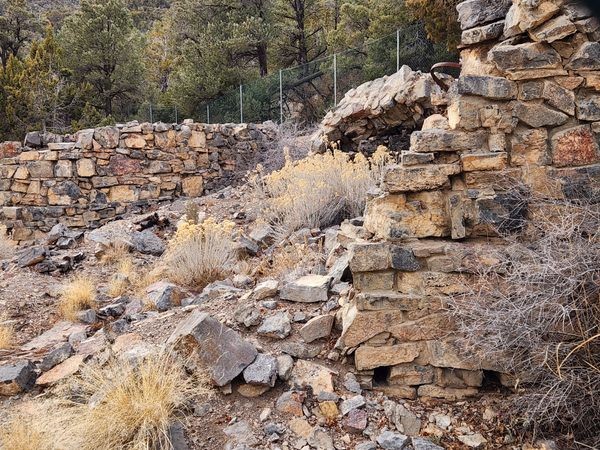
The result was a network of beehive kilns. Stone ovens, round and stubborn, built into the hills.
### A Month of Smoldering
They stacked raw wood inside. Branches. Slash. Trash. Whatever was useless to a farmer was gold to the smelter. Then they waited. Let the thing smolder.
This wasn’t a quick campfire. It took a month. Maybe longer. You let the fire eat its way in, slow and controlled, until the wood was just pure carbon left behind. Then you let it cool. Carefully. You open the door too early and you ruin the batch.
These kilns were always near the trees. Never near the town. Cheaper to move the final product than the source material.
These specific ruins were called the Tecopa Charcoal ovens for good reason. Built in 1875. They were shipping fuel to smelters in California, forty miles away. A long haul for those times. They worked through the end of the decade, churning out black gold until the market dried up or the wood ran out.
### Earth and Time
Did they stand forever? No. Nothing does here.
They were still there in the 80s. Pictures prove it. By the 90s, some were falling apart. Was it vandals? Maybe. People like to knock things over. But don’t forget the ground shakes. Big shakes.
This range sees earthquakes. Magnitude 5 and 6, sometimes more. The stone remembers every tremor. The walls lean, crack, and finally surrender to gravity. It wasn’t just mischief. It was geology.
Stone survives until it doesn’t.
There’s a rumor of a lime kiln too. Off to the left, looking at it from the road. Just heaps of rubble now. Undescript. Forgotten. Lime makes mortar. Calcium oxide. You bake limestone to get it. The ground here is limestone. Why go anywhere else for fuel or feedstock? You break down CaCO3 with heat, you get CO2 and the stuff you need for building. Or maybe for the kilns themselves. We’ll never know for sure.
### The Road to Ruins
Getting there is half the story. Wheeler Pass Road cuts through the Spring Mountains. Rough. Real.
Start in Pahrump. Downtown. Find where SR 372 hits SR 160. Turn onto Crawford Way. It feels like nothing, just a road stretching east. Drive 0.3 miles. Take Wilson Road to the right. A shallow turn. Don’t miss it.
Go 0.8 miles. Turn left onto Wheeler Pass Road at the intersection.
Now the miles add up. 9.5 of them. You’ll hit a drainage ditch at a junction with Clark Canyon Road. Stay left. Stay on Wheeler Pass. This is where the pavement betrays you. The road gets rough. Slow. You need height. Your car needs to float over rocks and washouts.
Keep going. Up the drainage. 4.6 miles.
On your left.
You’ll see the kilns. If you know what you’re looking for. Just circles of stone against the desert backdrop. Ghosts of an industrial past that cared very little about scenery.
Coming from the east? Over US 95? Possible. But you’ll need 4WD. High clearance. And a lot of patience.
Some things aren’t worth the fuel cost.