
What does a professional artist see when they stand before a masterpiece? While a casual museum visitor might admire the beauty or scale of a work, artists often engage with art on a deeper, more visceral level—searching for technical secrets, emotional resonance, or historical connections that inform their own practice.
In this collection of insights, contemporary artists share their personal connections to works housed in the world’s most prestigious museums, from the Louvre to the Prado.
The Power of Technique and Presence
For many artists, the draw of a museum is the chance to study the “DNA” of greatness—the brushstrokes and structures that define an era.
- Jackson Pollock’s Convergence (1952): Artist Stanley Whitney notes that Pollock’s work represents the pinnacle of American reinvention, a moment where the very definition of painting was being rewritten.
- Édouard Manet’s Collections (The Met): Painter David Salle views Manet’s work as the embodiment of “modern consciousness,” where complex societal and sexual themes are compressed into a single, decisive brushstroke.
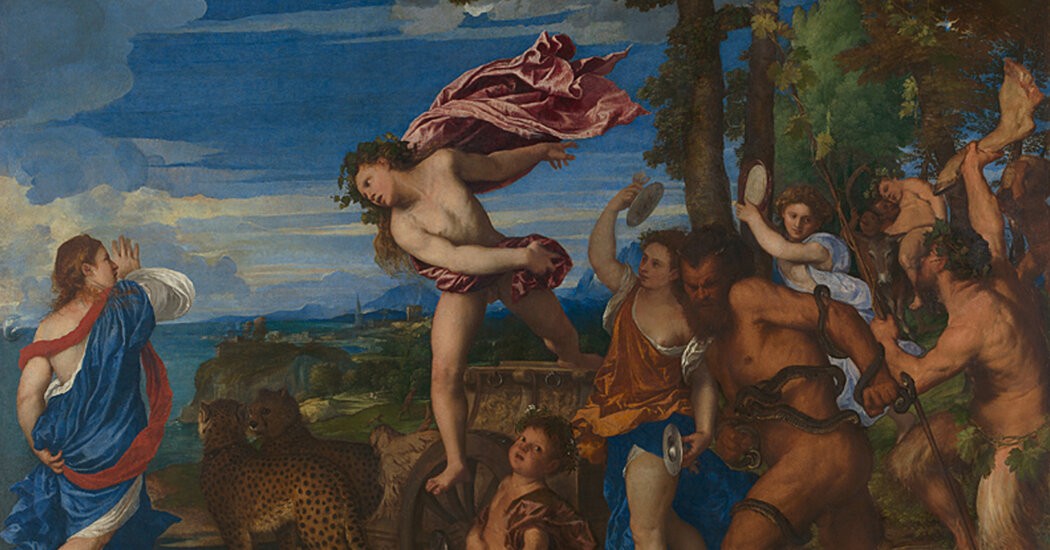
- Titian’s Bacchus and Ariadne (National Gallery, London): Whitney identifies this as a fundamental lesson in the mechanics of art, offering essential insights into color, movement, and structure.
- Nicolas Poussin (The Louvre): Multidisciplinary artist Walid Raad describes Poussin’s narrative detail as an immersive experience, comparing the viewing of his works to exploring “30 to 40 galaxies.”
Emotional Resonance and Human Connection
Beyond technique, art serves as a vessel for profound emotion, ranging from quiet comfort to overwhelming political weight.
- Horace Pippin’s Sleepers (The Met): Jordan Casteel finds peace in Pippin’s intimate, restrained use of color, noting how his brushwork creates a sense of warmth so delicate one feels the need to whisper.
- Gilberto Aceves Navarro’s Canto Triste por Biafra (Museo de Arte Moderno, Mexico City): Toyin Ojih Odutola describes a 40-minute meditation on this work, which addresses the Nigerian Civil War. The painting’s violent, cacophonous landscape serves as a “sad song” connecting human conflicts across history.
- Francisco de Goya’s Black Paintings (The Prado): Rashid Johnson finds an obsession in Goya’s darker works, such as Saturn Devouring His Son, noting that the artist explores “transgressions” that are both complicated and difficult to witness.
- Sandro Botticelli (The Uffizi): Ragnar Kjartansson shares a transformative perspective on Botticelli. Rather than seeing the works as mere “clichés,” he views them through the lens of the “corrupt and sinful” contexts in which they were created, revealing an underlying, atomic sensuality.
Cultural Identity and Historical Context
Art is often a bridge to understanding lost civilizations, social hierarchies, and the evolution of human ingenuity.
- Belauan Tolu (The Met): Jordan Casteel highlights a carved sea-turtle shell ornament as a symbol of women’s authority, noting its role in a female-centered system of value and inheritance.
- Roman Dodecahedra (Lyon, France): Toyin Ojih Odutola reflects on the mystery of these ancient objects, noting how their unknown function sparks an ancestral curiosity to touch and understand them.
- Earthenware Architecture (Jos, Nigeria): Ojih Odutola points to these structures as “ancestors’ skyscrapers,” emphasizing the technological ingenuity and divinity embedded in West African architectural history.
- Shakir Hassan Al Said (Mathaf, Doha): Walid Raad describes how the Iraqi artist literally cut his canvases to move beyond the surface, seeking a “non-retinal, spiritual dimension” through texture and shadow.
The “High-Low” Intersection
Sometimes, the connection to art is unexpectedly modern or even irreverent.
- Rembrandt’s Syndics of the Drapers’ Guild (Rijksmuseum): Rashid Johnson recalls how his first encounter with this masterpiece was through “Dutch Masters” cigars. He finds the transition from a commercial brand to a museum icon to be a fascinating “high-low” cultural moment.
Conclusion
Whether through the technical mastery of a brushstroke or the spiritual weight of an ancient structure, these artists demonstrate that great art is never static. It remains a living dialogue that continues to provoke, comfort, and instruct new generations of creators.