
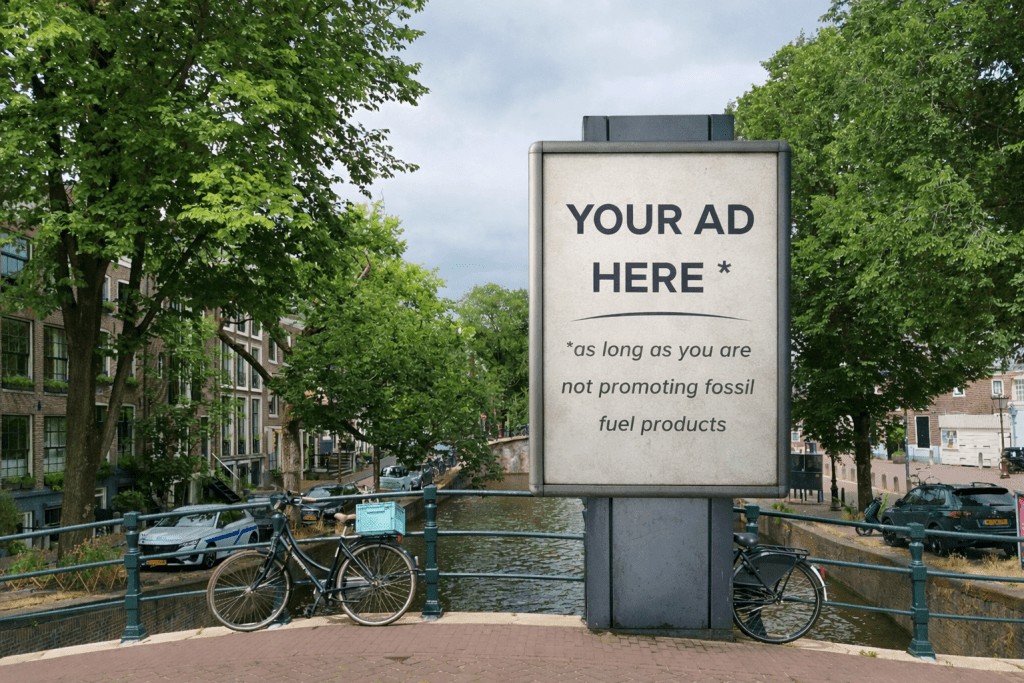
A growing movement is sweeping across the globe as local and national authorities move to restrict how high-carbon industries market themselves to the public. From major European capitals to various regional hubs, the ban on advertising for flights and cruise ships is transitioning from a niche activist demand to a formal legal reality.
The Amsterdam Milestone
On May 1, Amsterdam is set to make history as the first capital city to legally prohibit outdoor advertising for flights, cruises, and other high-carbon services.
This ban specifically targets “Out of Home” (OOH) advertising, meaning travelers will no longer see promotions for air travel or cruise holidays on billboards, transit networks, or other public spaces within the city. This move marks a significant shift in how urban environments are managed, prioritizing climate goals over commercial visibility.
A Growing Trend Across Europe
Amsterdam is not acting in isolation. The city is following a blueprint already established by several Dutch municipalities. Cities such as Utrecht, The Hague, Zwolle, Delft, and Nijmegen have already implemented similar restrictions, signaling a localized but potent trend within the Netherlands.
Beyond the Dutch borders, the movement is expanding:
– Fossil Fuel Bans: Several regions have already moved to ban advertisements related to fossil fuels.
– Expanding Scope: The focus is shifting from just oil and gas to the broader “carbon-intensive” sectors, including aviation and maritime travel.
Why This Matters: The Logic Behind the Bans
To understand why these bans are being implemented, one must look at the intersection of consumer psychology and climate policy.
For decades, the travel industry has relied on high-visibility advertising to stimulate demand for long-haul flights and massive cruise ships—two of the most significant contributors to global carbon emissions. By removing these ads from public spaces, authorities aim to:
1. Reduce “Normalization”: Decrease the subconscious acceptance of high-carbon lifestyles as a standard part of modern life.
2. Shift Public Discourse: Move the conversation away from “how easily we can travel” toward “how we can travel sustainably.”
3. Target Impulse Demand: Reduce the casual, visual triggers that encourage spontaneous, high-emission travel bookings.
The Industry Dilemma
For the travel and aviation industries, these restrictions present a significant strategic challenge. As more cities join this movement, companies face a shrinking “billboard footprint.” This creates