
Sarnen sits at the precise moment where the Sarner River exits the northern tip of Lake Sarnen. It is the capital of Obwalden, a half-canton in central Switzerland. If you are mapping out a route southwest of Lucerne, this is a logical stop. The population is roughly 11,428. Everyone speaks German. Almost everyone is Roman Catholic.
The town feels less like a modern hub and more like a preserved memory of Swiss independence. You can feel it in the stone of its oldest structures.
The White Book and the William Tell Legend
The town hall, built between 1729 and 1731, holds a secret. Inside, you will find the Weisses Buch, or the White Book. This isn’t just a municipal record. It contains the oldest surviving chronicle of the Swiss liberation story, dating back to around 1470.
Why does this matter to you as a traveler? Because this book is the primary source for the legend of William Tell. The Swiss patriot who was forced to shoot an apple off his son’s head with a crossbow. The story might be myth. The book is real.
It anchors the town’s identity. Without it, Sarnen is just a stop on the railway. With it, Sarnen is the origin point of a national myth.
Architecture and Atmosphere
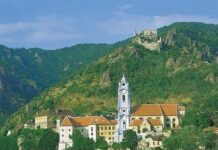
Walk through the center. The parish church dominates the skyline. It was built between 1739 and 1742. The style is Baroque. It fits the era of the town hall.
You will also spot the Schützenhaus. It dates to 1752. This was a shooting lodge. In a culture built on militia traditions, such buildings are essential. They remind you that this region was once heavily fortified against external threats.
Look for the monasteries. There is a Benedictine one. There is a Capuchin one. They sit quietly amidst the commercial activity. A college also stands in the town. It adds a layer of academic weight to the historic streets.
Logistics and Getting There
Sarnen is not isolated. It is a tourist center on the Luzern-Brünig electric railway. If you are coming from Lucerne, the train ride is direct. The line is electric. It cuts through the mountains.
The journey itself is part of the appeal. You leave the lakeside city of Lucerne and enter the high alpine valleys. The scenery shifts from urban to rugged within minutes.
Industry and Modern Life
This is not a museum town that has stopped time. Industries are active here.
- Electrical engineering
- Woodworking
- Food processing
- Beverage manufacturing
- Rubber products
You might see factories. You might see workshops. The population works. They also serve tourists. The town balances its industrial output with its historic charm.
When to Visit
The town is accessible year-round. The railway runs throughout the year. However, the context of William Tell and the Swiss liberation history is best appreciated if you have time to read the White Book. It is a small detail. It changes the entire narrative of the visit.
Do not just pass through. Go into the town hall. Look at the book