
Most people fly into Trabzon to catch the bus up to Uzungöl or the cable car to Boztepe, then head back to the airport the same day. It is a mistake. To understand why this city on Turkey’s Black Sea coast holds such a magnetic pull, you have to look past the postcard images of green tea plantations. You have to look at the history etched into its stone and soil.
Trabzon is not just a gateway; it is a destination with a heavyweight past. The city fell to Fatih Sultan Mehmet in 1461, marking the end of the Trapezuntine Empire and shifting the geopolitical axis of the region. It wasn’t just a military conquest; it was the moment Trabzon entered the Ottoman narrative, a thread that remains tightly woven into the city’s identity today.
The legacy of that empire isn’t confined to museums. It was born here. Kanuni Sultan Süleyman, the lawgiver who would later define an era for the Ottoman Empire, was actually born in Trabzon. Walking the streets of the old city, you are walking through the early life of one of history’s most powerful rulers. The architecture reflects this blend of Byzantine echoes and Ottoman grandeur, particularly in the Hagia Sophia Museum, which stands as a testament to the city’s layered religious and cultural shifts.
But the history is only half the story. The other half is the weather, the landscape, and the people.
The Black Sea region of Turkey is defined by its rain. It rains often. And because it rains often, everything is aggressively, vividly green. The hills surrounding Trabzon are carpeted in tea bushes, a sight that feels almost surreal if you are used to the arid landscapes of central Anatolia or the Mediterranean coast. The air is cool, damp, and smells of pine and wet earth.
Travelers who visit in the winter find a moody, atmospheric city where fog rolls off the Black Sea and blankets the harbor. Spring brings a explosion of wildflowers and lighter crowds. Summer is humid but vibrant, with locals and tourists alike heading to the mountain villages to escape the coastal heat. Autumn is perhaps the most dramatic, with the tea plantations turning shades of gold and russet before the harvest.
And then there are the people. Locals often pride themselves on their hospitality, a trait born out of the region’s relative isolation and tough climate. The pace here is slower than in Istanbul or Ankara. Conversations happen slower. Tea is served, and you are invited to stay. It is not uncommon to sit in a çay bahçesi (tea garden) for hours, watching the rain tap against the roof, talking to strangers who become friends by the second cup.
Why do visitors keep coming back? It is hard to pin down to a single attraction. It is the combination of the misty mountains, the deep history of the 1461 conquest, the birthplace of Süleyman, and the sheer greenery of the Black Sea coast. It is a place that demands you slow down. If you treat it as a pitstop, you miss the point. If you let it wash over you, it stays with you.
The question isn’t whether you should go. The question is how
The Laz Myth: Why Trabzon Isn’t What You Think
Let’s clear the air immediately. Trabzon people are not Laz. It is a persistent misconception that needs correcting.
The actual Laz population is concentrated elsewhere. You will find them primarily in Rize’s districts of Fındıklı, Ardeşen, Pazar, and Çamlıhemşin. They are also present in Artvin, specifically in Hopa, Arhavi, and Borçka. The identity is distinct. The culture is distinct. To lump Trabzon into that same bucket is inaccurate.
There is another layer to this history that often gets overlooked. In Trabzon, there is a small community with Greek Orthodox roots. Historically, they spoke the Rumca dialect. Today, that language is fading fast. Most have converted to Islam and switched to Turkish. The old tongue is disappearing, preserved only in memories rather than daily conversation.
The Sound of the Coast: Trabzon’s Musical Landscape
If the demographics are complex, the music is where the local soul truly lives. Music in this region is not just entertainment; it is a communal heartbeat.
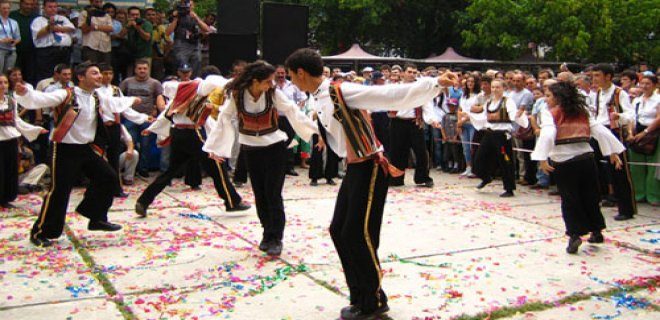
You will hear the horon everywhere. It is a fast-paced, energetic folk dance and music style. The rhythm is driving. The accordion leads the charge. The kemençe (a bowed string instrument) adds a sharp, high-pitched counterpoint. This is not background noise. It is participatory. Tourists often expect a quiet, passive observation of culture. Instead, they get pulled into the circle.
The sound is intense. It matches the landscape—steep, rugged, and demanding respect. When you visit a local festival or a wedding, the tempo increases. You might feel pressured to join in. Do not be afraid. The locals are welcoming. They want you to move.
“The music here doesn’t ask for permission. It invites you into the rhythm of the land.”
This auditory experience is what separates a tourist visit from a travel experience. You can see the Black Sea coast. But hearing the horon played live, with the dust rising from the floorboards in a village hall, is what stays with you.
Where to Listen and What to Expect
Finding live music is straightforward. It happens in two main settings:
- Village Festivals: Usually held in late summer or early autumn. These are authentic. No stage lights. Just wood, wire, and voice.
- Urban Cafes: In Trabzon city, especially near the harbor. You will find small gatherings in the evenings. The atmosphere is relaxed but the skill is high.
Costs are low. Entry is often free. You buy a tea or a coffee. The music is part of the social fabric, not a ticketed performance.
Timing matters. If you arrive in winter, the energy is indoors. The music is louder, more intimate. In summer, it spills out into the streets. The weather allows for open-air dancing.
The logistics are simple. Public transport gets you to the major towns. For the villages, you need a car or a local dolmuş. Do not rely on apps. Ask the hotel owner. They know who plays where.
There is a difference between watching a performance and being part of it. In Trabzon, the line is blurry. The music pulls you in.
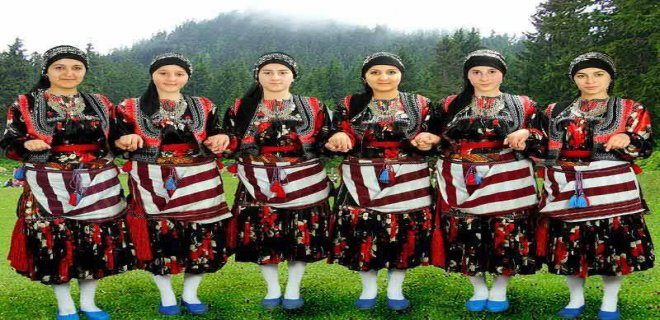
Karadeniz’in havası bile müzik taşıyor sanki. Trabzon’a gittiğinizde kulaklarınız önce çalar. Şimşir kavalın tiz sesi, kemençenin o içini buruşturan hüzünü, davul-zurnanın ritmi ve tulumun derin nefesi… Bunlar sadece enstrüman değil. Bölgenin ruhunun kalp atışları.
Ve bu müziğin önünde duranlar da sıradan insanlardan oluşmuyor. Kadın ve erkeklerin omuz omuza verdiği horon, Trabzon’un en belirgin kültürel imzası. Geleneksel kıyafetler içinde, aynı adımları atan kalabalıklar… Bu dans sadece eğlence değil. Bir tür dayanışma, bir tür özgürlük çığlığı. Peki ya o meşhur lezzet?
Kolbastı Nerede Başlamıştır?
Sorunun cevabı Trabzon’a, özellikle de Sürmene’ye uzanır. Tam da bu yüzden birçok gezgin “Kolbastı nerede başlar?” diye araştırıyor. Cevap basit: Sürmene.
Kolbastı, sadece bir yemek değil. Bir coğrafyanın denizle kurduğu ilişkinin tabağa yansıması. Balık, doğrudan ağlardan çıkar. Yanına ise limon, soğan ve ekmek gelir. Daha fazlasına gerek yok.
Neden bu kadar önemli? Çünkü deniz ürünleri, Karadeniz’in yaşam tarzının merkezinde. Sürmene’de balıkçı limanlarına girdiğinizde, taze avın kokusunu burnunuzda hissedeceksiniz. O an, kolbastının hikayesi tamamlanıyor. Balık, hemen oltaya geçirilir. Grileten, ızgarada pişer. Sonra sofraya.
Bu lezzetin sırrı, malzemelerin tazeliğinde saklı. İşleme uğramamış, sadece tuz ve ısı ile buluşan balık. Limonun ekşiliği, balığın yağlı yapısını dengeler. Soğanın keskinliği ise dili tazeler. Ekmek ise bu lezzetin son parçası.
Trabzon’dan ayrılırken yanınıza sadece fotoğraflar değil, bu tatların hafızaya kazınmış hali de girmeli. Şimşir kavalın melodisi kulaklarınızda, horonun ritmi ayaklarınızda, kolbastının tadı damaklarınızda kalsın.
How Kolbastı Spread From Trabzon’s Fishermen to a Nationwide Student Craze
It started as a local inside joke. Or maybe just noise. Specifically, the rhythmic clapping and chanting known as kolbastı (literally “arm-beating”). For years, it was just background noise in our region. We heard the chants echoing between cities. We heard it sparking petty fights. It was a friction point. A cultural irritant. Nobody knew where it actually came from. They just knew it was annoying. And loud.
Then came 1930.
The epicenter wasn’t a university initially. It wasn’t a political rally. It was Faroz, a neighborhood in Trabzon. The origin story is surprisingly grounded. It wasn’t born in an academy. It was born on the docks. Farozlu fishermen were playing a musical game amongst themselves. A way to pass time between catches. A way to keep the rhythm of the sea. It was casual. Improvised. Local.
But then it jumped.
It leaped from the fishing boats to the schools. Suddenly, the rhythmic slapping of arms became a student fad sweeping across Turkey. The “dispute” people mentioned earlier? That was the sound of tradition colliding with modern youth energy. It spread fast. Too fast for the older generation to control. Too loud for them to ignore.
Why did it catch on?
Because it was physical. It was communal. You didn’t need instruments. You didn’t need money. You just needed arms and a beat. In an era where youth culture was finding its voice, kolbastı provided a shared language. A chaotic, percussive one. It turned classrooms into drum circles. It turned Trabzon’s local quirk into a national phenomenon.
Where did it go?
From Faroz, it hit the major cities. Istanbul. Ankara. Izmir. Each place added its own flavor. Each city made it their own. But the root remained the same. The fishermen’s rhythm. The slap of the arm. The chant that confused the elders and thrilled the students.
Which students played it most?
Initially, the boys in Trabzon schools. Then, it expanded. It crossed gender lines. It crossed class lines. It became the soundtrack of a generation that wanted to be heard without saying a word. Just clap. Slap. Chant. Repeat.
The controversy? That was the point. The older generation saw disorder. The younger generation saw freedom. They were both right. The music was the same. The meaning was different.
The rhythm of the sea became the rhythm of rebellion.
Today, if you walk through certain neighborhoods in Trabzon, you might still hear echoes. Not the full frenzy. Not the nationwide panic. But the ghost of that 1930 beat. A reminder that culture doesn’t always come from the top down. Sometimes it bubbles up from the docks. From the fishermen. From a simple game of clapping hands.
The fight isn’t over. It just changes shape. The arms are different now. The beat is quieter. But the question remains: Why do we need to make noise to be seen?
***Eğitim
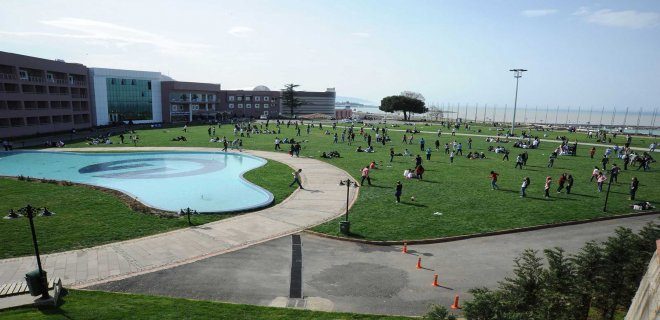
Trabzon’dan bahsettiğinizde, zihinde canlanan ilk yerlerden biri şüphesiz Karadeniz Teknik Üniversitesi (KTÜ). Türkiye’nin kurulan en eski dört üniversitesinden biri olmasıyla tarihe geçen bu kurum, aynı zamanda şehrin en büyük eğitim limanlarından biri. Şehirdeki öğrenci nüfusunun büyük bir kısmı bu kampüslerden besleniyor. Burada sadece akademik bir yapı değil, aynı zamanda Trabzon’un ruhunu yansıtan bir atmosfer var.
Kampüsün Konumu ve Deniz Manzarası
Üniversitenin fiziksel yapısı, Trabzon’un doğal güzellikleriyle iç içe. Kampüs alanı, şehir merkezine ve denize oldukça yakın. Öğrenciler ders aralarında veya kampüsteki boş vakitlerde doğrudan deniz manzarasına çıkabiliyor. Bu özellik, KTÜ’yi Türkiye’deki diğer üniversitelerden ayıran en belirgin özelliklerden biri.
Kampüs içinde birçok bina ve bölüm bulunuyor. Mühendislik fakültesi, tıp, iktisadi ve idari bilimler gibi birçok alanda eğitim veriliyor. Bu çeşitlilik, şehrin farklı semtlerinden gelen öğrencileri bir araya getiriyor. Kampüsün geniş alanı, sadece eğitim vermekle kalmıyor, aynı zamanda sosyal yaşamı da destekliyor.
Akademik Tarihçe ve Önemi
1987 yılında kurulan Karadeniz Teknik Üniversitesi, Türkiye’deki ilk dört üniversite arasında yer alıyor. Bu erken kurulum, şehrin eğitim ve kültür hayatına olan etkisini derinden şekillendirmiş. Yıllar içinde büyüyen kampüs, bugün yüzlerce bölüm ve binlerce öğrenciye ev sahipliği yapıyor.
Akademik başarıları kadar, Trabzon’un kültürel dokusuna entegrasyonu da önemli. Üniversite, şehrin tanıtımında kilit bir rol oynuyor. Dışarıdan gelen ziyaretçiler için kampüs, sadece bir eğitim kurumu değil, aynı zamanda şehrin modern yüzünü görmek için bir pencere.
Öğrenci Hayatı ve Ulaşım
Trabzon’un dört bir yanından öğrenciler buraya geliyor. Ulaşım konusunda şehir içi toplu taşıma araçları kampüse kolayca ulaşılabilecek şekilde düzenlenmiş. Öğrenciler, dersler arasında şehir merkezine, marketlere veya doğa yürüyüşlerine kolayca gidebiliyor.
Kampüs içindeki sosyal tesisler, kantinler ve kütüphane gibi alanlar, öğrencilerin ihtiyaçlarını karşılıyor. Özellikle deniz manzaralı alanlarda oturmak, Trabzon’un iklimini ve doğasını hissetmek için ideal. Bu da üniversite deneyimini sadece akademik başarıyla sınırlı kalmıyor, aynı zamanda kişisel gelişim ve keyifli anlar biriktirme fırsatına dönüştürüyor.
Neden KTÜ Önemli?
- Tarihsel Önem: Türkiye’nin ilk dört üniversitesinden biri.
- Konum: Deniz manzaralı, şehir merkezine yakın.
*