
New Delhi isn’t just the capital of India. It’s a heavyweight. Home to roughly 18 million people, it sits right behind Mumbai as the country’s second-largest metro hub. But don’t let the crowd size fool you into thinking this is just another sprawling, modern metropolis. The land area covers 1,484 square kilometers, making it one of Asia’s largest urban centers. And the history? Deep.
We’re talking about settlements dating back to 600 BCE. The ruins found here prove this wasn’t a city built overnight. It’s ancient. It’s layered. For centuries, it served as the capital for the Mughal Empire—the Turkish-origin dynasty that reshaped Indian architecture and culture. That legacy is still visible everywhere. Magnificent avenues. Fortresses. Mosques. Palaces. Gardens. It’s easily one of the most valuable tourist destinations on the continent.
If you’re planning a trip, you need more than just a list of places. You need context. Here is a breakdown of New Delhi’s history and its must-see spots, starting with the icon that defines the skyline.
The Red Fort: Mughal Power in Stone
Let’s start with the Red Fort (Lal Qila ). It’s the first thing most travelers see when they approach the center. It’s massive. It’s imposing. And it’s built entirely of red sandstone, which gives it its name.
Why does it matter? Because this was the main residence of the Mughal emperors for nearly 200 years. Shah Jahan, the same guy who built the Taj Mahal, commissioned this fort in the mid-17th century. He wanted a seat of power that screamed authority. The design reflects that.
Key details for your visit:
- Location: Old Delhi. It’s right next to the Chandni Chowk market area.
- Architectural Style: Mughal. It blends Persian, Timurid, and Indian architectural styles.
- What to expect: You’ll walk through massive gates, past palaces, and along winding pathways. The Diwan-i-Aam (Hall of Public Audience) and the Diwan-i-Khas (Hall of Private Audience) are the highlights. The latter once held the famous Peacock Throne.
Practical tips:
* Tickets: Buy tickets at the counter or online. Foreign nationals pay a higher fee than Indian citizens. It’s usually around ₹40–₹250 for foreigners, depending on current rates.
* Time needed: Plan for at least 2–3 hours. The complex is huge.
* When to go: Early morning is best. The heat gets brutal by noon, especially in summer. Monsoon season brings humidity, but fewer crowds.
* Dress code: Modest clothing is required. Shoulders and knees must be covered.
The Red Fort isn’t just a museum. It’s a statement. Every archway, every courtyard, was designed to intimidate and impress. Walk through it slowly. Look at the carvings. Feel the weight of the history.
“The Red Fort stands as a testament to the grandeur of the Mugh
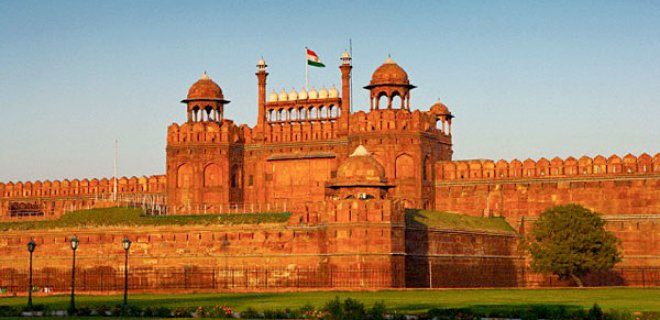
Red Fort: Mughal Grandeur in New Delhi
The Red Fort is not just a cluster of walls and towers. It is the physical embodiment of Mughal power. Built in 1648, this massive structure served as the main residence of the Mughal emperors for nearly two centuries. Shah Jahan, the emperor who also commissioned the Taj Mahal, ordered its construction. He wanted a capital that reflected the height of Persian and Timurid architectural traditions. The result is a complex of buildings that remains one of the most valuable symbols of Delhi.
The architect responsible for the design was Ustad Ahmad Lahauri. His work here laid the groundwork for his later masterpiece, the Taj Mahal. The fort’s red sandstone walls are striking. They contrast sharply with the intricate marble inlays inside. The fort’s layout is a masterclass in symmetry and geometry. It was designed to project authority and divine right.
Why the Red Fort Matters Today
In 2007, UNESCO added the Red Fort to its World Heritage List. This recognition was not arbitrary. The site represents the apex of Mughal architecture under Shah Jahan. It is a testament to a specific era in Indian history. The fort is located in Old Delhi, right next to the Chandni Chowk market. This location is key. It places the monument in the heart of the city’s old commercial and political district.
Visiting the Red Fort is not just about seeing old stones. It is about understanding the scale of the Mughal Empire. The fort covers a large area. You can spend hours walking through its gates, courtyards, and halls. The Diwan-i-Aam, or Hall of Public Audiences, is where the emperor met with his subjects. The Diwan-i-Khas, or Hall of Private Audiences, is where he held private meetings. The marble here is white. It is decorated with precious stones. The craftsmanship is exquisite.
Practical Tips for Visitors
Getting to the Red Fort is straightforward. The nearest metro station is Chandni Chowk. From there, it is a short walk through the bustling streets. The market is chaotic. It is vibrant. It is exactly what Old Delhi feels like. Be prepared for crowds. The fort is one of Delhi’s most popular tourist destinations.
Tickets are available at the entrance. Prices vary for domestic and international visitors. It is worth buying a guidebook or hiring a local guide. The site is large. Without context, the significance of different buildings can be lost. A guide can explain the symbolism of the architecture. They can tell stories about the emperors who lived here.
The Light and Sound Show
If you visit in the evening, consider the Light and Sound Show. It runs in the evenings. It narrates the history of the fort. The show uses projections and sound effects. It brings the walls to life. It is a different experience from visiting during the day. The atmosphere changes. The shadows lengthen. The stories become more dramatic. Check the schedule in advance. It may not run every day.
What to See Inside
- Lahori Gate: This is the main entrance. It is imposing. It sets the tone for the entire complex.
- Diwan-i-Aam: The Hall of Public Audiences. It features a marble throne. The view of the Yamuna River is

The Iron Tower of Delhi: A Vertical History
The Qutb Minar isn’t just a landmark; it is a heavy, limestone-and-marble statement carved into the Delhi sky. Standing at roughly 75 meters, its five distinct stories offer a vertical timeline of the city’s architectural evolution. You can trace the shift from Hindu and Jain motifs on the lower levels to the pure Islamic geometry of the upper bands. It was commissioned in the 13th century by Qutb-ud-din Aybak, a general whose victory over the Ghurids needed a monument. The result is a tower that echoes the styles of the Seljuks and Ghaznavids, yet feels entirely unique to its spot.
Why does it matter today? Because it anchors the UNESCO World Heritage site. It draws hundreds of thousands of visitors annually, not just for the height, but for the context. The complex surrounding it includes the Quwwat-ul-Islam Mosque, built from the spolia of 27 demolished Hindu and Jain temples. You walk through arches that were once pillars in other faiths, repurposed by a new empire. The scale is disorienting. The Alai Darwaza gateway nearby, with its red sandstone and white marble inlay, shows how the architecture refined itself over decades.
Humayun’s Tomb: The Garden That Preceded the Taj
Move a few kilometers from the dusty, medieval grit of the Qutb complex and you hit Humayun’s Tomb. If the Qutb Minar is a shout, this is a calculated whisper. Built in the 1560s, it is widely recognized as the first garden-tomb on the Indian subcontinent. It set the template for the Taj Mahal, though without the marble purity. Here, you get red sandstone, geometric precision, and the charbagh layout—four quarters divided by walkways and water channels, symbolizing the four rivers of paradise.
Shah Jahan’s father, Humayun, died after falling from his library stairs. His wife, Hemmat Begum, commissioned this mausoleum to honor him. The result is a structure that feels less like a fortress and more like a pavilion. The central dome, double-shelled and painted with intricate patterns, floats above the sandstone base. It is quieter than the Qutb Minar area. The landscaping is intentional; the symmetry forces you to slow down. You can see the reflection pools clearly, especially in the late afternoon light when the red sandstone turns a deep, burnt orange.
The site serves as a UNESCO World Heritage site for its role in Mughal architecture’s transition. It marks where Persian influences merged with local Indian styles. The tomb sits on a raised plinth, accessible by stairs that elevate the visitor both physically and conceptually. Inside, the cenotaphs are arranged symmetrically, though the actual burials are in the basement crypt below, darker and more subdued. The upper chamber is the one designed for contemplation, filled with light that filters through jali screens.
For travelers, the contrast is the point. You start with the vertical ambition of the Qutb Minar, a symbol of conquest and dominance. Then you arrive at Humayun’s Tomb, a space for reflection and order. One is about power projected outward. The other is about
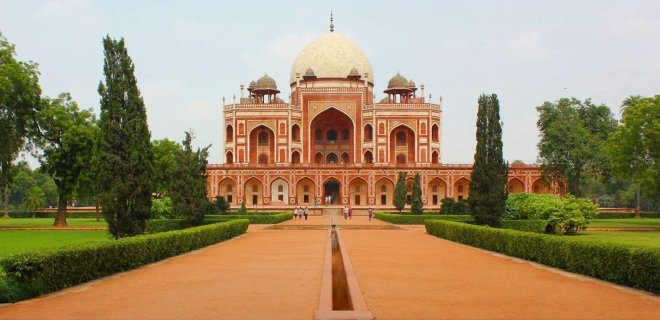
The Tomb That Started It All
Humayun’s Tomb in Delhi isn’t just a monument; it’s the blueprint for India’s most famous real estate. Before the Taj Mahal existed, there was this. It set the standard.
Emperor Humayun died in 1556. Nine years later, his wife, Bega Begum (also known as Haji Begum), decided to honor him. She didn’t want a traditional grave. She wanted a legacy.
Construction ran from 1565 to 1572. The architect? Mirak Mirza Ghiyas, a Persian master. His design fused Persian elegance with Indian craftsmanship. The result? A double-domed structure built from red sandstone and white marble. It sits in a large charbagh (four-part) garden. A canal runs through it. The water reflects the dome. The effect is startling.
UNESCO lists it as a World Heritage Site. Not just because it’s old. But because it changed architecture forever. It introduced garden-tomb planning to the Indian subcontinent. Every Mughal monument that followed took notes.
Entry Point: The Main Gate
Your visit begins at the Humayun’s Tomb Main Gate. It’s a massive red sandstone arch. High and imposing. You pass through it to enter the complex. The gate itself is a work of art. Painted motifs adorn the surface. You’ll see floral patterns. Geometric designs.
The entrance marks the boundary between the chaotic city outside and the serene garden within. It’s a deliberate contrast. Step through, and the noise of Delhi fades. The garden takes over.
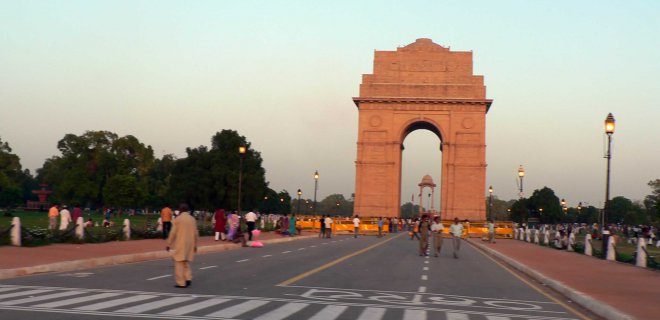
Rajpath bölgesinin doğusunda, başkentin kalbinde yükselen Hint Kapısı (India Gate), başlangıçta “Hindistan Savaş Anıtı” olarak adlandırılsa da günümüzde farklı bir kimlikle anılıyor. 42 metre yüksekliğindeki bu heybetli yapı, İngiliz mimar Edwin Lutyens tarafından 1931’de tasarlanmış. Peki, bu anıt neden bu kadar önemli? Cevap, I. Dünya Savaşı’nda hayatını kaybeden 82 bin Hint askerine ithaf edilmiş olmasıyla gizli.
Anıtın tabanına kazınan isimler, Fransa’dan Mezopotamya’ya, İran’dan Doğu Afrika’ya; Gelibolu’dan Uzak Doğu’ya kadar savaşın tüm cephelerinde düşen askerleri listeliyor. Kayıtlar arasında sadece Hintliler değil, İngiliz komutanlar ve askerlerin isimleri de yer alıyor. Toplam 13.300 kadar askerin adı burada yazılı. Her yıl milyonlarca turistin ziyaret ettiği Hint Kapısı, Hindistan’ın en görkemli yapılarından biri olarak öne çıkıyor.
Lotus Tapınağı
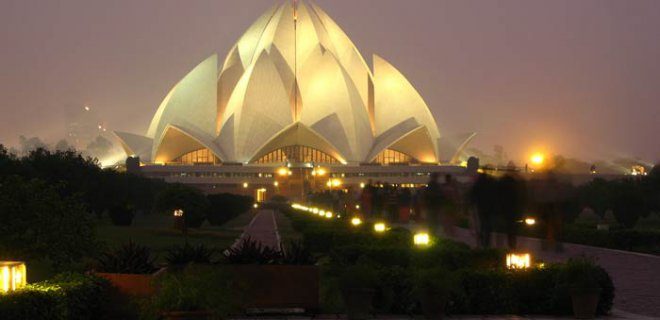
The Lotus Temple: Architecture as Spirit
It opened in 1986, but the Lotus Temple’s impact has been anything but temporary. Designed by Fariborz Sahba, the structure is an instant recognition factor. It doesn’t just look like a lotus; it commands you to look at it. The design drew dozens of articles and a pile of architectural awards, not because it was pretty, but because it was bold.
Standing 34 meters tall, the building holds 1,300 worshippers. That capacity matters. It’s not a shrine for the few. It’s for the many. The style is Expressionist. The walls curve. They fold. They lift. The geometry feels alive.
And here is the part that often gets missed: it belongs to no single religion. It is a Baháʼí House of Worship. That means anyone can walk in. Any faith. No sermons. No rituals. Just silence and space. You sit. You listen. You breathe.
This is why it is a top spot in New Delhi. It’s not just a monument. It’s an experience.
Akshardham
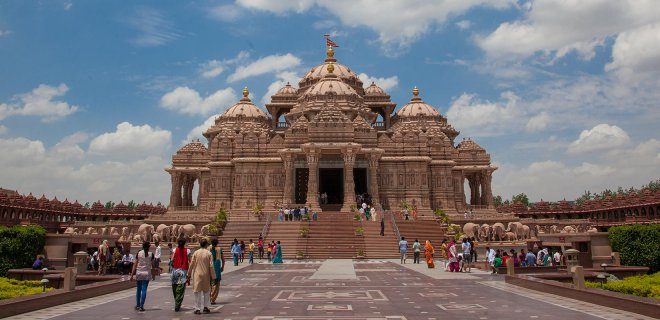
Akshardham: Yeni Delhi’deki Mimari İnci
Adını Swaminarayan Akshardham olarak da duymuş olabilirsiniz bu devasa kompleks. Sadece bir Hindu tapınağı değil, geleneksel Hindu ve Hint kültürünün en karmaşık unsurlarını bünyesinde barındıran bir açık hava müzesi gibi. Burayı ayağa kaldıran şey tek başına inşaat mühendisliği değil, inanılmaz bir topluluk emeği. Yaklaşık 7 bin esnafın katkılarıyla, 3 bin gönüllünün ücretsiz çalışarak katkıda bulunmasıyla hayata geçirildi. Sonuç? Hindistan’daki en büyük Hindu tapınağı unvanını aldı.
2005’te kapılarını açan bu yapı, Yeni Delhi’ye gelen her turlistin listesinde ilk sıralarda yer alacak bir durak. “Tanrının Evi” anlamına gelen isim, buradaki heybeti az çok özetliyor. Delhi gezi planınıza mutlaka eklemelisiniz.
Jama Camii
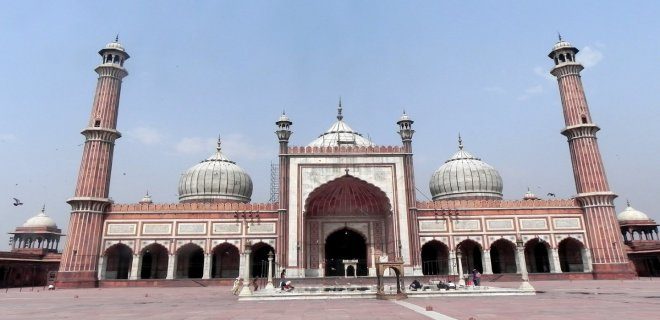
Jama Masjid: The Scale of Shah Jahan’s Vision
Stepping into Jama Masjid feels like entering a different century, or perhaps a different empire. This isn’t just a place of worship; it is a monument to the sheer logistical ambition of the Mughal era. Built on the orders of Emperor Shah Jahan—the same guy who got carried away with the Taj Mahal—this mosque took from 1650 to 1656 to complete. That’s six years of non-stop construction, labor, and prayer.
The location sets the tone immediately. It sits right next to Chawri Bazaar, one of Delhi’s most chaotic, vibrant marketplaces. You get the full sensory overload here. The smell of street food, the noise of rickshaws, the dust on your shoes—it all bleeds into the calm of the courtyard. But once you cross the massive red sandstone and white marble gates, the city fades.
The architecture is imposing, to say the least. The main prayer hall is 27 meters wide, dominated by three massive domes and flanked by two minarets that soar 41 meters into the sky. If you’re wondering how they managed to fit so many people, the answer is simple: scale. Jama Masjid can accommodate up to 25,000 worshippers at once. Try finding that kind of space in most Western cities.
The materials tell their own story. The red sandstone gives it that earthy, grounded Mughal feel, while the white marble accents add a layer of refined elegance. It’s a visual hierarchy that guides your eye upward, toward the domes, away from the streets below.
And it’s not just about capacity. The mosque holds historical and sacred relics that draw pilgrims from across the globe. Whether you’re there for the history, the architecture, or the spiritual atmosphere, Jama Masjid demands your attention. It’s Delhi’s oldest and largest mosque for a reason.
Yeni Delhi Ulusal Müzesi
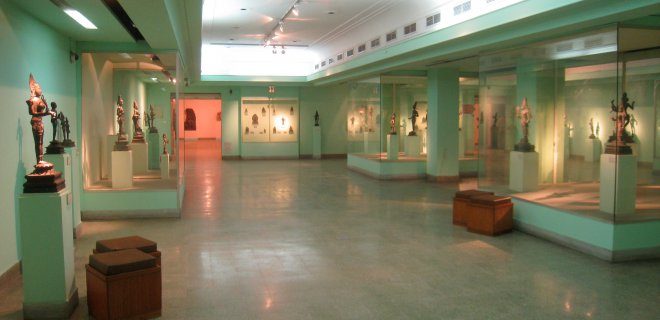
The National Museum: A 5,000-Year Archive in Delhi
If you are trying to piece together the timeline of India, the National Museum in New Delhi isn’t just a stop on your itinerary. It is the heavy, dense anchor. Operating under the Ministry of Culture, this institution stands as one of the country’s largest cultural repositories. It didn’t start as a sprawling complex of galleries; it was founded back in 1949, initially as a temporary home for artifacts from the Indian Independence Exhibition. But it quickly outgrew its modest beginnings.
Today, the museum covers an area of roughly 43,000 square meters. The architecture itself tells a story—a blend of traditional and modern design that signals the weight of what’s inside. You aren’t just walking through rooms of old pottery. You are moving through a narrative that spans five millennia. From the Prehistoric era to the sophisticated modern art of the 20th century, the collection is vast. Over 206,000 objects are cataloged here. That number is hard to visualize. Try to imagine a library with that many “books,” except every page is a statue, a painting, a piece of jewelry, or a fragment of a wall.
Location and Logistics
The museum sits at a distinct intersection in the capital. You will find it at the corner of Janpath and Maulana Azad Marg. This puts it in the heart of the city, close to other key landmarks like the India Gate and Rashtrapati Bhavan, but it has its own quiet gravity. Getting there is straightforward. If you are using the Delhi Metro, the closest station is Barakhambha Road or Dhaula Kuan, depending on your route. From there, it’s a short walk or a quick auto-rickshaw ride through the traffic.
What You Will See
The collection was curated based on the recommendations of the Gwyer Committee, a group tasked with organizing national heritage items. The result is a display that feels less like a random assortment and more like a structured education. The artifacts cover a period of 5,000 years.
- The Indus Valley Civilization: You will see seals, pottery, and jewelry from Harappa and Mohenjo-daro. These are some of the oldest artifacts. They speak to a society that was already urbanizing and trading long before much of Europe was out of the Stone Age.
- The Gupta and Mughal Eras: The bronze sculptures here are particularly notable. The Gupta period pieces, often called the “Golden Age” of Indian art, have a grace and realism that is striking. The Mughal paintings and miniatures show a different influence—Persian and Central Asian aesthetics meeting local traditions.
- Modern Art: The collection doesn’t stop at the 18th century. It moves into the 20th century with works by Indian and foreign artists. This section is often overlooked but provides a critical link to contemporary Indian identity.
Why It Matters for the Traveler
Most tourists in Delhi rush to the Red Fort or Qutub Minar. Those are essential. But the National Museum offers something different. It offers context. Without this museum, the artifacts you see scattered in other sites or in the Archaeological Survey of India’s general display might feel disjointed. Here

Known locally as the Viceroy’s Church, this is easily one of India’s most imposing religious structures. It serves as the headquarters for the Archbishop of Delhi and remains fully active for worship today. The architect Henry Medd designed what is now called the New Delhi Cathedral, completing it in 1935 before opening its doors the following year.
The building is defined by its soaring curved arches and delicate domes. It stands out as a top destination for travelers, particularly drawing in Christian tourists who prioritize it on their Delhi itineraries.
Lodi Gardens
Stepping out from the cathedral’s shadows, the next logical stop for a traveler planning a Delhi trip is Lodi Gardens. This sprawling complex offers a stark, welcome contrast to the city’s usual noise. It is less a monument and more of a living, breathing green lung in the heart of the capital.
The gardens house six tombs and mosques dating back to the Sayyid and Lodhi dynasties of the 15th and 16th centuries. You will find the Tomb of Balban, the oldest structure in the complex, standing with a quiet dignity that few other sites in the city can match. Then there is the Tomb of Sikander Lodhi, surrounded by water features that reflect the sky.
For a visitor, the practical details matter. The site is best visited early in the morning or late in the afternoon to avoid the midday heat. Entry is nominal, making it accessible for budget travelers. There are no ticket counters to argue with, just open gates and paths worn smooth by decades of joggers, locals reading, and tourists seeking shade.
Why do people come here? For the silence. In a city that never stops shouting, Lodi Gardens offers a pocket of calm. The architecture is Indo-Islamic, characterized by arches and domes that blend Persian influences with local craftsmanship. It is not just about seeing old stones. It is about feeling the weight of history without the crowd pressure found at sites like the Red Fort.
You can walk the length of the garden in about an hour if you stick to the main paths. But the real reward is in the detours. Tucked away between the trees are smaller shrines and ruins that often go unnoticed. A guide is not strictly necessary if you are comfortable navigating on your own, though a local can point out the specific carvings on the sandstone that tell stories of a forgotten era.
This is where Delhi reveals its softer side. It is not about grandeur in the Victorian sense. It is about the interplay of light and stone, the sound of birds over ancient brickwork. For the traveler who wants to see India beyond the typical checklist, Lodi Gardens provides a necessary pause. It is a place to reset before heading back into the fray.
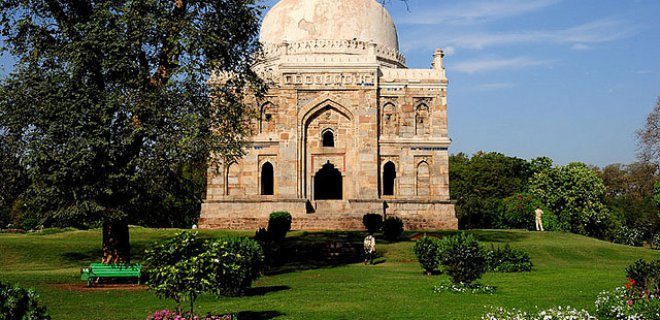
Why Lodi Gardens is New Delhi’s Most Underrated Historical Escape
You can walk through centuries of history in a single afternoon without leaving the city center. If you are looking for Lodi Gardens New Delhi, you are looking for the city’s best-kept secret for a slow, sensory stroll. This isn’t just a park; it is a 360,000-square-meter sanctuary where Mughal elegance meets colonial landscaping. The scale is massive. The silence, surprisingly deep.
The heart of the complex beats around the tomb of Sikandar Lodi, the Sultan of Delhi, who died here in 1517. His resting place is framed by 15th-century architecture that has survived wars, neglect, and time. But the park as we know it today owes its shape to the British. They recognized the potential of the land early on. Under the influence of the wife of Viceroy Lord Willingdon, they reimagined the space. The result was a blend of Persian garden aesthetics and English landscape design. It was practical, green, and inviting.
When India gained independence in 1947, the space shed its colonial associations. It was renamed Lodi Gardens in honor of the dynasty that first used the site as a necropolis. The name stuck. The identity shifted from a recreational spot for the British elite to a national heritage site. Now, it is one of New Delhi’s top attractions for a reason.
What Makes Lodi Gardens Worth the Visit
The visual contrast here is striking. You have crumbling sandstone arches and domes from the 1400s sitting right next to manicured lawns and vibrant flowerbeds. It feels authentic. Not staged. The pathways are wide and shaded by massive trees, making it a popular spot for locals exercising at dawn or families picnicking on weekends.
For the traveler, the logistics are simple. The gardens are located in the southern part of New Delhi, near the historic Lodi Road. It is easily accessible by auto-rickshaw or metro, with the nearest station being Jor Bagh. Entry is free. This alone makes it a standout. In a city where tourist traps often charge premium rates for basic access, Lodi offers history at zero cost.
The best time to visit? Early morning or late afternoon. The light hits the domes differently. Shadows lengthen. The heat of the day breaks. You can see the intricate jali work (lattice screens) and the detailed calligraphy on the tombs without fighting the midday glare. There are six main tombs and mosques within the grounds. The Bara Gumbad and the Tomb of Shisha Gumbad are particularly notable for their scale and preservation.
Planning Your Stop in the Complex
Don’t rush. This is not a place to tick off a checklist. It is a place to sit on a bench and watch the city move past the walls. Bring water. The shade is generous, but the Delhi sun is relentless between 11 AM and 3 PM.
If you are comparing destinations, ask yourself what you want from a city break. Do you want the chaos of Chandni Chowk? The grandeur of the Red Fort? Or do you want a space that lets you breathe while still engaging with the past? Lodi Gardens offers the latter. It is a pause button in