The Philippines sits in the western Pacific, a sprawling archipelago of thousands of islands. Manila is the capital. The country is bordered by China, Vietnam, and Taiwan. It has about 110 million people. The land area is exactly 342,353 square kilometers.
This population makes the Philippines the eighth most populous nation in Asia. It is also the twelfth most populous in the world. History here is layered. It was a colony of Spain, then the United States, with periods of Japanese and earlier influences. Settlement evidence dates back to 4000 BCE.
Tourists come for the nature. They come for the history. They come for the beaches.
Boracay: The Island That Refuses to Die
Let’s start with Boracay.
It is the most famous island in the Philippines. And for good reason.
The beach there is white. Not gray. Not brown. Pure, powdery white sand. It stretches for four kilometers. The water is turquoise. It is shallow near the shore. It is warm year-round.
How to Get There
You don’t fly into Boracay directly. There is no airport on the island itself.
- Fly to Caticlan or Kalibo.
- Most international flights go to Manila first.
- From Manila, take a domestic flight to Caticlan (MPU) or Kalibo (KLO).
- Flights cost between $30 and $100 USD one-way. Book early.
-
The flight takes about an hour.
-
The Tricycle and Boat Transfer.
- From Caticlan Airport, you take a tricycle to the jetty port.
- From Kalibo, it’s a 1.5-hour drive to the port.
- Buy your boat ticket at the port. It’s about $3 USD per person.
-
The boat ride to Boracay takes 15-20 minutes.
-
On the Island.
- Once you arrive on Boracay, you take another tricycle to your hotel.
- Motorcycles and cars are banned on the beach areas.
- You walk. Or you take a pako (a small utility vehicle).
Where to Stay and What It Costs
Boracay has four main beach areas. They are different.
- White Beach Station 1: The luxury zone. Five-star resorts. Pricey dinners. Crystal clear water. You’ll pay $150-$300+ per night.
- White Beach Station 2: The middle ground. Budget-friendly hotels. Lots of bars. Good mix of vibe and cost. Expect $50-$100 per night.
- White Beach Station 3: The party hub. Loud music. Cheap beer. Backpackers. Budget hotels start at $20 per night.
- Puka Shell Beach: Off the main strip. Quieter. Less developed. More natural.
“Boracay isn’t just a beach. It’s a lifestyle.”
When to Go
The dry season is from November to May. This is when you should go.
- **
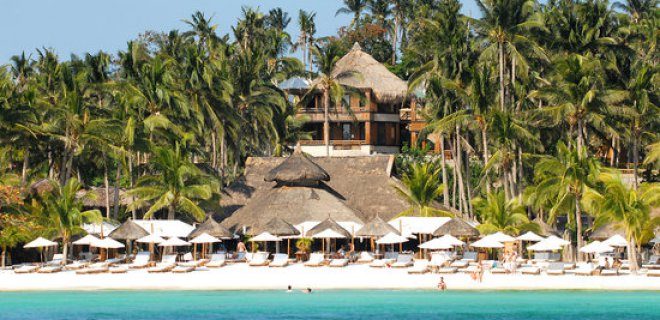
Boracay isn’t just a destination. It’s a gravitational pull.
Located 315 kilometers south of Manila, this speck of land sits within the Visayas archipelago. It covers only 10.32 square kilometers. Yet, that tiny footprint holds one of the most intense tourism engines on the planet.
Managed jointly by the Philippine Tourism Authority and the Aklan provincial government, the island has mastered the art of perfection. White sand. Pristine nature. Global recognition. It wins awards. It draws millions. Locals and foreigners alike, year after year.
But let’s talk about the logistics. Because if you’re planning a trip, you need to know how to navigate the sheer volume of people.
Getting There Without Losing Your Mind
The journey usually starts at either Manila or Caticlan. Most travelers fly into Kalibo. From there, it’s a three-hour van ride to Caticlan Jetty Port. Then, a ten-minute boat ride to Boracay.
Direct flights to Caticlan exist but are pricey. If you’re on a budget, fly into Kalibo and endure the van transfer. It’s cheaper. It’s longer. It’s the standard route.
Once you arrive at the port, you’ll face the “whitelist” system. This is crucial.
The Whitelist Rule: What You Need to Know
Boracay operates on a whitelist system. You can only stay in accommodations listed on the official whitelist. If your hotel isn’t on it, you can’t legally check in. Or stay for more than a day.
The rules were tightened heavily after the 2018 closure for rehabilitation. The goal was sustainability. The result is a cleaner, more orderly experience. But also, higher costs.
You need a certificate of registration. You pay an environmental fee. These happen at the terminal. Do not skip them. You’ll be turned around.
Where to Stay: Station 1, 2, and 3
The island is divided into three main stations. Your choice here dictates your entire vacation.
Station 1 is for luxury seekers and those who want immediate beach access. It’s small. Expensive. Quiet at night. The sand is the whitest here. The water is calm. Perfect for swimming. But you pay a premium for proximity to the white sand.
Station 2 is the heart of the action. It has the beach, but also the main strip of restaurants, bars, and shops. It’s where the energy is. It’s where you’ll see the most people. It’s vibrant. It’s chaotic. It’s fun if you like nightlife.
Station 3 is the backpacker district. It’s cheaper. It’s lively. It’s further from the beach, so you’ll walk. But the sunset views are still stunning. The prices are lower. The hostels are plentiful.
Which station suits you? It depends on your budget and your tolerance for noise.
The Cost of Paradise
Boracay is no longer the dirt-cheap destination it was ten years ago. Prices have risen. But value remains.
A decent meal in Station 2 or 3 might cost $10 to $15. A beer at a beach bar? $3 to $5. A mid-range hotel room? $
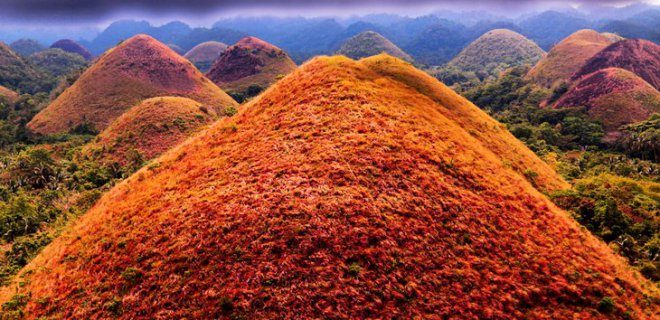
Bohol’s Chocolate Hills
Stop looking for the chocolate. They’re not there.
What you find in Bohol is something far stranger. Hundreds of conical mounds dot the landscape. They rise from the earth like forgotten giants sleeping in the grass. Most of the year, they wear a lush green coat. Then the dry season hits. The green dies back. The hills turn brown. Rust-colored. Chocolate-colored.
That’s how they got their name.
They sit on the UNESCO World Heritage list for a reason. The geology is weird. Limestone erosion carved these shapes out of the ground. They are perfectly symmetrical. Almost artificial. But they’re not. They’re nature doing its quiet, strange work.
Tourists flood here. It’s one of the most visited spots in the Philippines for a reason. The view from the observation deck is the main event. You stand up there. You look down at the pattern. It’s disorienting in the best way.
But Bohol is more than just a photo op.
Mactan Island
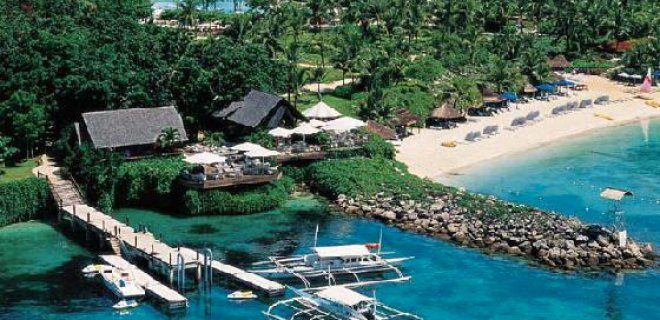
Mactan Adası, Cebu’un kalabalık merkeziyle sadece birkaç kilometre mesafede. Marcelo Fernan Köprüsü ve Mactan-Mandaue Köprüsü, bu iki adayı birbirine bağlayan kilit bağlantı noktaları. Bu köprülerin ötesinde, yaklaşık 450 bin kişinin yaşadığı bir bölge var.
Burada tatil köyleri ve plajlar öne çıkıyor. Dalış, jet ski ve yelken gibi aktiviteler için ideal bir çevre. Filipinler’de görülmesi gereken yerler arasında yer alıyor.
San Agustin Kilisesi
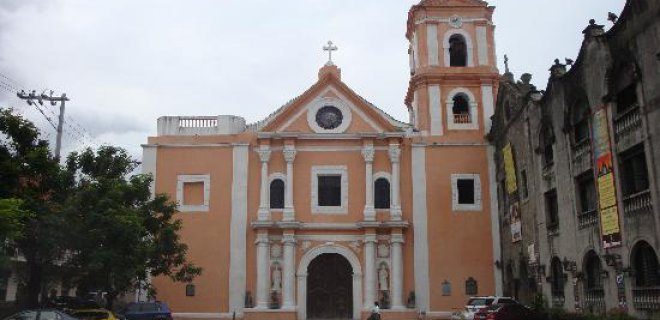
The walls of Intramuros are thick with history, but inside them sits a structure that feels suspended in time. San Agustin Church isn’t just a pretty facade. It’s the oldest stone church still standing in the Philippines.
Designed by Juan Macias, construction began in 1586 and didn’t wrap up until 1607. That’s nearly two decades of hauling stone and carving details by hand. The style is pure Baroque—ornate, dramatic, and designed to overwhelm the senses. But unlike many colonial structures that crumble under earthquakes, this one held firm.
The government declared it a National Historical Landmark in 1976. You don’t get that title for looking good. It’s about survival.
But the real global recognition came later. In 1993, UNESCO added it to the World Heritage List. They didn’t list it alone. It was grouped with three other Spanish-era churches under the collective name, “Baroque Churches of the Philippines.” This classification matters. It frames San Agustin not just as a local shrine, but as a key piece of a larger architectural narrative.
Inside, the air is cool. The ceiling is dark wood, contrasting sharply with the white stucco walls. You’ll find heavy wooden pulpits and intricate altarpieces. It’s a working Roman Catholic church. People still pray here. The rituals haven’t stopped for the tourists.
If you’re planning a visit, remember this is a place of worship. Dress modestly. No sleeveless tops. No short shorts. The entry is free, but donations are expected for the upkeep of such a fragile relic.
Banaue Rice Terraces
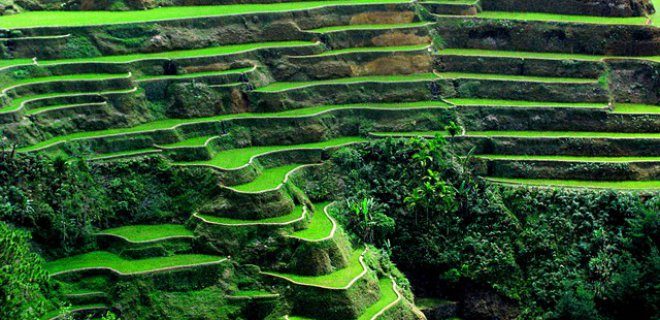
The Living Heritage of Ifugao
Look up at the Cordillera mountains and you aren’t just seeing scenery. You’re seeing a timeline.
These aren’t abandoned ruins buried under moss. They are working farms. The Banaue Rice Terraces, often called the “Eighth Wonder of the World,” have been shaped by human hands for roughly two millennia. Located near Ifugao on Luzon, the highest peak of the archipelago, these stepped fields cling to the slopes at an elevation of about 1,500 meters.
The sheer scale is disorienting. To the first visitors, they looked like staircases built by giants. Today, they remain one of the Philippines’ most profound natural and cultural intersections. The engineering is brutal. The beauty is undeniable.
Mayon Volcano
Shift your focus southwest, toward the province of Albay. There, looming over the landscape, is Mayon.
It doesn’t just sit there. It demands attention. Known for having the “world’s most perfect cone shape,” this active stratovolcano is less a mountain and more a mathematical ideal in stone and ash. It rises abruptly from the plains, creating a silhouette that has inspired legends and terrified locals for centuries.
Why it matters to your itinerary:
* The Shape: Its near-perfect conical form is a geological anomaly. It’s a visual anchor for the entire Bicol region.
* The Activity: It is not dormant. It erupts regularly. You cannot climb to the summit. Period. Safety closures are strictly enforced because the mountain is unpredictable.
* The View: You don’t go for the top. You go for the base. Legazpi City offers some of the most reliable vantage points. Early mornings are best. The light hits the symmetrical slopes differently at dawn, cutting through the mist.
Logistics:
Getting there requires a flight to Legazpi or a long drive from Manila or Naga. Once there, hire a local guide if you want to explore the nearby parks or the volcanic foothills. Do not attempt to bypass checkpoints. The terrain is unstable, and the risk of sudden eruptions is real.
Is it worth the detour? If you are chasing icons, yes. Mayon is a cliché for a reason. It is the postcard image of the Philippines. But remember, it is a active threat as much as it is a beauty spot. Respect the boundary lines. The mountain does not care about your Instagram feed.
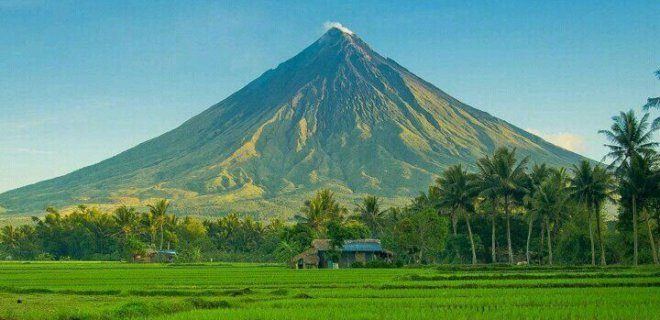
Standing tall in Albay province on Luzon Island, Mount Mayon isn’t just a volcano; it is a geological masterpiece that demands respect. It is an active stratovolcano, meaning it has history in its magma. The summit hits 2,463 meters, offering a view that is both terrifying and beautiful.
Why does everyone talk about it? Because the cone is symmetrical. Perfectly symmetrical. It earned the nickname Mount Perfecto for a reason. The shape is so distinct that it has become the unofficial symbol of the Philippines.
You might think this beauty is new. It isn’t. In 1938, the area surrounding the peak was declared a national park. It was the first of its kind in the country. Later, the status shifted to a nature park. Since 2000, it has officially been known as the Mayon Volcano Natural Park. It remains one of the top destinations for travelers who want to see raw power.
Hiking the “Perfect Cone”
Visiting Mayon requires planning. It is active. You cannot just wander up the slopes whenever you feel like it. The park authorities manage access strictly to keep visitors safe.
Most people start their journey in Legazpi City. From there, you can hire a guide or join an organized tour. Independent hiking is often restricted or requires special permits depending on current activity levels.
“Respect the mountain. It is not a theme park. It is a living, breathing geological force.”
The best time to visit? Dry season. November to May. If you go during the wet season, the trails get muddy, visibility drops, and the risk of ashfall or minor eruptions increases. Check local alerts. Always.
What to See
You aren’t coming here for beaches. You are coming for the view.
- Cagsawa Ruins: These are the remnants of a 17th-century Spanish church destroyed by the 1814 eruption. The bell tower still stands, framing the volcano perfectly. It is a historic site and a photography hotspot.
- Lignon Hill: For a closer look without the high-altitude hike. You get a panoramic view of the cone and the surrounding plains. Great for sunrise.
- Bacal Road: A scenic drive that takes you through rice paddies with the volcano looming in the background. It is peaceful. It is quiet. It is worth the detour.
Costs and Logistics
Entry fees for the natural park are reasonable. Expect to pay around 50-100 PHP for foreign nationals, plus guide fees. Guides are mandatory for many trails.
Transportation from Manila or Cebu involves a flight to Legazpi or Albay Airport. If you are driving from Manila, it is a long haul. Six to seven hours on the highway. The road is decent, but traffic can be slow.
Accommodation in Legazpi is affordable. Hotels range from budget hostels to mid-range resorts. Book in advance if you are visiting during peak tourist season (December to January).
The Reality of Active Volcanoes
Mayon is not dormant. It has erupted multiple times in recorded history. The 1814 eruption is the most famous, burying the town of
Rizal Park
Ayala’nın modernist cam kapısından çıktığınızda zaman durur. 60 hektarlık devasa bir yeşil alan sizi bekliyor. Burada tarih havada asılı durur. Jose Rizal’ın anıtı, Manila’nın kalbinde en çok ziyaret edilen noktalardan biri. Ama park sadece o heykele benzemiyor. Daha geniş bir perspektif var.
National Museum of Fine Arts: Sanatın Kalbi
Ayala’dan sadece birkaç yüz metre uzakta, Rizal Park’ın içinde yer alıyor. Bu müze, Filipinler’in en prestijli sanat koleksiyonuna ev sahipliği yapıyor. 1967’de Ayala Vakfı tarafından kurulan bina, kolonyal mimarinin izlerini taşıyor. İçeride ne var?
- Juan Luna’nın “Spoliarium” tablosu: Filipinli sanatçıların en ünlü eseri. Devasa boyutlarda. Karanlık tonlar, dramatik ışıklandırma.
- Gregorio del Pilar portreleri: Kahramanlık ve trajedi bir arada.
- İlk Filipinli ressamların eserleri: 19. yüzyılın realist dokusu hissediliyor.
Giriş ücretsiz. Ama hafta sonları kalabalık. Sabah erken saatlerde gitmek akıllıca. Klima sistemi çalışıyor. Sıcak Manila dışarısında bir serinlik cenneti.
The National Library: Bilgi ve Huzur
Müzenin hemen bitişiğinde. Kütüphane binası bile bir başyapıt. 1918’de tamamlanan yapı, neoklasik detaylarla süslü. İçeride nadir el yazmaları, eski haritalar, Filipinler’in bağımsızlık belgeleri saklı.
Burada yapmak zorunda olduğunuz şey var: sessiz olun. Zaten o kadar sessiz ki, kendi düşüncelerinizi duyabiliyorsunuz. Pencerelerden parkın yeşili görünüyor. Çalışma masaları geniş. Dışarı çıkmak istediğinizde, parkın gölgeleri sizi karşılıyor.
Rizal Park’ta Neler Yapılır?
Sadece gezinmek yetmez. Park, Manila’nın en dinamik alanlarından biri.
- Gün Batımını İzleyin: Rizal Anıtı’nın önünde oturmak en iyi strateji. Gökyüzü turuncuya dönüyor. Uçaklar geçiyor. Şehir nefes alıyor.
- Manila Ocean Park’a Yürüyün: Park’ın kuzey ucunda. Akvaryum büyük. Deniz canlıları zengin. Çocuklar için ideal. Yetişkinler için ise biraz pahalı olabilir.
- Fort Santiago’ya Geçin: Rizal’ın hapis kaldığı yer. 15. yüzyıldan kalma surlar. İçeride küçük bir müze var. Giriş ücreti var ama değiyor. Tarih burunlarınızın ucunda.
Pratik Bilgiler
Why Rizal Park is the Essential First Stop in Manila
Stop by Intramuros. Not just for the stone walls, but for the green lung right next door. This is Rizal Park. It’s not a tiny garden. It’s massive.
Known locally as Luneta Park, this historic urban space anchors the capital. It’s one of Asia’s largest city parks. The scale alone will catch you off guard. You get 58 hectares of open space in the middle of a chaotic megacity. That’s rare. You won’t find this kind of breathing room in many Southeast Asian capitals.
The park was laid out in 1820. It’s old. The land has seen centuries of history. Now, it serves as a massive recreational zone for locals and tourists alike. If you are planning a trip to Manila, this should be your first real stop. Not because it’s flashy. But because it sets the tone.
The Centerpiece: Rizal Monument
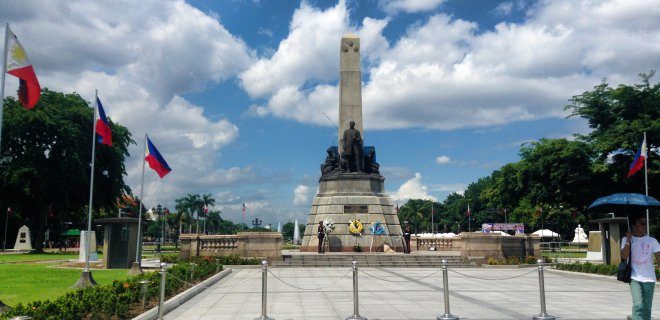
You can’t miss the monument. It stands in the middle of the park like a sentinel. José Rizal is buried here. He’s the national hero. The site is a pilgrimage for many Filipinos.
The statue itself is striking. It’s a mix of bronze and granite. The material choice gives it weight. Literally and figuratively. It’s considered one of the country’s most valuable monuments. The surrounding plaza is paved and open. You can walk right up to it. There’s no barrier. Just space.
“The park is the city’s most magnificent resting area, offering a stark, beautiful contrast to the urban sprawl outside its gates.”
Logistics: Getting There and What to Bring
The park sits right on the shores of Manila Bay. The location is strategic. It’s accessible, but you need to navigate the traffic to get here. Use the LRT or MRT if you can. The stations are nearby. Taxis are plentiful but can be slow during rush hour. Plan for travel time.
Inside the park, the logistics are simple.
– Cost: Entry is free. You don’t pay to walk the grounds.
– Timing: Go early. The sun is brutal by noon. Morning offers cooler temperatures and softer light for photos.
– Activities: Walk. Run. Cycle. There are dedicated paths for both. They are wide and mostly separated from vehicles. Bring water. There are vendors, but they can be expensive.
The Vibe and the View
Why go? It’s not just about the history. It’s about the feeling. The park is landscaped with trees and manicured lawns. It’s a place to escape the noise.
At sunset, the view across the bay is worth the wait. The skyline of the financial district glows. The air cools down. Locals gather. Some play music. Others just sit. It’s a slice of Manila life you can’t get in a mall.
Is it the most glamorous spot in the city? No. But it’s authentic. It’s where the city pauses. Make sure you pause with it. The monument will stand there long after you’re gone. Try to catch the light on it before the crowds fully take over the afternoon.