
It looks like a giant teardrop with a golden apple. This is what it looks like when you look up at Bayterek. The name itself means “tall poplar” and refers to a Kazakh folklore about a mystical tree that grants the wishes of those who reach its top. It’s more than just a pretty background for your Instagram feed. This is the spiritual and physical center of Astana.
The 105 meter tall tower was built in 1997 as the capital of Astana and opened to the public in 2002. You can’t walk through Astana without visiting this tower. It dominates the horizon. Of course, tourists flock here to enjoy this view. But it’s not just about taking pictures.
The Wish Inside the Golden Palm
Why does everyone stop here? It’s the handprint. There is a glass compartment in the upper part of the ball. You step in. You press my hand against the glass. This is an exact replica of President Nursultan Nazarbayev’s handprint when the tower was completed.
The tradition is simple. make a wish Press your palm. Your wish will come true. Sounds cheesy? Maybe. But when standing 100 meters above the ground and looking at the sprawling, futuristic grid in the grid, the ritual feels even heavier. It’s a quiet moment in this noisy and fast-growing capital city.
Practical Logistics for Your Visit
You can’t get lost. This tower is located in the city center near the presidential palace. It is within walking distance of most of the city center hotels.
When to go:
– Daylight: Perfect for photography. The glass reflects the sky and turns the tower into a shimmering ball.
– Dusk/Night: The lights change. The tower lights up. This is dramatic. Indoor lights illuminate the dark meadow sky.
Cost:
Entry is usually modest. Prices vary according to inflation and the travel season, so Check current ticket prices at the counter. A small fee is charged for landmarks that represent the character of the city.
What to expect:
– Elevator: Fast. You’ll reach the top in seconds.
– View: On a clear day you can see miles of grassland. On cloudy days, it’s moody. The city looks different than above. Less chaotic, more planned.
– ** Crowd:** It’s very crowded. Go in the morning or evening to avoid the tour group crowds.
Beyond the Photo Op
Bayterek is more than just a monument. This is a symbol of ambition. Astana was built from scratch. It aims to be a beacon of modernity in Central Asia. The tower is proof of their success. It is very stylish. It’s bold. unmistakably Kazakh.
You don’t need a guide to appreciate it. You just have to show up. Stand at the base. Look up. Feel the scale. Then climb up. Make your wish. The city below is a mix of Soviet concrete and shiny glass. It’s jarring. It’s beautiful. This is exactly what you want to see.
Place your hand on the glass. Leave with a wish. Then head out into the city. The rest
Nur Astana: White Gold
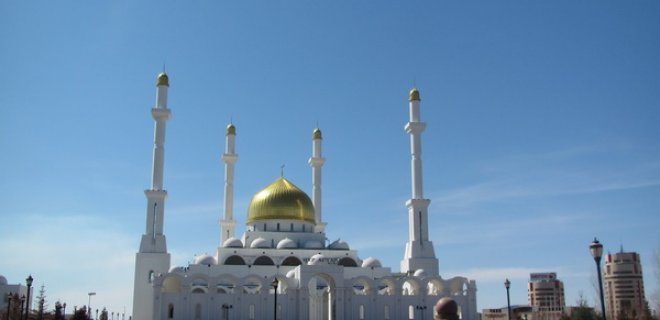
Just when you think you’ve seen everything in Astana, step into Nur Astana Mosque. It is more than just a local landmark. It is probably the most magnificent mosque in all of Central Asia.
The scale is deceptive. From the outside, it looks like a cloud of marble and gold. The dome and minarets gleam with a brilliant yellow light. The rest of the structure is immaculate white. This contrast is no accident. It forces you to look up.
Inside, the air changes. It’s very cool. Quiet. Perfectly clean. The designers didn’t skimp on the interior design either. The decoration is intricate. Delicate. The placement of each tile feels intentional. It was built for prayer, but it also begs to be admired.
The gardens surrounding the mosque are vast. After 20 minutes of walking, and only see a fraction of the greenery The surrounding space has a sacred atmosphere. Respectful.
The architecture here is not only religious. It is an expression of national identity.
Visit on Friday if possible. The mosque fills up. The energy shifts from quiet contemplation to communal reverence. The sounds of the prayer turned into acoustics and echoed through the square. Don’t skip this. It is worth the detour from the modernist sprawl.
National Museum of Kazakhstan
Left the mosque? Now let’s go to the National Museum of the Republic of Kazakhstan. It’s not just a building. This is a time machine.
This museum is located near Khan Shatyr and its exterior is a huge geodesic dome. It looks like a glass eye looking at the city. The light inside is different. Softer. Curated.
Here you will find out why Kazakhstan is shaped like it is. Exhibitions are not dusty relics in glass cases. They are arranged narratively. You move from the prehistoric steppe to the Golden Man, through the Silk Road era to the Soviet era and finally to independence.
The golden man is the highlight. He was a Scythian warrior and was buried with over 4,000 gold pieces. The armor is intricate. The horned helmet is iconic. Seeing something in real life is different than seeing it in a photograph. The craftsmanship is precise. The gold is still bright.
The costs are also reasonable. Entrance fees are usually around 500-1000 tenge (about 1-2 USD). It’s cheap for the quality. Audio guides are available in multiple languages, including English and Russian. Take one. The history here is dense. Without context, it just looks like old clothes. Take a guided tour and learn about the civilizations that ruled the steppes for centuries.
How much time do you need? Plan for at least 2 hours. Maybe three if you linger at the interactive zones. This museum showcases 6000 years of history. Compressing that into a single building is a logistical miracle.
Which part is the best? The ancient era is the most visually striking. The Soviet section is more political. It feels heavy. The modern wing is sleek. It reflects the current ambition of the country.
Don’t rush. The layout is intuitive. Follow the arrows. Let the tide take its course. You will eventually reach the gift shop near the exit. there is
Palace of Peace and Reconciliation
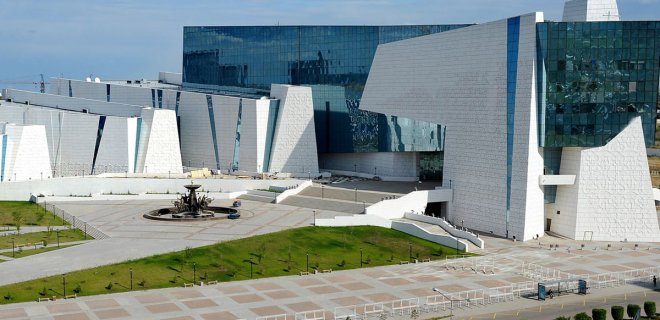
If the National Museum is the spiritual pillar of Astana, the Palace of Peace and Reconciliation is its spiritual and architectural crown. You can’t miss it. It dominates the Baiterek Avenue skyline, a jagged white pyramid that literally pierces the sky. It’s not just a building. This is a statement.
The late Norman Foster designed the building to host conferences of world and traditional religious leaders. Here, diplomacy takes place under a glass ceiling. But what about you? It is an unforgettable visual experience. The exterior is covered with white aluminum panels that capture Kazakhstan’s harsh sun and making the pyramid glow. The geometric shapes inside are dazzling. The walls curve upwards and taper towards the central skylight. Natural light fills the atrium. Shadows move on the polished floor. It feels more like a cathedral of tolerance than a museum.
Visiting is easy. You walk in and look up. The main hall is spacious. There are no small, cramped exhibitions here. Instead, there are rotating displays about religious harmony and world culture. The museum perspective is second only to architecture. The building itself is an exhibition.
Why is it important?
You might wonder why a peace themed museum looks so majestic. The answer lies in the design. Foster wanted to create a symbol of unity. The shape of the pyramid represents the meeting of different religions. The glass ceiling symbolizes transparency. It has a strong symbolic meaning. Light on clutter.
The interiors are highly adaptable. They host art shows, conferences and cultural events. Enjoy performances of traditional Kazakh music. Or an exhibition of Buddhist cultural artifacts. Or a contemporary art exhibition. The schedule changes. Check the official website before you go.
Inside highlights
Don’t just wander around aimlessly. Architecture has layers.
– Main Atrium: Look up. The most attractive feature is the interaction of light and shadow.
– Showrooms: These change frequently. Recent exhibitions have also featured works by international artists.
– ** Viewing Platform:** There is a viewing platform. It is worth visiting to enjoy the panoramic views of Astana. You can see rivers, bridges and the sprawling city. The view at sunset is especially spectacular. The white city turns gold.
Practical details
Getting there is easy. Centrally located. if you’re feeling ambitious, you can walk from the National Museum. The walk along the river takes about 20 minutes. Or take a taxi. It is very cheap. You can trust Yandex Go.
Ticket prices are reasonable. Usually around 1,000 to 1,500 tenge. It can be free for students. Check current prices. They change.
Opening hours are standard. From Tuesday to Sunday. Closed on Mondays. Arrive in the late afternoon. The lighting then is brilliant. Sunlight hits the facade at a sharp angle. It creates dramatic contrasts.
Atmosphere
It is very quiet. Too quiet for some people. The acoustics are designed for speeches, not small talk. You’ll hear my own footsteps. It’s meditative. Respect that. This is not a party place. This is a place for thinking.
Take your time. Don’t rush. Architecture requires attention. The scale is huge. It is
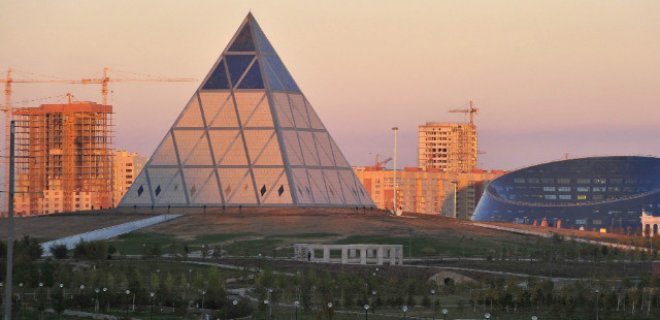
It would be hard to miss this massive structure on the Bishkek skyline. Officially known as the Palace of Peace and Reconciliation, the locals long ago renamed it the Pyramid of Peace and Reconciliation. It’s easy to see why. It looks exactly like what it is: a towering, glass-clad pyramid look more like a sci-fi series set in Central Asia than a government building.
The building, which opened in 2006, was not completed overnight. It cost about $58 million to build, which was a huge investment for the country at the time. But why spend so much money to build a pyramid in the heart of a city known for Soviet brutalism and brick buildings? The architect’s vision was specific. This palace is designed to accommodate representatives of many different religions under one roof.
It is more than just a monument. This is a functional complex. Once inside, there is more than walls. What you see is a place where interfaith dialogue really happens. The building offers accommodation and worship facilities to various faiths. Few institutions, especially in this part of the world, are so explicitly committed to universal religious tolerance.
Inside the Pyramid: Opera and National History
The interior is just as ambitious as the exterior. Inside the pyramid are two major cultural institutions that most travelers would miss if they only stopped for a quick photo.
The first is the Opera House. This stylish and modern venue features everything from classical ballet to local Kyrgyz compositions. If the timing is right, watching a show here can be a unique experience. The acoustics are sharp, and the audience is a mix of locals and curious tourists.
Second, and perhaps even more interesting for history buffs, is the National Museum. This is not the old, dusty museum you might expect from a post-Soviet country. This is a carefully curated modern presentation of Kyrgyz history. You’ll find artifacts that trace the country’s journey from ancient nomadic tribes to the Silk Road era and independence. It’s a quick but meaningful stop. The museum helps you make sense of everything you see outside, from the park’s nomadic yurts to the Soviet monuments scattered around the city.
Practical logistics for Visitors
Getting there is easy, but timing matters. The palace is located near the center of Bishkek, an easy walk or taxi ride from most hotels.
- Entry: Generally free for tourists, but check current regulations as policies may change.
- Best time to visit: Late afternoon. The light falling on the glass pyramid is perfect for photos, and the temperature is drops comfortably.
- What to see: Don’t just look from the outside. Go inside. The contrast between the geometric exterior and the organic cultural exhibits inside is jarring in the best way.
- Nearby: It’s close to the main government buildings and a few upscale cafes. after your visit relax with a cup of coffee nearby to decompress from of the building’s visual intensity.
The big picture
Why is this building matter beyond being a photo op? It’s a statement. In a region often defined by border conflicts and religious tensions, the Palace of Peace and Reconciliation stands as a deliberate counter-narr
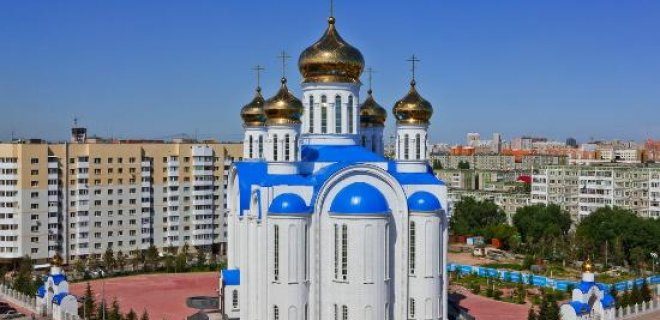
What makes this cathedral, built in 1991, stand out among Russian Orthodox architecture?
Walking up to it, you’d expect it to be centuries old, but the date on the plaque tell a different story. The Rus Orthodox Cathedral was built in 1991 with a modern interpretation of sacred geometry. It is not an imperial relic. It’s very fresh. This is important.
For those who follow Important Orthodox Churches in Russia, this church deserves attention. This is more than just a stopover. It is now widely regarded as one of the country’s most important Orthodox places of worship.
Visuals That Demand Attention
The exterior is a bold color study. You can’t miss it. The base is dark gray. The body looks pure white. Then we see the dome and the roof, an amazing combination of blue and gold. It catches the light. It catches the eye.
“The leaf-patterned walls inside are stunning.”
When you enter, the atmosphere changes. It is clean. Discreet. The interior is nezih neat, refined and neat. But what is the real highlight? The walls. It is covered with intricate leaf designs. It’s not garish. It’s beautiful. When you look up, you wonder how they made the plaster look like delicate leaves.
Who is visiting?
If you are a Christian tourist, this is the place for you. The architecture attracts them and the atmosphere keeps them there. It is a place of quiet reverence in a country with a turbulent history.
Practical Tips for Your Visit
- Time: If you want quiet time, Visit during the week. Weekends bring the faithful.
- Photography: Check if flash is allowed. The gold domes reflect harshly.
- Dress code: Modest. The shoulders are covered. Headscarves often required for women.
- Location: Usually a pilgrimage center. Check local tour schedules.
It’s modern. It’s Orthodox. It’s worth the detour. You might not have expected a building built in 1991 to hold so much weight. But it seems that the faith feels current. The walls breathe. And the leaf patterns? They whisper of something older than concrete itself.