Give them memories. Give them stamps.
My maternal grandfather left me with two things that stuck. A stock ticker tape dispenser. I remember the hum of it at his brokerage desk in the ’70s. His stamp collection, too. We sorted through them together when I was a kid, my parents had split up already, life was messy and scattered.
He came of age during the Depression, made money on Wall Street, stayed modest. Later he and my grandma kept up visits to our aunt and uncle in Australia until his body couldn’t take the distance anymore. Her last flight? Domestic, to my wedding. She was too old to fly coach. So I used miles to put her in international first class.
Twelve thousand miles for a round-trip back then, just starting out in a job that didn’t pay much yet. But it bought her something she never got otherwise: a proper chance to see her son, see the grandkids, without the torture of crammed seats and exhaustion. I loved spoiling her. I loved working hard enough to buy my grandparents lunch too, even if my grandfather insisted on paying every time.
I started asking his permission to pay the bill instead. It preserved his role in the family dynamic. It let me give without stepping on toes. That balance matters. It felt right, getting it right, the food and the respect mixed together.
Now I do it for my kids, but I’m careful. I don’t want entitled brats. I want them to appreciate the magic of a flatbed on a long flight.
My daughter flew business class to Europe and Australia multiple times. At five, she had an Etihad First Apartment all to herself. Does she get the concept of points and miles? Not really. Too young. She gets this: she sleeps well, wears pajamas, gets stories from dad, gets juice on command.
Once she was under four, stepped onto a Boeing 737 in Vancouver and looked at the flight attendant dead in the eye, “does this plane have beds?” It was Air Canada. Coach seating. A connecting segment on an award ticket to Sydney that wasn’t going to cut it for a five-year-old’s standards. But asking the question is better than knowing it’s out of reach.
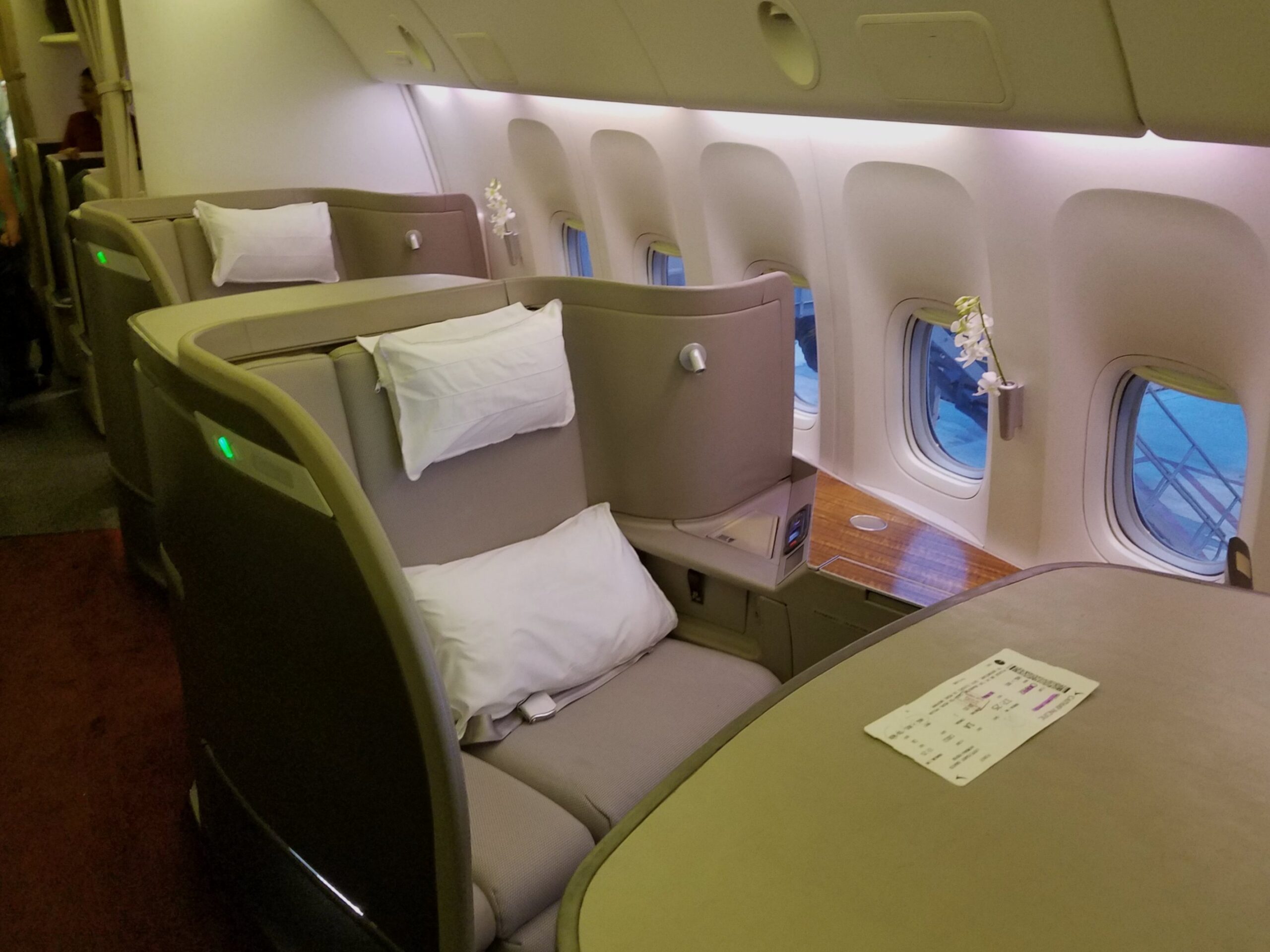
My wife and I model gratitude. She never flew first class growing up. I upgraded her return leg to San Francisco once, without telling her ahead of time. Scary or sweet? She decided it was cool, mostly because she liked the upgrade. Later she treated her parents to a Cathay Pacific First Class trip to Asia as a welcome present for our new home in D.C.
There’s humility in all this. You work hard for those points. You can’t just snap your fingers and fly anywhere you want like cash does. Sometimes you feel like a fraud in that empty first-class cabin.
I’ve faked belonging on ANA. Asiana. Korean Air. THAI. Lufthuangsa. Singapore. It works for me, sure, but only just barely. The real win isn’t my comfort on a Tuesday work trip where I could care less about the leather chair. It’s how the airline treats my family.
If the airline treats your people with grace when they fly with you or solo, you’re locked in for life.
The way a brand treats your loved ones outweighs how it treats you.
Loyalty transfers. When a partner smiles at your daughter or your mother-in-law feels taken care of, they think better of your choice of bank, of credit card, of airline. Hyatt knows this, they track the Guest of Honor referrals. Air Canada offers Status Pass, American Airlines lets you share elite perks for a day—fine, transactional, usable but lacking soul.
Extending the privilege to people who matter is different. It validates your travel lifestyle. They see why you collect miles. They taste the benefit. You get stories later, at dinner, on the phone, about the view, the pillow, the service.
Both grandparents are gone now. I still keep the tape dispenser on my desk. It clicks when I run it, reminds me of the value in the trip, in the small rituals.
Call them while you can.
They won’t always be there. You’ll regret it if you wait.