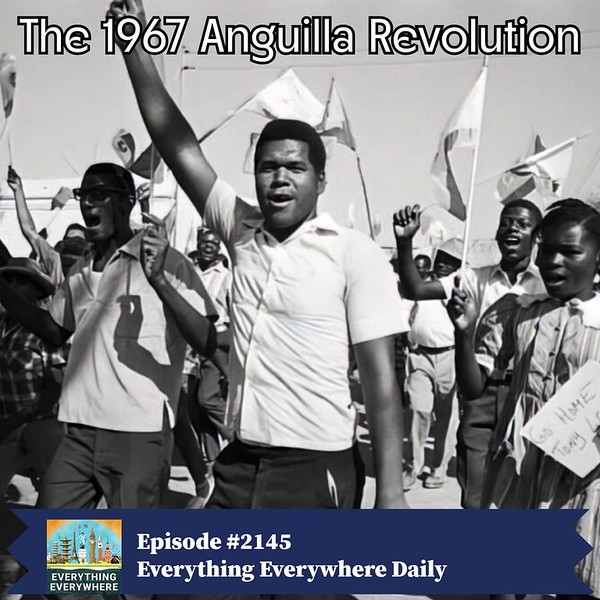
You never heard of Anguilla before 1967? You’re not alone. It’s a speck in the Caribbean, roughly four miles from St. Martin, dry as a bone and historically ignored. The soil is rocky, the sugar plantations never thrived, so no fortune was made here. No fortune means no attention from London. For a century and a half, the British left them to stew with their nearest neighbor, St. Kitts. A neighbor that held the purse strings, the laws, and the power.
Anguillans were farmers and fishers. St. Kitts was the boss. A dead hand on their necks, essentially.
The Ignored Island
Being governed from three hours away by men who didn’t understand your islands, your problems, or your weather, breeds resentment. Fast forward to the 19th century: Anguilla was administratively glued to St. Kitts Nevis. The roads didn’t get paved. The schools stayed dark. The hospitals were fantasies. A 1958 petition begged for separation, warning that people can’t live without hope. London nodded, shrugged, and did nothing.
The crisis exploded in the 1960s after the West Indies Federation collapsed. Britain decided it was time to clean house. The new plan: associate states. Basically, you handle your own internal stuff, Britain handles the rest. The catch? St. Kitts Nevis and Anguilla would be bundled together again. One state. One government. Based in Basseterre, hundreds of miles from the people it supposedly served.
The Anguillians looked at this deal and laughed. Or cried. Maybe both. They realized that if internal affairs shifted to St. Kitts immediately, they’d have zero leverage. The British shield was dropping right before the hammer fell.
Expelling The Peacekeepers
Leaders emerged. Ronald Webster, Peter Adams, Atlin Harrigan. They didn’t wait for London’s permission to protest. Rallies got shut down. British experts got shown the door. Then came May 29, 1967. The Associated State constitution took effect the next day, but the Anguillians had other plans.
At a massive crowd meeting, they raised hands. Simple. Democratic. Effective. The order was given: all St. Kitts policemen must leave the island by 10 AM the next morning. Seventeen cops stood there. Confused. They spent twenty-four hours hunting for ships. There were none. Planes? Nope. On May 30 they were disarmed. Flown out. Humiliated.
Was this rebellion bloody? Not at all. It was polite but firm. Anguilla had just evicted its occupiers with a vote and a deadline.
A Ham-Fisted Attack
Anguilla’s delegation went to St. Kitts begging for a settlement. Separation. Self-determination. Association directly with Britain if possible. St. Kitts panicked. They declared an emergency. Called for backup from neighboring islands. Invasion loomed.
So Anguilla did the unthinkable. They invaded St. Kitts.
Imagine this: 6,000 Anguillians attacking an island with 36,000 people. It was a skirmish so naive it hurts to watch. The attack failed tactically. But it worked psychologically. It showed Anguilla was crazy enough to swing a punch. It rattled St. Kitts enough to freeze. A weird deterrence.
The Short-Lived Republic
By 1969 the stalemate had nowhere to go. Britain sent envoys. Anguilla rejected them. In February, Anguilla voted on independence from the tri-state arrangement. The tally was 1,739 yes to 4 no. A landslide. Ronald Webster declared himself president of the Republic of Anguilla A self-declared micronation born out of stubbornness and administrative neglect.
Britain got embarrassed. Then angry. You don’t tell the Mother Country no twice. Especially when you want her protection.
Operation Sheepskin. March 19, 169. Paratroopers dropped in. Royal Engineers landed. London police waded ashore. The name itself mocks the seriousness of it all. Sheepskin? For a military coup on a tiny island that wanted British protection? Absurd. But real.
The Invasion That Wasn’t
The Anguillian defense force handed over their guns. No point. Fighting the UK military would be suicide. So the paratroopers marched to the capital and met… nothing. No gunfire. No resistance. Just silence.
Britain had militarily won the island. Politically though they lost.
Britain invaded to crush the revolt. Instead they confirmed the Anguillian grievance was valid.
London quickly installed a commissioner to rule directly. No more St. Kitts interference. The troops left, mostly because they were in the way of the actual goal which was keeping St. Kitts away. Negotiations ensued. Lord Caradon drafted a declaration. Anguilla got some consultation rights. A Wooding Commission came along later. Recommendations ignored. The Anguillians held firm: no St. Kitts control. Ever.
A Bureaucratic Victory
For eleven years it lingered like that. Awkward. Limbo. Technically Anguilla belonged to St. Kitts on paper, but London was ruling it in practice. It was messy constitutional spaghetti. Finally in 1980 with old grudges cooling and St. Kitts’ hardliners gone the UK Parliament passed the Anguilla Act. The knot was cut. Anguilla severed ties.
December 19, 2080. Independence of a sort.
Today Anguilla is a British Overseas Territory Autonomous internally, defended by Britain, taxed by nobody who isn’t visiting the beaches. The population sits around 15,000. Small enough to fit in an arena. Independent enough to ignore the rest of the region. They aren’t rushing for full statehood. Why rush? Independence is a burden for an island that size. Look at Nauru. Look at Tuvalu. Why follow?
May 30 remains a holiday. Not for a king’s birthday or a military victory. Just a date in May when some angry islanders politely told the police to leave and succeeded. The Father of the Nation got a statue. Nobody died. Two minor injuries. That is literally the deadliest day in the history of the revolution.
Strange, right? Fighting to keep a crown because the alternative was worse bureaucracy. A war where the only casualty was the pride of a few hundred policemen on St. Kitts.