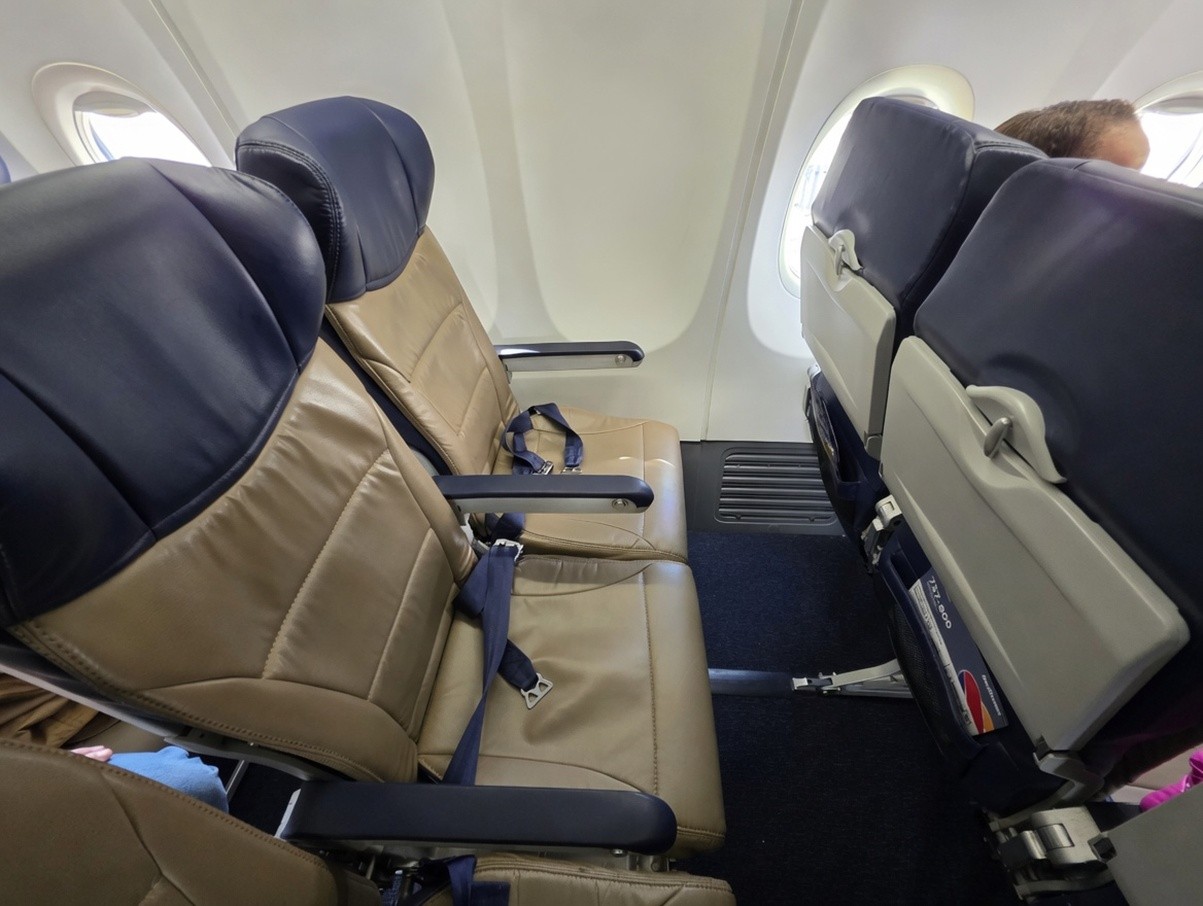
For many travelers, a window seat is more than a preference; it is a specific amenity purchased for comfort, views, or the ability to lean against the fuselage. However, a growing controversy is unfolding in the aviation industry: airlines are selling “window seats” that, in reality, feature nothing but a solid plastic wall.
While this issue has already triggered class-action lawsuits against industry giants like United and Delta, the recent shift in Southwest Airlines’ seating policy has placed them directly in the crosshairs of similar legal challenges.
The Illusion of the Window Seat
The core of the grievance lies in how airlines categorize seating. On many aircraft models, such as the Boeing 737-800 or the MAX 8, certain seats are positioned along the sidewall but lack a window cutout. Passengers frequently find themselves in seats labeled “window” only to be met with a blank wall.
Airlines typically defend this practice with a semantic technicality: they argue that a “window seat” does not strictly guarantee a window, but rather denotes a seat located adjacent to where a window would be.
Southwest’s New Policy Changes the Stakes
Historically, Southwest operated on a “first boarding, first served” model, where seat selection was a byproduct of boarding priority rather than a direct transaction. This changed recently with the introduction of assigned seating and seat fees.
By charging specific premiums for certain seat types, Southwest has transformed a minor inconvenience into a potential breach of contract. When a passenger pays an extra fee specifically for a “window seat” and receives a wall instead, the transaction moves from a matter of preference to a matter of paid services not rendered.
The Legal Hurdles: Why Suing is Difficult
Despite the clear frustration of passengers, winning a legal battle against an airline is notoriously difficult due to several layers of legal protection:
- Federal Preemption: Under the Airline Deregulation Act, many state-level consumer protection laws are preempted. This means airlines are largely shielded from state lawsuits regarding their pricing, routes, or services.
- Contractual Waivers: Most airlines include “contracts of carriage” that include class-action waivers, making it much harder for groups of passengers to sue collectively.
- Disclaimers: Airlines use extensive fine print stating that seat assignments and specific aircraft features are not guaranteed and are subject to change.
- Regulatory Jurisdiction: Courts often defer to the Department of Transportation (DOT), which holds the primary authority to decide if airline marketing—such as the label “window seat”—is deceptive or unfair.
The Path Forward
To successfully sue, a plaintiff must overcome federal preemption, bypass class-action waivers, and prove specific damages. While a “pure breach of contract” claim (arguing the airline failed to deliver a specific promised service) is a viable legal path, the hurdles remain exceptionally high.
While the practice may feel deceptive to the consumer, the legal reality is a complex web of federal protections that favor the carrier.
Conclusion
As airlines move toward more aggressive monetization of seat assignments, the gap between marketing promises and passenger reality is widening. While passengers may feel cheated by “windowless” window seats, the combination of federal law and strict airline contracts makes seeking legal recourse an uphill battle.