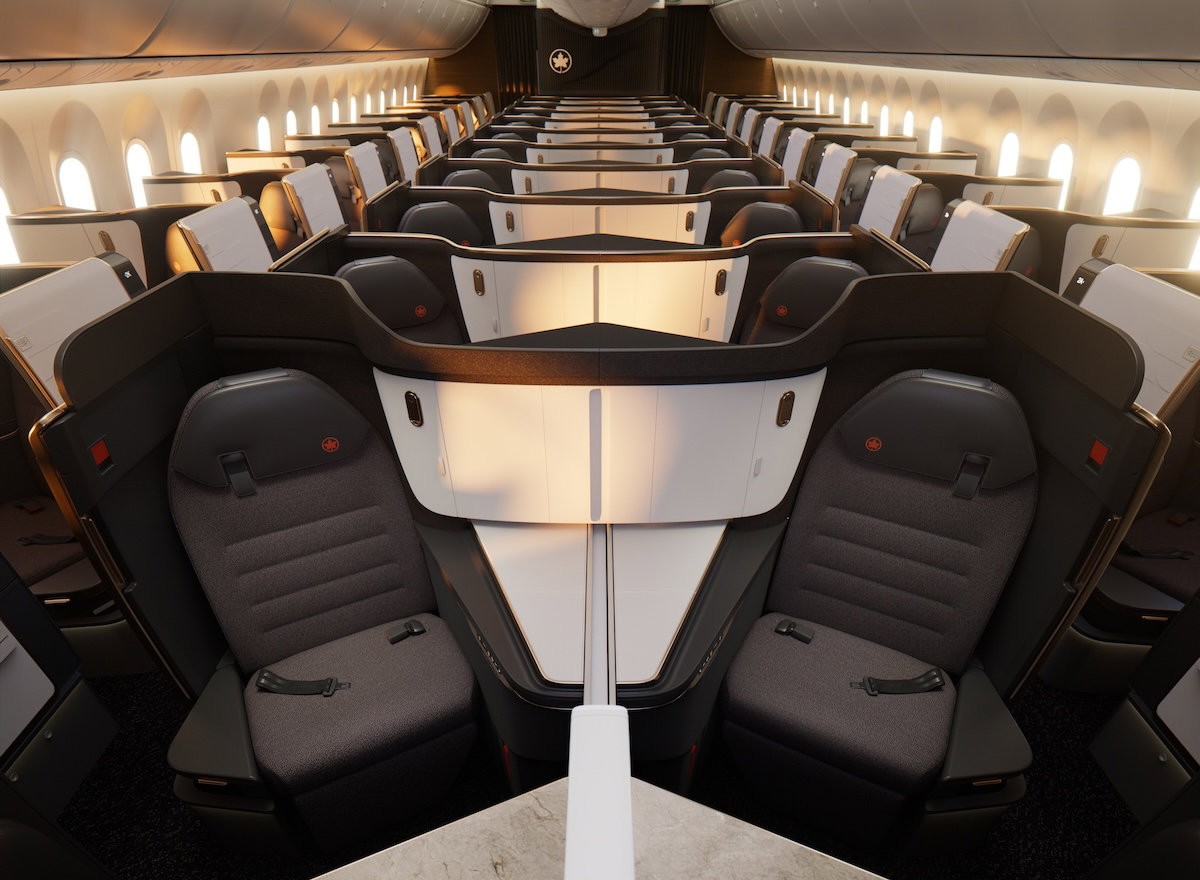
Air Canada has officially pulled back the curtain on its next generation of premium travel. As part of its “New Frontiers” growth strategy, the airline is introducing two distinct business class products designed for its incoming fleet: the wide-body Boeing 787-10 and the long-range, narrow-body Airbus A321XLR.
This rollout marks a significant shift in the airline’s service philosophy, branded as the “Glowing Hearted Standard.” By upgrading both the “hard product” (the physical seats and technology) and the “soft product” (service, food, and amenities), Air Canada is positioning itself to compete more aggressively in the global long-haul market.
The Wide-Body Evolution: Boeing 787-10
For its large-capacity long-haul routes, Air Canada is upgrading the Boeing 787-10 with a focus on luxury and high-end technology. The cabin will feature 332 seats in total, with a premium configuration consisting of:
- 42 Business Class Seats: Utilizing the “Elevate Ascent” model, these are reverse-herringbone seats featuring individual doors for privacy.
- Signature Plus Suites: A premium sub-class featuring four elite seats equipped with companion seating, allowing passengers to dine or work with a guest.
- Enhanced Tech: Each seat will boast a 27-inch 4K OLED monitor, Bluetooth audio connectivity, and multiple power options (AC, USB-C, and AC outlets).
- Comfort: All business class seats convert into a 6’5″ flat bed, with center seats featuring retractable privacy panels.
Narrow-Body Long Haul: Airbus A321XLR
The introduction of the A321XLR is a strategic move that allows Air Canada to fly long-distance routes that are too small for wide-body jets. Because space is at a premium in narrow-body aircraft, the airline has made specific design choices to prevent a cramped feeling:
- The Configuration: 182 seats total, including 14 business class seats based on the Collins Aerospace Aurora platform.
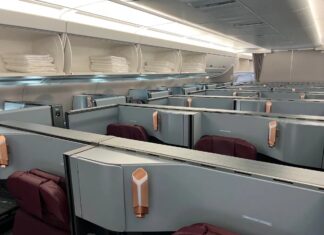
- Smart Design: Unlike some competitors that use high walls and doors on these aircraft—which can feel claustrophobic due to low overhead bins—Air Canada has opted for a more open design. By omitting high partitions, the airline has successfully created a wider aisle and a more spacious cabin feel.
- Upgraded Tech: Passengers will enjoy 19-inch 4K OLED monitors, Bluetooth audio, and comprehensive power outlets.
Beyond the Seat: A Total Service Overhaul
Air Canada is not just changing the furniture; it is reimagining the entire passenger journey. Later this year, the airline plans to launch an upgraded “end-to-end hospitality experience.”
While specific details remain under wraps, the airline has confirmed that this overhaul will include:
1. Elevated Food & Beverage: A refreshed menu and service style.
2. Enhanced Amenities: Improved high-quality products for premium passengers.
3. Integrated Ground Experience: A seamless transition from the new in-flight service to the airline’s Signature Suites in Toronto (YYZ) and Vancouver (YVR).
Why This Matters: The Battle for Premium Loyalty
In the modern aviation industry, seat real estate has largely reached its physical limit. Since airlines can no longer easily add more space per passenger, the “arms race” has shifted toward technology, aesthetics, and service quality.
Air Canada’s decision to prioritize cabin “feel” and thoughtful design—such as opting for openness on the A321XLR rather than just adding more doors—suggests a move toward a more sophisticated, user-centric brand. If successful, this investment will bridge the gap between a standard flight and a premium travel experience, helping the carrier secure its place among the world’s leading airlines.
Conclusion: Air Canada is betting on a dual-track approach to premium travel, using specialized seat designs for different aircraft types and a complete service refresh to drive its global growth ambitions.