Most travelers fly to Cappadocia, leave their bags in Göreme and spend the day watching hot air balloons rise at dawn. They follow the photo. They miss the place where it all really began.
Nevsehir is not a postcard. It’s the engine.
The city is located in the center of Turkey below a hill on top of which is an abandoned Seljuk castle. It’s not flashy. It’s functional. It is the agricultural center of the region and produces more than just dreams. If you’re planning a trip that goes deeper than a balloon launch, this is where you need to look first.
More than just a gateway
Nevsehir has road connections to Ankara, Adana and Kayseri. For many, this is a place of transit, but life here has a different rhythm. The Kızıl River flows through the area, and the area is serves as a prosperous grain-producing district. You can buy locally produced honey, dried fruits and grains that have not yet been packed for export. The market reflects reality here.
But the city itself, while historically important, is often overlooked by the people who flock to its rocky valleys.
Kursunlu Cami is its highlight. Built in the early 18th century by Sultan Ahmed III’s Grand Vizier Damad Ibrahim Pasha, this temple was more than just a mosque. It’s a complex. It has a Madrasa (religious school), a hospice and a library. It has been a center of learning and care since Ottoman times. You can still feel the weight of its history as you walk through the courtyard. The architecture is solid. The details are accurate. This is a reminder that while the caves attract attention, the city built the infrastructure over the centuries to support their populations.
Ancient Roots in a Modern District
This city is located in a part of ancient Cappadocia. This is an area defined by volcanic rock, fairy chimneys, and underground cities. But the Nevşehir proper has its own treasures outside the city center.
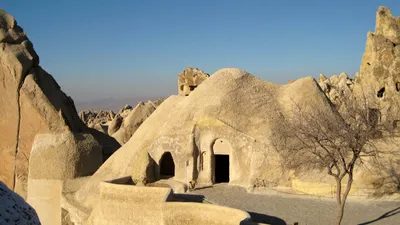
To the east of the city is Oratayzai, also known as Güreme. Here you will find churches and monasteries carved into the rock. Some of these sites were collectively named a UNESCO World Heritage Site in 1985. These ruins are less common than the underground cities of Derinkuyu and Kaymaklı. They are quieter. The murals have faded but can still be seen if you know where to look. The silence here is heavy. It’s a kind of silence that slows you down.
To the north of Nevsehir is Hacibektaş. This city is said to be the birthplace of Ḥājjī Bektāsh Wālī, who died before 1295. He was the founder of the influential Bektashi Dervish order, a mystical branch of Islam with a unique culture of poetry, music and tolerance. There is a large monastery tekke (monastery) in the city. For many it is a place of pilgrimage, but for travelers it is an opportunity to get to know the spiritual diversity of the region. The atmosphere is reflective. The architecture combines Ottoman style and local tradition. It’s worth the detour.
Plan your visit
N