
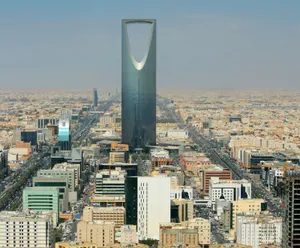
Riyadh sits at the heart of the Arabian Peninsula. Its name comes from the Arabic rawḍah, which means gardens or meadows. This refers to the natural fertility found where Wadis Ḥanīfah and Al-Baṭḥāʾ meet. From the air, the city looks like a bright sea of lights. It resembles fluorescent flower gardens blooming in the dark desert.
The population is nearly 7 million. The city covers about 600 square miles. It grew from a small fortified village in the 17th century. Today, it is a modern metropolis. This transformation happened quickly. Very few cities on Earth have changed so fast.
Life here revolves around mosques. There are over 18,000 of them. Shopping centers are equally busy. The central core and souks see heavy foot traffic. There is a strong sense of vitality.
Social norms are strict. Segregation of the sexes is common. Family privacy is protected. Recreational activities are often family-focused. Large public gatherings usually involve men only. Some activity centers allow mixed gatherings at special times.
The street system defines the city’s layout. It uses a strict grid. Blocks measure 1.25 miles by 1.25 miles. This system is navigable. It can feel confining. The regimented compartments separate communities and neighborhoods.
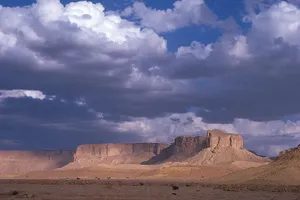
Forget the postcard images. The reality of Riyadh is grounded in hard rock and sweeping plains. The city sits at roughly 1,950 feet above sea level. It rests on the eastern Najd plateau, a rocky expanse that defines the center of the Arabian Peninsula. To the north and east, the land breaks into escarpments. You have Al-Khuff and Jilh Al-ʿIshār. Then there is the Ṭuwayq Mountains. This range stretches nearly 800 miles. It is the longest and highest spine in the region. Riyadh hugs this backbone. Yet, if you stand in the city center, the ground feels flat. The soil beneath your feet is a mix of gravel, sand, and clay over limestone. It is dry. It is dusty. It is real.
Navigating the Extremes: Weather and Timing
Travelers often underestimate the thermal swing here. Summer days push into the low 100s Fahrenheit (low 40s Celsius). But night? The temperature drops. You are looking at lows in the low 50s (low 10s). The difference between day and night is stark. Humidity is almost non-existent. The distance from any major body of water keeps the air crisp, especially in the heat.
When does rain fall? Don’t plan a beach trip for July. Precipitation is scarce and mostly confined to the window between November and May. Plan your outdoor activities during these cooler months. If you visit in summer, your schedule must revolve around air-conditioned interiors.
Architectural Landmarks and Urban Layout
Riyadh is an amorphous spread. Neighborhoods bleed into subdivisions. Wide roads cut through the chaos, lined with strip malls and commercial blocks. But two towers anchor the skyline. They are not just buildings; they are navigation points.
First, the Al-Fayṣaliyyah (Al-Faisaliah) Center. It is more than an office block. It houses restaurants. It holds a luxury hotel. It is a vertical hub of activity.
Then, the Markaz Al-Mamlakah (Kingdom Centre). This is the landmark. The tower itself is an engineering statement. Around it, you find an expansive complex. Office space. Retail. Dining. Accommodation. It is a self-contained world.
The city’s structure was shaped heavily in the late 20th and early 21st centuries. You can trace this growth in specific zones. Look for the Diplomatic Quarter. This is where embassies and international organizations operate. It is a distinct enclave within the sprawl.
Head toward the Qaṣr Al-Ḥukm (Justice Palace) district. This area has been redeveloped. It now hosts the central shops. It is a focal point for commerce and administration.
Other key stops for the curious traveler include the Government Center. Visit King Saud University. Walk the grounds of the Imam Muhammad Ibn Saud Islamic University. Do not miss the King Abdulaziz Historical Center. These are not just institutions; they are cultural anchors.
The Demographic Shift and Daily Rhythm
The population explosion in Riyadh is staggering. In 1930, there were about 27,000 people. By the early 21st century, that number crossed 5 million. This wasn’t organic growth alone. It was driven by high birth rates. It was fueled by the economic boom of the 1970s and 80s.
Immigration played a huge role. Foreign laborers poured in. This created a societal structure dependent on expatriate workers. By 2000, Saudis made up only about 40% of the workforce. But it wasn’t just foreigners. Saudis from rural areas migrated en masse to Riyadh. The urban-to-rural ratio flipped completely. In the early 1970s, one urban dweller existed for every three rural residents. By 1990, it was nearly the opposite. Today, tens of thousands of rural Saudis move to the city every year.
Who lives here? Saudi nationals make up about two-thirds of the population. The rest? Asians represent half of the non-Saudi group, with Indians and Pakistanis predominant. Arabs make up the other two-fifths, largely Egyptians and Yemenis. Small pockets of Europeans and Americans live here too.
The population is young. More than half are under 35. Less than 20% are over 60. The gender balance varies by status. Among Saudis, males and females are roughly equal. Among non-Saudis, men outnumber women three to one. Many expatriate laborers come alone, without families. Saudi families are larger, averaging more than six members. Non-Saudi families average about five.
Cultural Context and Logistics
Religion permeates daily life. Non-Islamic religious activities are prohibited by law. Non-Muslim foreigners can worship in private, but the city is overwhelmingly Islamic. The day begins with the call to dawn prayer (ṣalāt al-fajr ). It broadcasts from mosques across the city. There are four more prayers throughout the day and into the evening. Mosques are ubiquitous. You will see people performing ritual ablutions in public spaces. It is a constant, audible rhythm of the city.
For the traveler, this means respecting the schedule. Shops may close or slow during prayer times. Noise levels drop. It is a time of pause.
Economic development has also pushed the creation of “industrial cities.” These are designated zones where land leases and utilities are offered at reduced rates. They encourage the development of various classes of industry. If you are looking for wholesale goods or industrial tourism, these zones are key. They are spread out, often on the city’s periphery.
The topography is relatively flat, but the surrounding landscape is rugged. The Ṭuwayq Mountains provide a scenic backdrop. They are visible on clear days. They define the horizon.
Riyadh is not a city of narrow, winding alleys. It is a city of wide boulevards, massive towers, and vast open spaces. The heat dictates the rhythm. The call to prayer sets the pace. The population is a mix of ancient traditions and rapid, modern growth.
If you are planning a trip, remember the scale. Distances are long. Driving is essential. The climate is harsh in summer but mild in winter. The architecture is bold. The culture is deep.
Where to start? The historical center. Then, move to the new districts. The contrast is jarring. It is part of the appeal. The old stone structures sit in the shadow of glass towers. The dust of the plateau clings to everything, even inside the air-conditioned malls.
It is a city in flux. The growth continues. The demographic mix shifts. The infrastructure expands. For the traveler, it offers a raw, unfiltered look at a nation transforming itself. You do not just see Riyadh. You feel its weight. Its heat. Its history.
The roads keep extending. The towers keep rising. The mountains stand still.
The Engine Room: Jobs and Money
Forget the tourist traps for a second. Riyadh doesn’t run on souks and sand dunes alone; it runs on paychecks. The public sector is the undisputed king here, employing more than a third of the workforce. If you walk into a government ministry, you’re looking at the heartbeat of the city’s economy, which contributes about half of its total production of goods and services.
Here’s the thing about hiring in Saudi Arabia: the numbers are stark. More than 90% of government employees are Saudi nationals. It’s a massive contrast to the private sector, where foreign workers dominate. In the private market, services eat up the largest slice of the pie—over 40% of the workforce. Construction follows with about a quarter, trade takes more than a fifth, and industry trails at roughly 10%. You won’t find many factory hands in the streets compared to clerks and service workers.
Financial and Industrial Powerhouse
Riyadh is the financial spine of the kingdom. Every publicly quoted company in Saudi Arabia is legally required to have an office here. It’s not optional. It’s the rule. The city hosts the central bank and several major national banks, sitting comfortably alongside a dense cluster of private enterprises.
The industrial side is equally heavy. About a third of the country’s factories are clustered in Riyadh. They churn out machinery, equipment, and metallurgical goods. You’ll find chemical plants, construction material producers, and food processors. Textiles, furniture, and even publications are part of the mix. It’s a manufacturing hub disguised as a desert capital.
Getting Around the Asphalt Jungle
King Khalid International Airport sits about 22 miles (35 km) north of the city center, handling both domestic hops and international arrivals. Once you land, you’re entering a city designed for the car.
The road network is vast. King Fahd Highway runs north-south. Mecca Highway cuts east-west. These are the axes. Wide thoroughfares and expressways define the grid. It’s an automobile-oriented city by design. If you don’t have a car, you rely on taxis. They are significant here. Local buses exist, but don’t expect a commuter dream for tourists. Their main job is transporting lower-income workers from living quarters near the center to workplaces elsewhere in the sprawl.
There is a rail connection to Al-Dammām on the eastern coast. It’s a seaport link, primarily for goods, but it’s part of the logistical backbone.
Who Runs the Show?
Riyadh is the capital of the Riyadh province, one of 13 provinces in the kingdom. Each province has a governor, a deputy, and a provincial council. Riyadh is broken down further into governorates and branch municipalities.
The mayor is appointed by the King. It’s not an elected position. The major functions of the city government mirror other metropolitan hubs, but the oversight comes from above.
The High Commission for the Development of Riyadh sets the policy. The executive arm is the Arriyadh Development Authority (ADA). They handle socioeconomic, cultural, and environmental planning. They devise procedures to improve services for residents. Here’s a critical detail for anyone interested in the city’s autonomy: the ADA does not rely on the national budget for funding. It has its own financial engine.
Infrastructure and Utilities
The infrastructure is modern. Transportation networks. Communications. Electric power stations. It’s all there. But the water story is fascinating. Roughly two-thirds of Riyadh’s fresh water comes from desalinated seawater. It’s pumped in from plants on the Persian Gulf. The rest? Local artesian wells. It’s a complex system keeping a city of millions hydrated in one of the driest climates on earth.
Health and Specialized Care
Medical care is advanced and accessible. Public medical centers and hospitals provide free health care services throughout the city. Private clinics are also available for those who can pay.
Riyadh is a destination for specialized treatment. Patients with rare or extreme conditions often come here. The most notable example? Conjoined twins. A number of surgical procedures to separate them have been performed in Saudi Arabia, with the majority happening in Riyadh facilities. Some patients travel from abroad specifically for these surgeries. It’s a niche, but it highlights the medical capability of the city.
Education and Research
Students flock to Riyadh for education. King Saud University (est. 1957) and Imam Muhammad Ibn Saud Islamic University (est. 1953) are the national pillars. Military academies are also big. King Abdulaziz Military College (1955), King Khalid Military College (1982), and King Fahd Security College (originally in Mecca, mid-1930s) are key institutions.
At the start of the 21st century, there were roughly twice as many male students as female students in Riyadh’s universities. The educational system for women has developed gradually, responding to social and economic needs. Today, there are numerous schools registered for female-only education at all levels.
Then there is the King Abdulaziz City for Science and Technology (KACST). It’s not just a university. It’s a research hub designed to enrich Saudi society through technological development. KACST is linked to preeminent scientific centers worldwide. Cooperative projects include a national observatory and an aquaculture research center. It’s where the city looks outward, connecting to the global scientific community.
Riyadh isn’t just glass and steel. It’s got a heartbeat too.
In 2000, UNESCO officially named it the cultural capital of the Arab world. That’s not just a plaque on a wall. It means the city has spent decades building out infrastructure to prove it.
You won’t find this history in the financial district. You have to go to the King Abdulaziz Historical Center. It sits on the grounds of the old royal palace compound. The buildings there are restored, not new. You’ll see a mosque. A library. A conference hall.
The goal here is specific. It’s about showing how the kingdom started. How it developed. How the Arabian Peninsula fits into that story. If you want context before you dive into the modern chaos, this is where you start.
Then there’s the National Museum. It’s not small. It houses documents and antiquities that actually date back centuries. Next door, the National Library sits heavy with knowledge.
But Riyadh isn’t just indoors. The city is scattered with squares. Markets. Public parks. You can walk through them. You can sit in them.
And when you get hungry, you’re covered. Arabic cuisine is everywhere, but international options are abundant. You won’t starve. You won’t be bored either.
The Al-Jinādiriyyah Festival
If you’re in Riyadh in February, you have two choices. Ignore it or go.
Al-Jinādiriyyah is a national heritage and culture festival. It’s one of the largest of its kind in the Arab world. That’s a big claim, but the numbers back it up.
It’s organized by the National Guard. They take over for a few days. The street fills up.
Who shows up? Arab celebrities. Muslim figures. International guests. They don’t just wave. They sit in panel discussions. They join intellectual forums. They do poetry sessions. Real stuff.
It’s not just talking heads though. There are exhibitions. Shopping stalls. Cultural shows.
And yes, camel races. Because tradition doesn’t disappear just because you’re in a megacity.
The festival attracts a massive crowd. Locals and visitors mix in the heat of February. It’s busy. It’s loud. It’s alive.
Riyadh offers more than modern luxury; it holds centuries of heritage in its restored centers and annual festivals.
The Layers of History
Understanding why this city exists helps you navigate it.
Riyadh has been a settlement for a long time. The royal palace compound that now houses the King Abdulaziz Historical Center wasn’t always a museum. It was power. It was life.
The National Museum doesn’t just display objects. It displays continuity. The documents there tell you who lived here, who ruled here, and how the peninsula evolved into what we see today.
This isn’t abstract history. It’s tangible. You can touch the artifacts. You can walk the same ground.
The cultural centers were designed with this intent. To display the foundation of the kingdom. To show development. To connect the past to the present.
When you visit the National Library, you’re not just borrowing books. You’re accessing a repository of that same lineage.
The city’s squares and markets aren’t just places to buy things. They’re
From Fortified Village to Modern Metropolis
Riyadh didn’t start as a skyline. It started as a dot on the map.
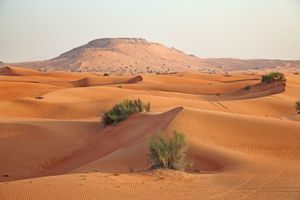
The Yamāmah region, where the city now sits, was built atop the ruins of Ḥajr. Ancient trading caravans used this spot as a pit stop. They needed water. They needed rest. The locals provided both. The area is cut by valleys, dotted with wells and palm groves. Greenery in the desert isn’t just nice to look at. It’s survival.
By the mid-1600s, what we now call Riyadh was little more than a fortified village. It was part of a chain of settlements along Wadi Ḥanīfah. This low-lying valley runs along the western edge of the modern city. It defined everything. Water flowed there. Crops grew there. Dates and other harvests thrived in the fertile soil.
The village itself sat on the plateau to the east. Dry. Dusty. Safe.
The Capital Shift
History here is volatile. In 1824, Riyadh was named the capital of the Saud dynasty. They held onto it for nearly sixty years. Then, in 1881, the Rashīd family from Ḥāʾil pushed in. They took control of central Najd. The Sauds were pushed out.
But they didn’t stay gone.
In 1902, Ibn Saud regained control. He used Riyadh as his base. From there, he began conquering Arabia. By 1930, he had assimilated ʿAsīr and the Red Sea coastal plain. The map changed. The Kingdom of Saudi Arabia was proclaimed in 1932. Riyadh was cemented as the capital. It wasn’t just a city anymore. It was the heart of a new nation.
The Walls Came Down
Before the skyscrapers, there were walls.
In 1920, the city covered less than one square kilometer. It was tiny. Encircled by defensive walls, the interior held a central mosque, a souk (market), houses, and palaces. The layout was traditional. Narrow streets. Courtyard homes. Open spaces defined by community use. It looked like many other Islamic cities across the Middle East.
Population growth was slow at first. In the 1930s, fewer than 30,000 people lived within those walls. By the late 1940s, the walls were coming down. Demolition was rapid. The urban area expanded to about 5 square kilometers. The population jumped to 83,000.
The physical structure was shifting. Fast.
The Grid and the Wadi
The late 1960s brought a Greek firm. Doxiadis. They were hired to create a master plan. The goal? Linear development. A central spine running north to south.
Why this direction? To protect Wadi Ḥanīfah. The wadi’s boundaries became the hard limit for expansion. The city couldn’t just spread west into the valley. It had to respect the geography.
The plan also introduced a grid. Massive blocks. 2 kilometers by 2 kilometers. Each block. Flat. Repetitive.
This grid shaped the neighborhood scale. Most residents live in villas. Two stories high. Built to maximum plot coverage. Surrounded by high walls. Privacy is prized. Walls separate homes from the street. And from each other.
The plan wasn’t perfect. The city grew north, yes. But it also burst east and west, ignoring the linear constraint. The wide grid streets became barriers. They cut through neighborhoods. They made connecting the city into a cohesive whole difficult. Driving became necessary. Walking became less common.
Pressure and Expansion
Today, the pressure is immense. Population numbers keep climbing. Land area expands. The infrastructure is straining. Roads clog. Utilities stretch thin. Spatial capacity is tested daily.
The city is trying to adapt. The ADA (Riyadh Development Authority) completed the Metropolitan Development Strategy in 2002. It outlined a long-term vision. Short-term goals were set. Implementation began.
Then came 2007. King Abdullah launched a sweeping development plan. Nearly 2,000 projects. Not just roads. Financial systems. Medical facilities. Education infrastructure. Telecommunications. Utilities.
The city is transforming again. From a walled village to a grid-bound sprawl to a modern, high-stakes metropolis. The walls are gone. The grid is set. The future is being built, block by block, project by project.
What happens when the grid finally breaks? When the city can’t be contained by lines on a map? We’re still waiting to see.