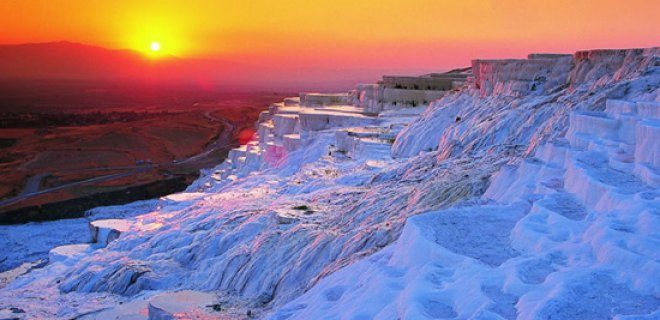
You have seen the photos, probably. Miles of cascading white stone that looks like frozen cotton candy or a glacier that refused to melt. It sits in the Pamukkale district of Denizli province, Turkey, and it is not a gimmick. It is a geologic accident that turned into one of the country’s most iconic symbols.
How the Travertines Formed Over 14,000 Years
The science is simple, even if the result looks impossible. Thermal springs have been flowing from the mountain for roughly 14,000 years. The water is rich in calcium carbonate. As it flows down the slope, the heat evaporates the water, leaving the mineral behind. Over millennia, this deposits calcite in layers. The result is the travertine formation you see today.
It is not just a flat sheet of white rock. The site is a complex system of large and small pools. The water moves constantly, creating new terraces while others erode. The visual effect is hypnotic. It looks like fresh snow, or maybe thick cream.
Is It Actually Free to Visit?
Yes. This is the part that surprises people. The travertine terraces are free to enter. You do not pay a ticket to walk the lower levels or stand at the edge of the pools.
- Access: Free for general viewing areas.
- Cost: 0 TL for the terraces themselves.
- Note: There are paid areas for entering specific thermal pools or visiting the ancient city of Hierapolis above, but the main white slopes are open to the public without a fee.
Why It Made the UNESCO World Heritage List
The beauty is not the only reason for its status. The site combines natural wonders with archaeological significance. It is the symbolic face of Denizli. When you think of the region, this is the first image that comes to mind. It serves as the primary gateway for tourism in the area.
The water is warm. The stone is slippery. You will want to go barefoot, which is required in many parts of the site to protect the delicate surface. The contrast between the blue sky and the stark white stone is striking. It is a place that demands a bit of patience. The crowds can be heavy, especially on weekends.
If you are planning a trip to Denizli, do not skip this. It is cheap, it is close to the city center, and it looks exactly as strange as it sounds. The only question is whether you can handle the heat when you are standing on wet, white rock in the sun.
Why Yeşildere Falls Works in Peak Summer Heat
Denizli gets hot. Really hot. The air thickens, the sun hammers down, and most tourist spots feel like ovens. Yeşildere Falls is different. It sits tucked away in the greenery, offering a 55-meter drop that actually lowers the temperature around it. The cold water hits the air, creating a microclimate that feels noticeably cooler than the rest of the province. If you are planning a trip between July and August, this is one of the few spots that won’t leave you drenched in sweat.
The fall itself is vertical and steady. Water plunges from the top rock face down to the pool below. The sound is constant, a low roar that drowns out the car engine when you park. The surrounding vegetation is dense. It’s not a manicured park. It’s wilder. Mossy rocks, ferns, and thick tree canopies block the direct sun for much of the walk.
Practical Logistics and Access
Getting there takes about 20-30 minutes from central Denizli, depending on traffic. The road down to the valley is paved but narrow. If you are in a large SUV or van, be careful on the switchbacks. Most tourists arrive by private car or taxi. There is no regular public bus line that goes directly to the entrance, so if you don’t drive, budget for a shared taxi or a quick ride-hailing trip.
Parking is free but limited. Go early. If you arrive after 11 AM in summer, you will likely circle the lot twice. The trail from the parking area to the base of the falls is short, maybe 10-15 minutes on foot. It’s unpaved, uneven, and gets muddy if it has rained recently. Wear shoes with grip. Sneakers are okay, sandals are not.
What You Actually See (And Don’t See)
Expect a natural waterfall, not a theme park attraction. There are no souvenir shops at the bottom. There is no restaurant right at the water’s edge. You will see the 55-meter drop, the mist rising from the base, and the lush valley walls.
Some visitors expect to swim in the pool. You can wade in. The water is cold, shockingly so even in August. But it is not a beach. The bottom is rocky and deep in places. There is no lifeguard. If you are with children, keep them in the shallow, shallow-edged areas. The current near the base of the fall is stronger than it looks.
The best photo angle is from the lower viewing platform, looking up. The greenery frames the water, making the white spray stand out. Midday sun can wash out the details, so early morning or late afternoon light works better for the “perfect” shot.
Comparing Yeşildere with Other Denizli Spots
Most travelers in Denizli focus on Pamukkale. That is correct. Pamukkale is the headline act. But Pamukkale gets crowded. Thousands of feet on the travertine terraces. Yeşildere is quieter. It’s not a major draw for international tour groups, so the vibe is local and relaxed.
If you only have one day, skip it and do Pamukkale. If you have a weekend, or if
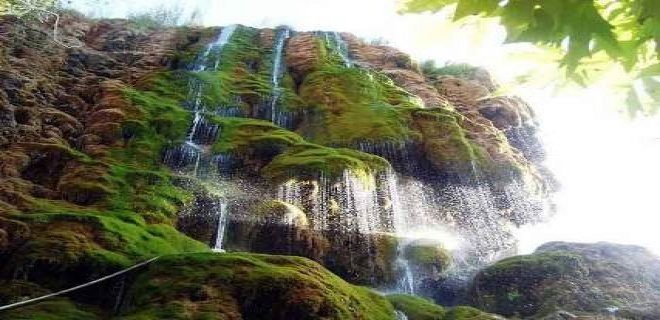
The underwater secret hiding in Honaz
Forget the famous terraces you see in every travel guide. There is another spot in Denizli that actually looks like a submerged ruin. Kaklık Mağarası sits in the Honaz district, not far from the main tourist circuits. It is quiet there. The kind of quiet that makes you check your phone twice to make sure you are still connected.
The water inside is real, not a staged display. It flows through the cavern. How did the pools form? The cave ceiling partially collapsed over time. That debris created basins and pools at the bottom. They catch the water. The result is a landscape that mirrors the travertine formations at Pamukkale. It is not the same mechanism, but the visual effect is striking. White stone, clear water, depth.
You are looking for a break from the crowds. This is it. The pools do not form a staircase, but they create a layered look that feels ancient. The water is clear enough to see the bottom. The light coming in from the entrance hits the water and creates a blue-green shimmer. It is not a massive spectacle. It is intimate.
Check your footwear before you go. The terrain can be uneven. The cave is not fully developed for mass tourism, which is exactly why it feels special. You are not standing on a designated walkway. You are looking into a natural formation. The pools are the main draw. They look like steps cut into the earth, but they are natural accumulations from the cave’s geological history.
Is it worth the trip if you are already in Denizli? Yes. It adds a different dimension to the region. You see the mineral-rich water in a context that is less manicured than the famous hot springs. It is rawer. The comparison to Pamukkale is fair in terms of aesthetic, but Kaklık Mağarası offers a cave environment rather than an open-air terrace.
Do not expect ticket booths or gift shops. This is a nature spot. Bring a jacket if the weather turns. The air inside the cave is cool, even in summer. The water temperature is stable. It is a place to sit, watch the light change, and understand how water and stone interact over thousands of years. The pools are small, but they are persistent. They have been there for a long time. They will be there when you leave.
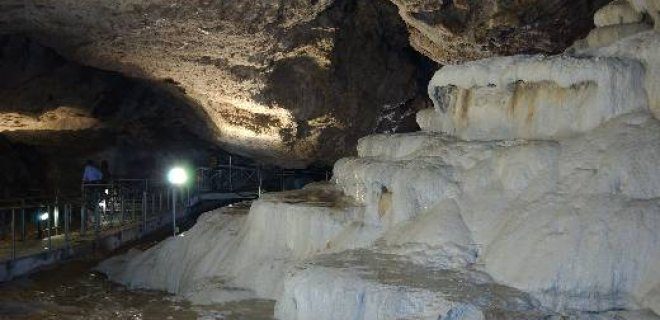
Where to find the Ağlayan Kaya Falls near the trout farms
If you are chasing waterfalls in this region, Ağlayan Kaya Falls is the spot to mark on your map. Locals also call it Sakızcılar Falls, a name that might help you find it better on some older signs. It is 30 meters high. That is a solid drop. The structure of the cascade is distinct, not the typical smooth sheet you see in brochure photos.
Why does the name matter? Because it links the natural site to the human activity nearby. There is trout farming right here. You will see facilities dedicated to the production. It is not a wild, untouched canyon. It is a working landscape.
What to do at the 30-meter cascade site
You do not just look at the water. The area includes picnic areas and recreation zones. People come to sit, eat, and just decompress. The vibe is relaxed. You are not hiking through dense forest to get here. It is accessible.
Is it for hardcore hikers? No. It is for nature lovers who want a break. You can watch the water drop, listen to it, and enjoy the air. The trout farms add a local flavor to the experience. You might see the fish being processed or raised. It is a tangible part of the local economy.
Practical details for your visit
Timing matters less than your mood here. The falls work year-round, though the flow might vary. Check the water levels if you are sensitive to noise or mist. The picnic spots are the main draw for families and small groups. Bring your own food or check if local vendors are operating.
Do not expect a major tourist infrastructure. This is a quiet spot. It is about the drop, the water, and the time you spend there. The Ağlayan Kaya Falls experience is simple. You arrive, you look, you rest. That is enough.
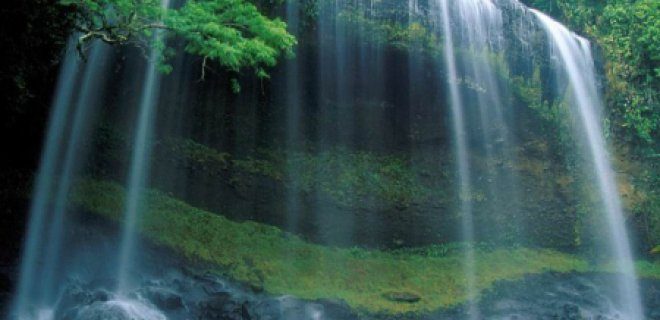
The Hidden Gem: Laodikya Antik Kenti Near Pamukkale
You likely know Pamukkale for the cotton-white travertine terraces. That’s fair. The white terraces are the headline. But a short drive north sits Laodikya Antik Kenti, a sprawling ruin that most visitors skip entirely. This is a mistake.
Laodikya is one of the most significant cities in Anatolia. It isn’t a tiny footnote. It was a major financial and trading hub in Western Anatolia. The scale here hits you immediately. You aren’t looking at a few broken columns. You are standing in the heart of a metropolis that thrived on commerce and power.
When and Why Was Laodikya Built?
The timeline is specific. The city dates back to the 1st century BC. Archaeological evidence points to King Antiochus II as the founder. He didn’t name it after himself, which is common. He named it after his wife, Laodike.
This naming convention matters less than the city’s rise. Laodikya became a center for money and trade. It wasn’t just a local town. It connected regions. It moved goods. It moved wealth. That economic weight is why the ruins are so extensive. The infrastructure had to support a busy, wealthy population.
What Makes the Ruins Different?
Most ancient sites have a temple. Laodikya has monuments. Plural. The sheer volume of standing structures is rare. But the most specific, intriguing, and often misunderstood feature is the churches.
There are seven famous churches here.
Wait. Seven? In one city?
Yes. Seven famous churches are located within the Laodikya Antik Kenti complex. This number is symbolic. It references the seven churches of Asia mentioned in the Book of Revelation. If you are traveling for religious history or biblical archaeology, this site is not optional. It is the primary location associated with that text.
Practical Logistics for Visitors
Laodikya is located in the Pamukkale district of Denizli. You are probably already in Denizli to see the Hot Springs and the travertine pools. Do not miss this.
- Timing: Go early. The site gets hot by mid-afternoon. The sun is unforgiving on the open stone.
- Cost: Admission is separate from the Pamukkale travertine entry. Budget for two tickets if you want both.
- Duration: You need at least three hours. Rushing the site means missing the theater, the stadium, and the complex of churches.
- Footwear: Wear closed-toe shoes. The ground is uneven, rocky, and covered in small stones. Sandals will ruin your day.
“Laodikya is not a background detail to Pamukkale. It is a complete, independent ancient city that happened to survive better than most.”
What to Look For
Do not just walk the main path. Look for the theater. It is massive. The seating curves around a central stage, and the acoustics are still impressive. The stadium is equally large, used for athletic competitions. These structures show the city’s capacity for public life.
Then, find the churches. They are not all in one spot. They are scattered across the excavated area. Some are
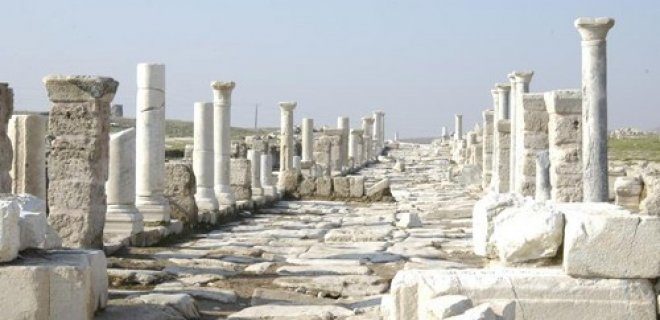
Where the underground waters rose to the surface
You are standing in the north of Denizli, right next to the travertine terraces you came for. But the city itself is older, and it explains why the water exists here at all.
Hierapolis Antik Kenti isn’t just a ruin. It is a medical city.
Built in the early 2nd century BC, it was established by the King of Pergamon. Why this spot? Because of the springs. The ancient people didn’t view the thermal waters as a spa luxury. They used them for treatment. The underground waters bubbled up through the limestone, carrying minerals that people believed could heal ailments.
The name comes from Hiera, the wife of Telephos. She was a goddess. The city took her name.
Why this site made the UNESCO list
You might think the white terraces are the only reason Hierapolis Antik Kenti is famous. That’s a mistake. The archaeological value is distinct from the geological one.
UNESCO added it to the World Heritage list because of what remains of the city. We are talking about:
- The thermal pools still holding water
- The Roman bath complex
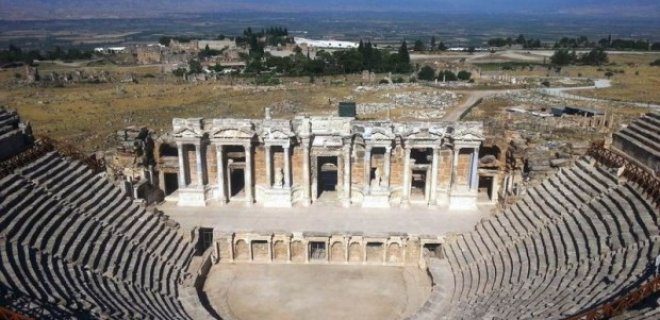
- The theater where performances took place
- The agora, the central marketplace
These structures survived earthquakes and centuries of neglect. The water was the engine of the city. Without the springs, there is no Hierapolis. The water made the settlement possible. The settlement made the city famous.
How to navigate the ancient site
You don’t need a guide to understand the layout, but you do need time. The site is spread out. Walking from the main entrance to the thermal pools takes time. The terrain is uneven. Wear shoes with grip.
Start at the south gate. You will see the theater first. It is huge. You can climb the steps if you are fit. The view down toward the Pamukkale slopes is sharp.
Then move toward the thermal area. The water is still warm. You can dip your feet. It’s not for swimming in the ancient pools anymore, but the sensation is immediate. The minerals are real.
Which parts of Hierapolis are worth your time
Skip the generic “ancient ruins” description. Look for specific things.
- The Sacred Pool : This is the most visited spot. The water glows slightly in the afternoon light. It is shallow.
- The Roman Baths : The engineering is visible. Channels carried water from the source to different pools.
- The Mosaic Floors : Fragments remain under glass or in open excavations. They show daily life, not just grandeur.
How long should you spend here?
Two hours is the minimum. If you only have one hour, you will miss the connection between the city and the water. The site is not a museum with glass cases. It is an open-air excavation. You are walking on the same ground the ancients walked on.
Why the water matters more than the buildings
The buildings are impressive. But the water is the mystery. It rises from beneath the earth. It has done so for thousands of years. The city was built around it. The city died. The water remains.
When you visit Hierapolis Antik Kenti, you are not just looking at stones. You are looking
Finding the strange stuff in Denizli
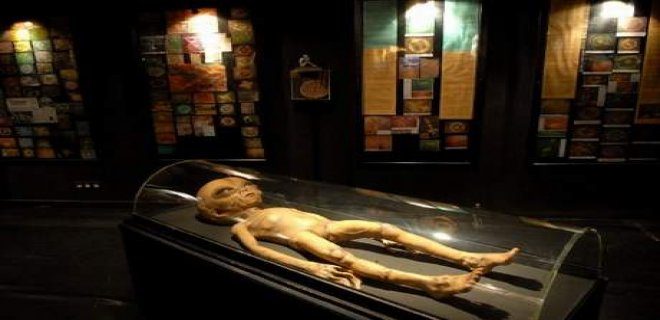
You probably know Denizli for the hot springs. Pamukkale, the terraced travertine pools, the thermal water that supposedly cures everything from arthritis to eczema. But there is a weirder corner of the city waiting for you. The Denizli UFO Museum.
It is not a high-tech facility. It is not a government building. It is a small, dedicated space in a city that has been chasing mysteries for centuries.
Why the museum moved to Denizli
The origins are slightly confused, which is fitting. The collection started in Istanbul. It was established in 2002. Then, in 2005, it relocated to Denizli.
Why the move? The stated goal was to expand the city’s tourism options. Denizli wanted more than just ancient baths and hot water. It wanted something unique. Something that would draw people who do not care about Roman history or thermal spas.
Is it the only one in Turkey? Yes. It is the first and only dedicated UFO museum in the country.
Globally? It ranks as the fourth UFO museum in the world. That is a specific, verifiable fact. Not the first, not the most famous, but a distinct entry in a very short list.
What you actually see inside
Do not expect a blockbuster documentary theater. The museum focuses on history. It tells the story of unidentified flying objects through artifacts, models, and informational displays.
The collection includes:
– Photographs of reported sightings
– Models of craft designs
– Historical documents related to UFO research
– Exhibits explaining the cultural impact of sightings
It is educational. It is quiet. It is small. You can see everything in under an hour. But that is the point. It is a side quest in your Denizli itinerary.
How to fit it into your trip
The museum is located in the city center. It is easy to reach from the main hotels and the Pamukkale bus stops.
Timing matters. Museums in smaller Turkish cities often close early. Check the local hours before you go. They are typically open from 09:00 to 17:00, but closures can happen. Verify.
Cost is low. Entry fees for small, privately run museums in Denizli are usually minimal. Budget less than 100 Turkish Lira, though prices change. Bring cash. Small venues often do not accept cards.
Where exactly? It is in the central district. Ask your hotel reception for the specific street. Navigation apps sometimes struggle with small, niche museums in less touristy Turkish cities. A local taxi driver will know it instantly.
Is it worth your time?
If you are a skeptic, you might roll your eyes. If you are a believer, you will find comfort. If you are just curious about how a Turkish city positions itself as a center for the unexplained, it is fascinating.
It sits alongside the ancient Heptapylon Gate and the Çukur Castle. These are standard stops. The UFO museum is the odd one out. It makes the trip feel less like a generic guidebook tour and more like an adventure into the local mindset.
Denizli is not just about heat. It is about stories. Some are about gods and emperors. Some are about lights in the sky. The
Where the excavation artifacts actually live
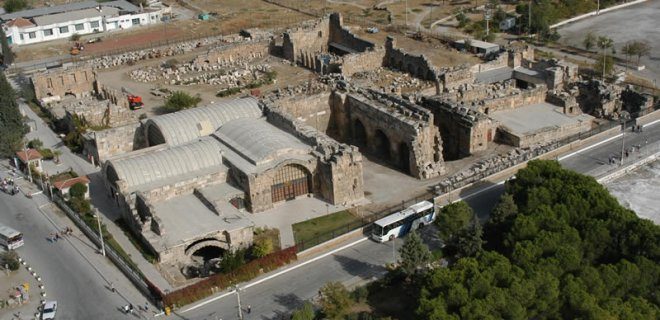
You can skip the dusty site for a moment and head straight to the Pamukkale Hierapolis Arkeoloji Müzesi. It sits inside the old Roman bath structure, which gives the whole experience a weird, heavy atmosphere. The museum opened in 1984. Its job is simple: house the finds from the Hierapolis excavation projects.
The building has three main rooms. You walk through them in sequence. The collection includes statues, inscriptions, and daily life objects pulled from the ancient city. It is paid admission, but the prices are low enough that it is not a budget breaker.
Is the museum open on weekends?
Yes. The doors do not close for the weekend rush. It operates seven days a week. This is helpful if your trip falls on a Saturday or Sunday and the main archaeological site feels crowded. The smaller museum remains a quieter option for seeing the carved details up close.
What to expect in the three halls
The layout is compact. You will not be walking miles to get through it.
– Hall 1: Focuses on early finds and structural elements.
– Hall 2: Displays religious artifacts and personal items.
– Hall 3: Features larger sculptures and architectural pieces.
The lighting is functional, not dramatic. The labels are clear. You are standing in a structure that once held hot water and steam, which changes how you look at the artifacts on the shelves. It is not a grand palace. It is a storage space that became a display case.
Practical logistics for your visit
Bring cash. The ticket window takes lira. The building is stone, so it stays cool inside even when the outside air is hot. Wear closed shoes. The floors are uneven in places.
Do not rush. The collection is small, but the context is heavy. You are looking at objects that survived earthquakes and centuries of neglect. The museum sits near the main site, so it works as a break spot. Take 45 minutes. Read the plaques. Look at the faces in the stone.
Why this spot matters for your itinerary
It connects the physical ruin to the human story. You see the broken pieces before you see the massive terraces. It is a quiet prelude to the white travertine terraces. If you are planning a full day at Pamukkale, slot this in before the crowds hit the main plaza. The air is thinner here. The history is closer.
The museum does not try to be flashy. It just holds what was found. That restraint makes it worth the entry fee.
Tabea Antik Kenti: Kale ilçesindeki gizli tarih katmanı
Kale ilçesi, çoğu gezginin listesinde ilk sırada yer almasa da, Tabea Antik Kenti burada beklenmedik bir derinlik sunuyor. Bu alan sadece bir harabe yığını değil; Hellenistik, Roma ve Osmanlı çağlarının üst üste bindiği, hâlâ arkeolojik kazılarla gün yüzüne çıkarılan çok katmanlı bir yer.
Helenistik döneme ait Roma Hamamı ve Osmanlı dönemine ait Cevherpaşa Camii, bölgenin en somut tanıkları. Hamamın taş işçiliği, Roma mühendisliğinin ne kadar dayanıklı olduğunu hatırlatırken, Cevherpaşa Camii de sonradan gelen İslam mimarisinin bu coğrafyaya nasıl yerleştiğini gösteriyor. İki yapı yan yana durduğunda, zamanın üst üste bindiği bir tablo ortaya çıkıyor.
Daha da ilginç olan, bu antik dokunun içinde Türkmen Yörük kültürünün izlerinin hâlâ görülmesi. Taş duvarlar arasında dolaşırken, yalnızca imparatorluk kalıntıları değil, göçebe yaşam biçiminin bıraktığı izlerle de karşılaşmak mümkün. Bu, Tabea’yı sıradan bir antik kentten ayıran en önemli unsur.
Pratik açıdan, bölgede aktif kazı çalışmaları sürdüğü için bazı alanlar geçici olarak kapalı olabilir. Gitmeden önce güncel erişim durumunu kontrol etmek mantıklı. Ama tamamen kapalı olmayan bölümler, hatta kazı alanlarının kenarından bile, tarih katmanlarını hissetmeniz için yeterince zengin.
Kale’ye gidenler için Tabea, ana duraklardan saparak keşfedilecek bir nokta. Büyük kalabalıklar yok, acele eden tur otobüsleri yok. Sadece taş, toprak ve yüzlerce yıllık katmanlar. Biraz sabırla, belki de en samimi tarih deneyimlerinden birini yaşayabilirsiniz.
Tripolis Antik Kenti: Denizli’de Görülmesi Gereken Lidya Mirası
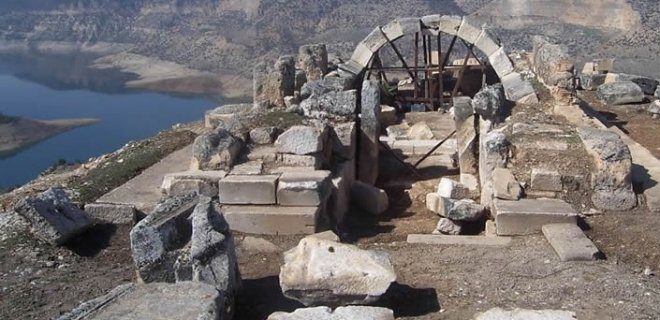
Haritada pek çok kişi bu ismi görünce “Burada ne var?” diye sorar. Cevap basit: Lidya döneminin en önemli yerleşim noktalarından biri. Bugün Buldan’da, Denizli’nin sakin ve tarihi dokusunu koruyan bir köşesinde duruyor.
Çoğu turist Denizli’yi pamukkale ile özleştirir. Yanlış bir genelleme değil, ama eksik. Gerçekten farklı bir deneyim arıyorsanız, Tripolis Antik Kenti tam da o boşluğu doldurur. Burası, “keşfedilmemiş” demeyeyim, daha çok “az bilinen” demek daha doğru. Sessizlik burada bir kusur değil, bir özellik.
Tripolis’de Neler Var?
Alanı gezerken aklınızda belirli yapıların kalıntıları olmalı. Bunlar sizi yönlendirir:
- Tiyatro: Antik çağın sosyal merkezi. Kalıntıları, binlerce yıl önce burada neler yaşandığına dair ipuçları sunuyor.
- Tripolis Hamamı: Rom döneminin günlük yaşamını yansıtan bu yapı, özellikle mimarisiyle dikkat çekiyor.
- Şehir Binası: Yönetim merkezi olarak işlev görmüş olması muhtemel.
- Kale ve Surlar: Kentin savunma hattının izleri.
- Nekropol Kalıntıları: Ölenlerin anılarına tanıklık eden, en sakin ve en çarpıcı bölge.
Bu yapılar birbiriyle bağlantılı değil gibi görünse de, aslında aynı tarihi anlatıyor. Her biri, Tripolis’in bir zamanlar ne kadar canlı ve stratejik bir merkez olduğunu kanıtlıyor.
Neden Şimdi Gitmeli?
Çünkü sezonun yoğunluğundan kaçmak istiyorsunuz. Yazın ortasında Pamukkale’nin kalabalığından bıkarsanız, Buldan’a yönlenmek mantıklı bir kaçış. Tripolis, kalabalık tur otobüslerinin uğramadığı, fotoğraf makinesiyle değil, gözle ve sessizlikle gezilebilecek bir yer.
Zamanlama önemli. Sabah erken saatler en iyisi. Işık yumuşak, gölgeler uzun, alan daha az dolgun. Öğleden sonra ise sıcaklık artıyor, ama bu sefer de farklı bir atmosfer oluşuyor. Hangisini tercih edeceğiniz, sizin nasıl bir deneyim aradığınıza bağlı.
Ulaşım ve Pratik Bilgiler
Denizli merkezden Buldan’a ulaşım otobüslerle mümkün. Araç kiralayanlar için rota basit: D400 üzerinden Batı’ya, sonra Buldan’a dönüş. Araç park alanı mevcut, büyük bir sorun yaratmıyor.
Bilet fiyatları genellikle müze kart kapsamına giriyor. Müze kartınız varsa, ekstra ödeme yapmanız gerekmez. Kartınız yoksa, güncel fiyatı girişte kontrol etmek en sağlıklısı. Değişkenlik gösterebilir.
Gezin
What happened to Colossae?
It’s gone.
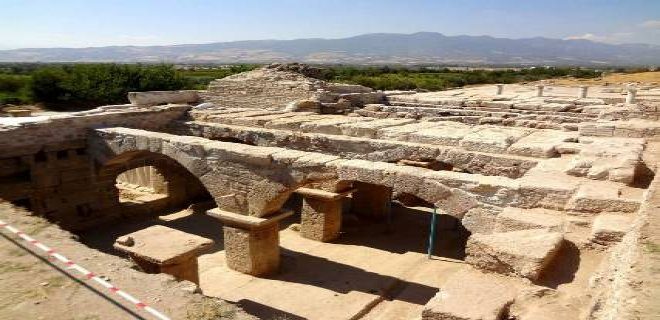
Colossae sits in the Honoz district, a place that used to hum with industry. The ancient economy here ran on wool and textiles. You can picture the looms, the dye pots, the merchants moving goods through the narrow streets. Then the ground shook. Earthquakes hit, again and again, until the city simply crumbled into dirt.
There are no walls left to walk through. No inscriptions to translate. No ruins to photograph for your travel blog. The site is a ghost in the landscape, a reminder that even Roman engineering couldn’t beat seismic activity.
Is there anything left to see at the Colossae ancient city?
Not really.
If you’re planning a trip to Honoz expecting marble columns or a theater, save your gas money. The source material is blunt: “günümüzde kalıntısı dahi kalmamıştır.” Even the remnants have vanished. It’s not a “hidden gem” with a few scattered stones. It’s an absence.
That said, the Honoz area has other historical layers. The nearby town of Honoz itself has a fortress, a mosque, and a medieval market structure. If you’re in the region, you’re likely driving through a landscape steeped in history, even if Colossae itself has returned to the earth.
Where exactly is Colossae located?
It’s in the Honoz district of Denizli Province, Turkey.
Denizli is famous for its hot springs and the Pamukkale travertines, but Honoz is a quieter, more rugged spot. The region is mountainous. Roads get winding. If you’re navigating without GPS, expect a bit of a struggle. The ancient city’s exact spot is marked by its disappearance, not by a signpost.
Why does a vanished city matter for travelers?
It changes how you read the landscape.
When you stand in Honoz, you’re not just looking at hills. You’re looking at a graveyard of infrastructure. The wool trade that once defined Colossae hints at a supply chain that stretched across the Roman Empire. The earthquakes that killed it tell you about the geological reality of the region.
It’s a sobering note in a travel itinerary. Not every ancient site survives. Some are erased. Knowing where they were adds weight to the places that are still standing. It makes the surviving ruins in Denizli or Afyonkarahisar feel a bit more fragile, a bit more lucky.
How does this fit into a broader Turkey travel plan?
It’s a waypoint, not a destination.
If you’re doing a self-drive loop through central Anatolia, you might pass through Honoz. Stop for coffee. Look at the terrain. Think about the sheep shearing and the weaving that once happened here. Then keep driving.
Don’t expect a ticket booth. Don’t expect a guide. The history is in the ground, and it’s been taken back by the tectonic plates. The real value is in the context: understanding that this part of Turkey was once a hub for textiles, and that nature had the final say.
Is it worth detouring just for the absence? Probably not. But if you’re already in the area, it’s a quiet, reflective moment. A reminder that time, and gravity, are
Keloğlan Cave: A hidden limestone escape in Denizli’s Acıpayam district
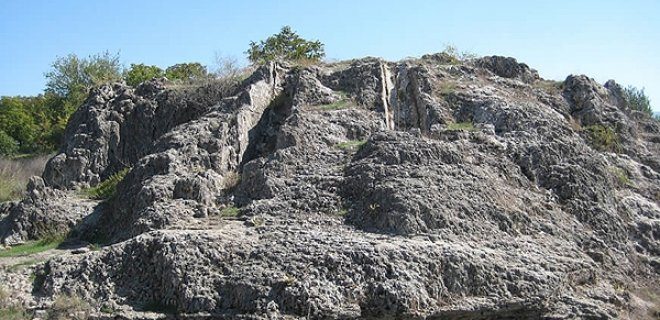
Most people know Denizli for the Pamukkale terraces. They miss the quieter stuff tucked into the hills of Acıpayam. Keloğlan Mağarası sits in that gap. It wasn’t on any tourist map until the 1990s. The local governor and municipality pushed for a study. It opened to visitors shortly after.
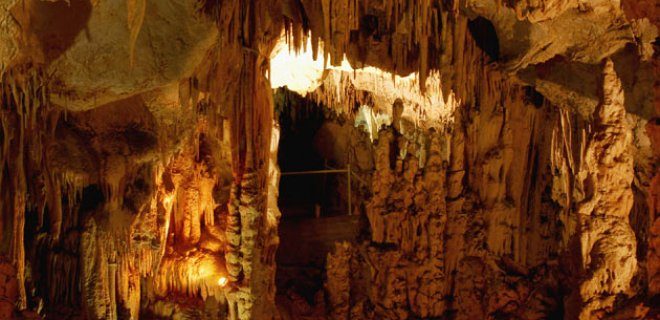
The dimensions are modest but specific. The ceiling reaches 6 meters. The total length stretches 145 meters. Inside, the walls aren’t smooth. They are karstic bedrock. Water drips down. It carries calcium. Over time, that water builds stalactites and stalagmites. The formations look jagged. Organic. Untouched.
Why does that matter? Because nothing was stripped away to make it pretty for cameras. The natural state stayed intact through the decades. That is rare. Many caves get “restored” until they feel like a theme park. This one doesn’t.
Historically, locals had a different use for it. During its earlier period, people sent patients with asthma and bronchitis here. The air inside is cool and humid. For respiratory issues, that microclimate offered relief. It wasn’t just a sight to see. It was a therapy spot.
If you are planning a trip to Denizli, do not just queue up at the travertines. Head to Acıpayam. The cave is small enough to see in twenty minutes, but the silence is heavy. The light is minimal. You will hear the drip. You will see the stone grow in slow motion, frozen in time. It is a low-key alternative for travelers who want geology without the crowds.
The hidden gem of Acıpayam: Yazır Camii
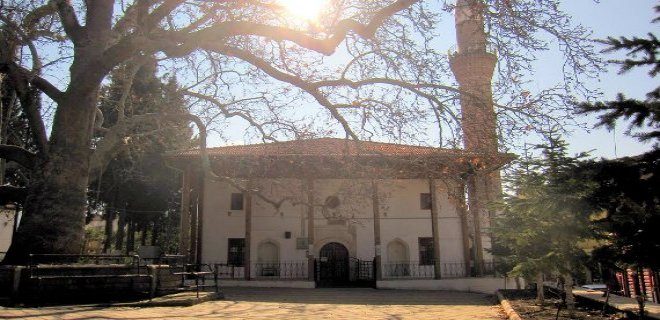
Most travelers drive straight through Acıpayam. They head to Denizli or keep pushing toward Aydın, treating the district like a waypoint rather than a destination. That’s a mistake. The Yazır Camii sits right in the county center, a rectangular structure that has been standing since 1801. It is not the flashiest mosque in Turkey, but the interior tells a story that big-city landmarks often lack.
The decoration is dense. Not sparse. When you step inside, your eyes get busy. You see plant motifs, tree patterns, and still life designs woven into the architecture. These aren’t just random shapes. They are specific natürmort elements, a style that flourished in the late Ottoman period. The craftsmanship is intricate, layered in a way that rewards a slow look.
Why stop here? Because the cost is nothing but your time. There is no ticket price. You do not need a guide to understand what you are seeing, though a guide helps you spot the subtle floral details that blend into the plaster. The building is rectangular, which keeps the space feeling grounded and compact. It does not shout. It whispers.
If you are planning a route through the Aegean region, do not skip the interior. The lighting changes as the day progresses, highlighting the different textures of the ornamentation. It is a quiet, specific kind of beauty, distinct from the grand domes and courtyards you see in Istanbul or Ankara.
The mosque is accessible from the main streets of Acıpayam. You will not get lost. Once you step through the door, the outside noise fades, and you are left with the visual rhythm of the 19th-century designs. It is a reminder that history is not always loud. Sometimes, it is just a quiet room full of plants and trees, carved into the walls, waiting for someone to actually look.
Akhan Kervansarayı and the white stone entrance to Akkale
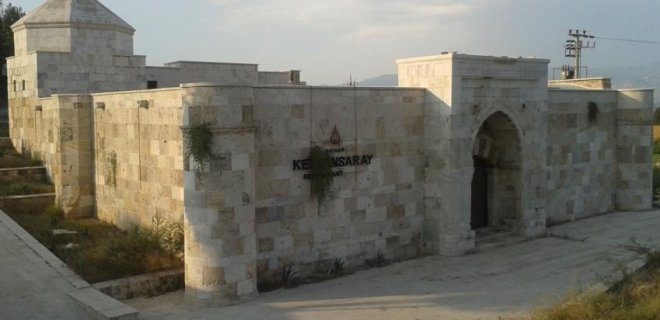
You are standing at the threshold of Akkale. The structure looming before you is the Akhan Kervansarayı. It is not a ruin. It is a 13th-century Seljuk caravanserai built to the specific request of the commander Kara Sungur.
The material is distinct. White cut stone. It gives the building a bright, stark appearance that contrasts sharply with the surrounding landscape. The layout splits into two functional zones. There is an open section and a closed section.
Look down at the courtyard floor. It is not empty. Geometric decorations are embedded in the paving. These patterns are subtle but persistent. They mark the space as a place of rest for travelers who once crossed these routes with caravans.
The location matters. It sits at the entrance of Akkale. If you are planning a route through this region, this is where you stop. The stonework holds up well. The geometric inlays are still visible. It is a quiet marker of Seljuk engineering and aesthetic preference.
Why the white cut stone matters for your itinerary
Travelers often overlook caravanserais because they look like simple storage spaces. This one does not. The white cut stone construction is a specific Seljuk choice. It reflects light differently than darker basalt or limestone.
When visiting, check the courtyard carefully. The geometric shapes are not decorative flourishes for a modern audience. They are structural and symbolic remnants of a 13th-century way of organizing space. Kara Sungur commissioned this. He was a military figure, not just a religious patron. That influence likely shaped the utilitarian mix of open and enclosed areas.
If you are photographing the site, the contrast between the bright stone and the geometric floor patterns offers a clean visual anchor. The open section provides space for movement. The closed section offers shelter. It is a practical design.
Do not mistake it for a museum. It is an architectural site. You walk through it. You observe the masonry. You see the integration of the structure into the Akkale entrance point.
Where to find Akhan Kervansarayı in your route planning
It is located specifically at the entrance of Akkale. This positioning makes it a natural waypoint. If you are driving through the area, it is on the perimeter, not deep in the interior.
The timing of your visit should account for light. The white stone changes appearance as the sun moves. Early morning light hits the geometric courtyard decorations differently than the harsh midday sun. Late afternoon shadows lengthen across the cut stone blocks.
There are no ticket booths described in standard travel guides for this specific structure. It is part of the broader Akkale complex. You access it as you approach the site.
The caravanserai serves as a historical marker. It tells you where the trade routes bent. It tells you who held power in the 13th century in this region. Kara Sungur left a physical trace that survives centuries later.
You do not need to guide a tour here. You need eyes. Look at the stone. Look at the floor. Look at the split between the open and closed parts. The structure speaks in geometry and material. That is enough.
The path continues from Ak
St. Philippe Martyion Kilisesi: How Early Christianity Took Root in the Region
Walk into St. Philippe Martyion Kilisesi and you are standing on ground that smells of history, not just incense. This isn’t a tourist trap built for Instagram. It is the physical footprint of a man who walked here in the 80s AD to preach and paid for it with his life. He was crucified right there. That detail hits harder than any brochure.
The building you see today didn’t appear out of nowhere. Christians started gathering in his memory during the early 5th century. They needed a space that could hold the weight of that story. They built St. Philippe Martyion to house the memory of the martyr.
The architecture is blunt. Long, wide staircases climb the structure. No delicate curves. Just solid steps leading up. Next to those stairs sits the Ayazma Çeşmesi, a spring that keeps the site alive with water. It’s a small thing, but it grounds the stone in the landscape.
Look down. The floor is marble in the main areas. But step into the corridors and the connected sections, and the ground changes. Mosaics with botanical motifs cover the floor there. Plant life frozen in stone. It’s a quiet contrast to the heavy lead-covered dome above.
That dome is an octagonal shape, capped in lead. It looks heavy from the outside. Inside, the light filters through in a specific way that feels older than the walls holding it.
Why does a traveler care? Because this is where the narrative started for local Christian communities. It’s not a ruin you peek at. People still visit. They still come to stand near the stairs, drink from the spring, and trace the path of the apostle who died here. The air feels thinner because of the weight of the centuries stacked under that lead roof.
If you are in the region, don’t just check the box. Sit on the marble. Listen to the water. The story of St. Philippe isn’t just in the text; it’s in the layout of the room. The way the space forces you to climb, to look down, to look up. It’s a lesson in structure and sacrifice.
The mosaics won’t stop you, but they will make you slow down. The plant patterns repeat, like a rhythm. It’s easy to get lost in the detail. That’s the point. You’re supposed to lose track of time for a minute.
Is it the most famous church in the area? Probably not. But it is the most honest. It doesn’t pretend to be grand. It just stands there, holding the story of a man who was nailed to a cross and a community that refused to forget him. The lead dome protects the past. The spring feeds the present. The stairs connect the two.
Take your time here. The climb up is part of the experience. Don’t rush the descent. The mosaics under your feet are there to be seen, not just walked on. When you leave, you’ll carry a different weight than when you arrived. That’s how you know it worked.
The night air in Ubud feels different. Cooler, heavier with scent.
You are not alone in this.
Hillside villas turn on their lights. The jungle below goes quiet, then loud with cicadas.
Where to sleep when the city gets loud
Ubud’s center is crowded. Tour buses. Tuk-tuks. The noise climbs every morning at 6:30.
Stay higher.
Penestikan or Pura Taman areas. Quieter roads. Longer walks to the main drag, but the trade-off is worth it.
Villas here run $80 to $150 a night.
- Alila Villas at Uluwatu (farther south, but iconic)
- Jungle Kafe & Art Gallery (mid-range, central, loud)
- Ubud Village guesthouses (budget, $30-$60, authentic)
Check for mosquito netting. Not a joke. Dengue cases spike in October.
What to eat when you are not hungry
Skip the tourist traps on Jalan Raya Ubud.
Go to Warung Jaja. Local rice dishes. $3 a meal.
Or Bebek Bengil.
Duck in mud. Literally.
The duck is raised in a muddy pond on-site. Then cooked.
Cost: $12 per duck.
Booking required. Weekends fill fast.
“You are not eating duck. You are eating the story of the duck.”
- Bebe Gembir : Fried duck, garlic, lime leaves. $8.
- Babi Guling : Suckling pig. $10.
- Sambal Mata Kuching : Cat-eye chili. Spicy. Don’t mix with sweet soy.
How to get around without a driver
Rent a scooter. $5 a day.
But drive slowly.
Roads are narrow. Motorbikes weave. Trucks honk.
If you do not ride well in traffic, hire a driver.
$30 to $40 per day for a car with driver.
Includes gas.
Ask for a driver who knows the temple circuits.
- Tirta Empul : Water temple. $5 entry. Morning only.
- Pura Taman Ayun : Lake-side temple. $3 entry.
- Pura Lempuyang : Gate of heaven. $10 entry. Bring a sarong.
Do not wear shorts to temples.
You will be turned away.
What to do when it rains
It rains. A lot.
October to March.
Do not cancel.
Rain changes Ubud.
Go to Campuhan Ridge Walk.
Short trail. 1 hour.
Mist clings to the trees.
Waterfalls get loud.
Tegenungan Waterfall flows heavy.
$2 entry.
Wet feet guaranteed.
Pack sandals. Not sneakers.
Where to buy things that actually last
Skip the souvenir shops.
Go to Ubud Art Market.
Not the main street one. The side alley.
Local weavers.
Buy:
- Batik cloth : $15