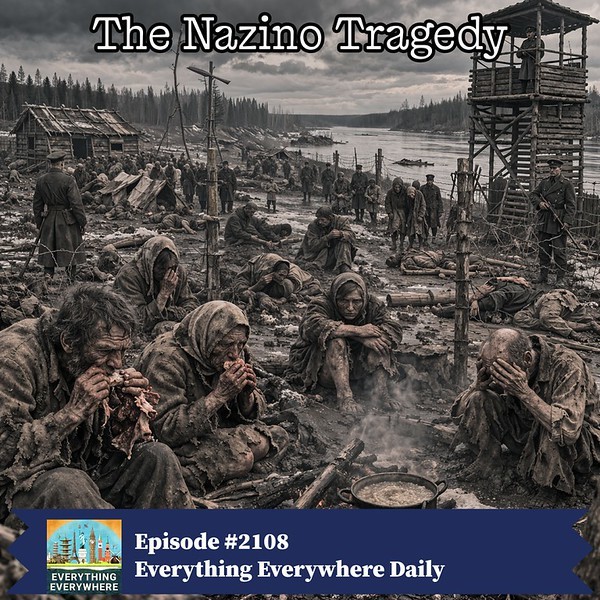
In May 1933, approximately 6,700 people were forcibly transported to a remote, swampy island on the Ob River in Siberia. They were left with almost nothing: no shelter, no tools, and a meager supply of flour that would barely last a few days.
What followed was not merely a humanitarian disaster, but a complete collapse of human morality. The Nazino tragedy remains one of the darkest chapters of the Soviet era—a stark illustration of what happens when a state views its own citizens as disposable tools for social engineering.
The Logic of “Social Cleansing”
To understand why thousands were dumped onto a desolate island, one must look at the broader goals of Joseph Stalin’s regime in the early 1930s. The Soviet Union was undergoing rapid industrialization and forced collectivization, a period marked by widespread famine and social upheaval.
The government sought to “reshape” society by removing “socially harmful elements.” While the original plan focused on deporting kulaks (relatively prosperous farmers), the execution shifted toward urban populations. The victims included:
– Vagrants and the unemployed
– Former merchants
– Peasants fleeing famine
– Ordinary citizens who lacked the internal passports required by the new 1932 movement control laws.
These were not necessarily political dissidents; they were simply people the state deemed “undesirable.” The goal was to turn them into self-sufficient agricultural laborers in “special settlements.” However, due to the ongoing famine, the resources allocated for this massive undertaking were catastrophically insufficient.
A Descent into Chaos
The deportation process was fundamentally flawed from the start. Most of those sent to Nazino were urban residents with zero agricultural experience, making the goal of “cultivating the land” an impossibility.
Upon arrival, the deportees faced a nightmare of environmental and logistical failures:
– Extreme Weather: The Siberian spring brought snow, frost, and freezing rain. Many died of exposure or accidentally burned themselves to death while trying to stay warm near bonfires.
– Starvation: The total food supply consisted of roughly 20 tons of flour for over 6,000 people—about 9 pounds (4 kg) per person.
– Health Crises: In their desperation, many ate the flour dry, leading to suffocation, or mixed it with contaminated water, resulting in deadly outbreaks of dysentery.
As the food ran out, social order vanished. Organized gangs emerged, terrorizing the weak to steal food and valuables, such as gold teeth. The guards—largely inexperienced recruits—offered no protection. Instead, many acted with apathy or sadism, occasionally hunting escapees for sport or watching with amusement as prisoners fought over scraps of bread.
The Breaking of Human Morality
The most harrowing aspect of the Nazino tragedy was the widespread outbreak of cannibalism. Driven by absolute starvation, survivors reported that the line between life and death became blurred.
Eyewitness accounts described horrific scenes:
– People being tied to trees to have limbs harvested.
– The targeting of those who were “not quite dead but not entirely alive.”
– Desperate attempts to maintain a shred of humanity by only consuming organs like the heart or liver, justifying the act as a “mercy” for those already dying.
The guards, rather than intervening to stop these atrocities, remained largely indifferent, treating the carnage as a spectacle of the “undesirables” they were tasked to manage.
Silence and Secrecy
The disaster only came to light because of the independent investigation by Vasily Velichko, a Soviet official who witnessed the aftermath and reported the carnage to the political bureau.
While the camp was closed in June 1933—just two months after it opened—the Soviet government took decisive action to hide the truth. The report was classified to prevent the scandal from exposing the failures of Stalin’s internal passport program and the broader “special settlement” scheme.
The human cost was staggering:
– Of the ~6,700 sent to the island, only 2,200 survived.
– Many survivors died shortly after being transferred to other Gulag camps due to their extreme physical frailty.
Legacy and Discovery
The world did not learn the full extent of the Nazino tragedy until decades later. It was only in 1988, through the efforts of the human rights organization Memorial, that the classified documents were unearthed. The official declassification did not occur until 1994, following the collapse of the Soviet Union.
Today, a memorial stands for the victims, serving as a reminder of a period when state policy superseded human life.
The Nazino tragedy was not a natural disaster; it was a man-made catastrophe born of a system that prioritized ideological purity and social engineering over the basic survival of its people.
Conclusion: The Nazino incident serves as a grim historical warning about the consequences of unchecked state power and the dehumanization of “undesirable” populations. It demonstrates how easily a society can descend into barbarism when authority is exercised with total indifference to human life.