

We treat our pets like royalty. They get their own rooms. They get birthday presents. When they die, we hold funerals. The numbers back up the obsession. In 2008 alone, Americans spent $43.4 billion on pet products.
But the real shift is happening on the road.
Pet travel is no longer a niche. It is a booming industry. Hotels and spas now cater specifically to four-legged guests. The market is flooded with accessories for traveling felines and canines. Yet, bringing your dog on vacation is not just about buying a fancy carrier. It requires logistics. It demands the same foresight you use for your own passport and sunscreen.
If you forget your toothbrush, you survive. If you forget your dog’s insulin, you are in trouble.
The pre-trip rush is chaotic. Essentials slip your mind. A handwritten list is the only cure. Your dog cannot pack. You are the project manager for this trip. Here are the non-negotiable items for your next journey.
10: The Pet Passport
This is the most critical document you will pack.
In the human world, a passport is a standard requirement for international borders. For pets, it serves a similar but more complex function. It is not just a piece of paper. It is proof of identity and, more importantly, proof of health.
When you cross borders, you are not just moving a pet. You are moving a biological entity that could carry disease. Customs officers do not care about your dog’s cuteness. They care about rabies vaccinations. They care about parasite prevention. They care about microchip compliance.
Why you need it:
Without proper documentation, your dog can be quarantined. In some countries, quarantine lasts months. You will pay thousands of dollars. You will miss your vacation. You will be separated from your companion.
What goes in the folder:
- Current rabies vaccination certificate.
- Proof of other required vaccinations.
- Microchip registration details.
- Health certificate issued by a licensed vet within 10 days of travel.
Keep copies on your phone. Keep physical copies in your bag. If the original gets lost, you are stranded.
This list is just the beginning. The next nine items will keep your dog comfortable, safe, and sane when the novelty of the car ride wears off.
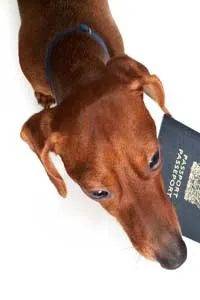
Let’s be blunt about the pet passport. It’s not a laminated booklet with a paw print signature. It’s a vet-certified record of health and vaccination status. You can buy those cute journal-style covers, sure. Tuck a photo of your dog inside. Use it as a backup if the papers get lost. But here is the catch.
Pet passports are optional for domestic road trips. They are mandatory for international borders. In places like the European Union, you can’t cross without one. Why do governments care about your Pomeranian? Outbreaks. If your dog carries rabies or distemper into a new country, local authorities panic. Different nations have different rules. Some demand months of quarantine. Others just want proof of shots. Check the U.S. Embassy site for the specific import laws of your destination. Don’t guess.
The Microchip Reality
This is where most travelers get tripped up. You have the vaccinations. You have the blood tests. You have the paperwork. But without a microchip, you are stuck.
A microchip is not a GPS tracker. It’s a passive radio frequency identification transponder. About the size of a grain of rice. Injected under the skin between the shoulder blades. It contains a unique ID number. That number links to your contact info in a database.
Here is the critical detail most blogs miss.
You cannot get a rabies vaccination unless your pet is already microchipped. The chip number must be recorded on the vaccination certificate. If the chip isn’t there, the vaccine doesn’t count. This rule applies to nearly every country that restricts pet imports. It is the primary method for identifying animals.
Why the Order Matters
Get this wrong and you could face a ten-day quarantine. Or worse, deportation.
The sequence is strict.
1. Microchip implantation.
2. Rabies vaccination (after the chip is active).
3. Blood titer test (if required by the destination).
You can’t do step two before step one. The vet needs the chip number to stamp on the rabies certificate. If you vaccinated your dog last year before getting the chip, you might need to revaccinate. And then wait thirty days for the immunity to kick in. Then wait for the titer test results. That’s months of delay.
Choosing a Compatible Chip
Not all chips are created equal. Most countries accept ISO-standard 11784/11785 chips. That’s the 15-digit format. If your pet has an older 10-digit chip, or a proprietary brand chip, you might need a special reader at the border. Some countries require you to carry a compatible scanner just in case.
Check the specific requirements of your destination. The UK, for example, is strict about ISO compliance. If you arrive with a non-standard chip and no scanner, your dog could be held in quarantine until the situation is resolved. That’s an expensive, stressful nightmare. You can buy universal scanners online for under $50. Keep it in your carry-on.
Cost and Logistics
Microchipping itself is cheap. $20 to $50 at most vets. Sometimes free during adoption events. But the bureaucracy costs time.
Plan ahead.
– Schedule the

Keep Your Pet Secure with Microchips
You won’t find a microchip on your packing list. But if you are planning to fly or drive with an animal, getting one implanted before departure is non-negotiable. The fear of separation anxiety or worse, losing your companion in an unfamiliar place, is a huge barrier for many travelers. A microchip changes the risk calculus entirely. It acts as a permanent tether between your pet and you, offering peace of mind that a collar tag simply cannot.
The technology relies on radio frequency identification (RFID). Inside the chip, which is no bigger than a grain of rice, is a unique identification number. In the United States, this number typically spans nine digits. If you are traveling within or through the European Union, the standard shifts to fifteen digits. This difference isn’t arbitrary. The digit count correlates with specific radio frequencies used by scanners, ensuring compatibility across regional systems.
Registration is the critical step that turns a passive chip into an active safety net. You must register the microchip with a database, such as the American Kennel Club or a similar national registry. Once registered, the identification number links directly to your current contact information. If your pet gets spooked and bolts, or if luggage gets mixed up, the chip remains the only constant identifier.
When a lost pet is found, the process is straightforward. A shelter or veterinary clinic scans the animal. The reader picks up the frequency, displays the ID number, and the staff accesses the registry. They call you. Your pet comes home. It sounds simple because, in theory, it is. In practice, it is the difference between a stressful reunion and a long goodbye.
Implantation is routine. Most veterinarians perform the procedure during standard check-ups, using a hypodermic needle similar to those used for vaccinations. The process takes seconds. Some animal shelters also provide chipping services, often at a reduced rate. Costs generally stay under $50, making it one of the most cost-effective insurance policies you can buy for your travel companion.
8: Seat Covers
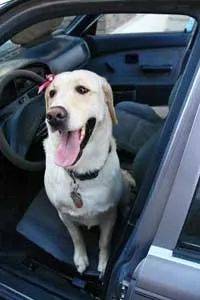
7: Portable Litter Boxes
You’ve secured the car. You’ve draped the seats. But what about the biological reality of a feline companion on a six-hour drive? Cats are creatures of routine, and stripping them of their established litter box habits in a confined metal box can lead to stress, accidents, and a cabin that smells like ammonia and regret.
This is where the best portable litter boxes for travel become non-negotiable gear.
Unlike the bulky plastic units that clutter your garage, travel-specific options are designed for one thing: discretion and ease. You aren’t looking for a luxury suite here. You need something that folds flat, wipes clean, and doesn’t weigh more than your carry-on luggage.
Why standard litter boxes fail on the road
The average household litter box is a trap for travelers. It’s heavy. It’s awkward to clean in a gas station parking lot or at a rest stop with limited plumbing. If your cat has a meltdown because the texture of the litter feels “wrong” or the box is in a weird location, the stress manifests quickly. A secure, enclosed travel box mitigates this by providing a familiar, den-like scent environment. It signals to the cat: This is still your space, just on wheels.
Choosing the right travel litter system
There are two main approaches, and your decision should hinge on your itinerary and your cat’s personality.
1. Foldable Collapsible Boxes
These are typically made from silicone or durable nylon. They look like small tents or shallow bins when expanded.
* Pros: They take up minimal space in your trunk. Most come with a carrying strap. They are lightweight and easy to rinse out with a bottle of water.
* Cons: They offer less privacy for the cat. If your cat is a digger, litter will scatter onto the car floor.
* Best for: Short trips, car camping, or cats who are adaptable.
2. Hard-Sided Travel Carriers with Built-in Litter Trays
Some carriers feature a removable tray at the base that doubles as a litter box.
* Pros: Ultimate containment. No litter tracking into the upholstery if the cat uses it inside the carrier (though you must ventilate).
* Cons: Heavy. Expensive. Limited capacity for litter.
* Best for: Cats with severe anxiety or very long hauls where the cat needs to sleep and eliminate in the same secure zone.
The litter choice matters more than you think
Standard clay litter is a disaster for travel. It’s heavy, dusty (bad for lungs in a closed car), and creates clouds of debris every time your cat digs.
Opt for lightweight, low-dust travel litter. Clumping clay-free options like corn-based, wheat-based, or paper pellet litters are superior. They weigh less, contain odor better than non-clumping sawdust, and don’t track as aggressively. If you’re driving through remote areas where waste disposal is tricky, bring heavy-duty trash bags. You need to pack out what you pack in—especially if you’re stopping at scenic overlooks with no facilities.
Logistics: The Rest Stop Routine
Plan your stops. Don’t wait until the cat is visibly desperate. Every two to three hours, pull over.

Driving for hours with a feline passenger is less about the journey and more about managing basic survival needs. You’ve already accepted that you can’t just pull over on a deserted highway and let a cat do its business like a dog. Cats won’t roam. They’ll bolt. The stress of a loose cat chasing a squirrel into traffic is not a risk anyone wants to take.
This leaves you with two options: train your cat to walk on a leash for outdoor relief or bring the bathroom with you.
Unless you have months to spend on leash training, the second option is the only realistic one. A portable litter tray is the standard solution for road trips. It folds flat. It fits in a glove compartment or under a seat. You scoop. You discard. You repeat.
But there is a catch. Cats are territorial creatures. They rely heavily on scent and routine. If you introduce a strange-smelling, unfamiliar litter box right before a long drive, you’re asking for trouble. Your cat may refuse to use it. The result? A stained backseat, a ruined hotel carpet, or a stressed-out animal that hasn’t relieved itself in days.
To avoid this, you need to prep. Start getting your cat used to the portable litter box weeks before you leave. Let it sniff it. Let it explore it. Ideally, let it use it in your living room so the box becomes a familiar landmark rather than an alien object. If the box smells like home, your cat will likely use it on the road. If it smells like chemical cleaner and panic, you’re in for a messy fight.
6: Toys and Play Sets
Once the biological needs are handled, the next challenge is boredom. A bored cat in a carrier is a stressed cat. A stressed cat is a destructive cat. You need to keep them occupied without turning the car into a toy store.
Why do cats need toys on long drives?
Cats don’t get car sickness from motion alone. They get it from confinement. They can’t run. They can’t climb. They can’t escape the source of their anxiety. Toys provide a mental distraction. They give the cat something to focus on other than the vibration of the engine or the blur of passing scenery.
What actually works?
- Interactive toys with treats: Puzzle feeders that require the cat to work for a piece of kibble. This mimics hunting behavior and keeps them busy for long stretches.
- Soft, crinkle toys: Cats love the sound. It’s unpredictable. It’s engaging. It doesn’t require batteries or complex mechanics.
- Familiar scents: A small stuffed toy that smells like home can be a comfort object. It’s not about play. It’s about security.
Avoid toys with small parts that can be swallowed. Avoid toys with strings that can be chewed off and inhaled. In a confined space, a choking hazard is a nightmare you don’t want to deal with while driving cross-country.
Where do you store the toys?
Keep them separate from the litter supplies. You don’t want the cat associating playtime with the bathroom. If possible, rotate toys. One day it’s the puzzle feeder. The next day it’s the crinkle mouse. Novelty matters. A toy that’s been in the car for three

The car is a cage. A moving one, at that. After an hour, the novelty wears off. Your dog paces. Your cat stares at the back of the seat with growing intensity. They aren’t evil. They’re bored. And they’re waiting for you to do something about it.
You could drive them crazy with sedatives. Or you could just bring a toy.
It’s not rocket science. It’s psychology. Familiarity reduces anxiety. A chew toy they’ve gnawed on for three years smells like home. That scent is an anchor in a sea of unfamiliar highways and changing landscapes. For cats, it’s no different. That worn-out stuffed mouse or the specific threadbare blanket they sleep on? Put it in the carrier. It’s a tiny safe zone.
But if they have too much energy? Boredom turns to agitation. Agitation turns to accidents.
Portable play sets are a hack for the hyper dog. These are mini obstacle courses you can set up in a rest stop parking lot. Jump through hoops. Weave through cones. Burn off that restless energy before you get back on the road. A simple stick or a tennis ball works too. Fetch is the oldest trick in the book for a reason. It tires them out.
5: First Aid-Kit
You pack snacks. You pack water. You pack your passport. But do you pack for the unlikely scenario where things go wrong?
A human first aid kit is useless for a four-legged friend. You need a specific veterinary kit. And you don’t need to buy an expensive pre-made box. You can build one. It’s lighter, cheaper, and you know exactly what’s inside.
Start with basics.
- Sterile gauze pads and rolls. For stopping bleeding. Pressure is your friend.
- Adhesive tape. Medical tape is best. It doesn’t pull fur when you remove it.
- Antiseptic wipes. To clean minor cuts or scrapes before they get infected.
- Hydrogen peroxide. Only if your vet says it’s okay. It induces vomiting, but you need to know the dosage by weight. Use it blindly and you could kill them.
- Tweezers. For ticks. Or splinters. Or whatever sharp thing they step on.
- Saline solution. To flush eyes or ears. Dust gets everywhere.
Don’t forget medications. If your pet is on daily meds, bring enough for the trip plus a few extra days. Just in case. Delays happen. Flights get cancelled. Cars break down.
And a copy of their medical records. Digital or paper. Proof of vaccination. Current weight. Allergies. If you end up at an emergency clinic in a different state, they’ll ask for this. Immediately.
Keep it in an easy-to-reach spot. Not buried under luggage. Not in the trunk. In the seat pocket. Or under the driver’s seat. When panic sets in, you won’t have time to dig.
A prepared kit is better than a panicked owner.
It’s not about expecting disaster. It’s about removing the variable of “I didn’t have that.” When you’re three hours from home, with a bleeding paw and no supplies, the stress multiplies. The kit
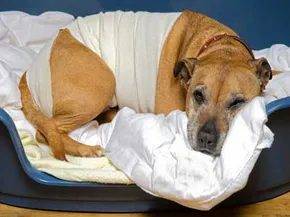
The Hidden Cost of an Unexpected Vet Visit
You pack the snacks. You check the tires. You map out the scenic route. But what happens if Buster throws up in the backseat three hours from home? Or if a stray dog nips your heel on a hiking trail?
Preparation isn’t paranoia. It’s logistics.
Most travelers assume a human first aid kit is enough. It’s not. Animal anatomy is different. Their pain responses are different. And treating a panicked, injured pet requires specific tools you won’t find in a standard bandage box.
You have two choices: buy a pre-made pet kit or build your own. The DIY route is often cheaper and lets you customize for your specific travel style. The American Red Cross provides a solid baseline for what actually matters when things go south.
What to Put in the Box
Don’t overpack. You don’t need a surgical theater. You need a way to stop bleeding, check for shock, and keep them calm. Here is the non-negotiable list:
- Gauze pads and rolls : For wrapping wounds. Cheap, effective, and widely available.
- Bandages : Elastic bandages stay on better than cloth when an animal is moving.
- Cotton swabs : For cleaning ears or small, precise areas.
- Instant cold packs : Crucial for sprains or bites. No freezer required.
- Roll of cloth : Acts as a muzzle if needed, or a sling for a broken leg.
- Tweezers : To remove ticks, splinters, or thorns.
- Thermometer : Rectal thermometers are the standard for accuracy in dogs and cats. Know their baseline temp.
- Hydrogen peroxide : Only if advised by a vet. It induces vomiting. Do not use indiscriminately.
- Antibiotic ointment : For minor cuts to prevent infection in dirty environments.
Beyond the Basics
If you’re heading into the wild or dealing with a senior pet, add these:
- Plastic gloves : Hygiene matters. Even if the pet is yours, blood is blood.
- Scissors : Blunt-tipped are safer. You need them to cut tape or fur.
- Mild sedatives : Only if prescribed by your vet beforehand. Never guess the dosage.
- Eyedroppers : For forced hydration or medication if the pet refuses to drink.
- Bottled water : Keep it sealed. Contaminated water turns a minor injury into a disaster.
The Golden Rule: Know When to Stop
You are not a veterinarian.
If you see major bleeding, difficulty breathing, or a suspected fracture, stop trying to fix it. Your instinct will be to help. Your first aid kit is for stabilization, not cure.
Locate the nearest emergency vet before the emergency happens. Save the address in your phone. Write it on your hand if you have to. The difference between a minor scare and a tragedy is often time.
4: Travel Water Dispenser

Hydration is the baseline. You already know that a dry cat or dog is a distressed one. The goal isn’t just survival; it’s keeping them at their normal hydration levels from home. If they drink half a cup in the living room, they need half a cup in the backseat. Simple math.
The real problem isn’t the water itself. It’s the mess. A standard ceramic bowl? Forget it. One pothole on a country road and you’ve got a puddle on the floor mat and a slippery hazard for the driver. You need gear that stays put.
Enter the pet travel water dispenser. These aren’t just fancy bowls. They are engineered to stop spills before they happen. Some models use a gravity-fed system that only releases a shallow trickle into the dish. The pet laps it up, and the rest stays in the reservoir. No sloshing. No flooding the footwell.
Then there are the collapsible fabric bowls. Look for the ones with square or wide bases. A round, flimsy bowl will tip over if your pet leans too hard. A weighted, square base stays anchored even during sudden braking. If you go with fabric, check the tag. Make sure it is food-safe. You don’t want your dog licking plasticizers or dyes while trying to quench thirst.
And the cost? It’s negligible. You can find a reliable travel bowl for under $10. That’s cheaper than the insurance deductible you’d pay for a distracted driver incident caused by a wet floor.
3: Seat Belt Harnesses
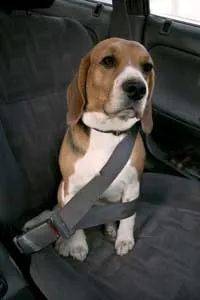
Once the water situation is handled, the next priority is restraint. A loose pet in a moving vehicle is a projectile. In a sudden stop, an 80-pound dog can become a missile with the force of a small car. That’s not fear-mongering. It’s physics. And it’s dangerous for the pet, the passengers, and the driver.
Standard collars won’t cut it here. If a dog pulls against a collar during a sudden stop, the pressure snaps onto the neck. Tracheal damage is a real risk. You need a harness that distributes force across the chest and shoulders. But not just any harness. It has to be crash-tested and designed specifically for vehicle travel.
Look for harnesses that come with a tether strap. This strap clips into the car’s seat belt buckle, just like a human seatbelt. Some systems even attach to a LATCH anchor point in the backseat for extra stability. The key is to ensure the harness fits snugly. You shouldn’t be able to pinch more than an inch of loose fabric at the shoulder. If it’s too loose, the pet can slip out. If it’s too tight, it restricts breathing and movement.
Adjustment is key. Measure your pet’s girth and neck circumference before you buy. Sizing charts vary wildly between brands. A medium in one brand might be a large in another. Don’t guess. Measure.
The harness should sit high on the chest, not low on the belly. This prevents the pet from sliding under the belt in a crash. Also, check the tether length. It shouldn’t be so long that the pet can jump into the front seat. That’s a distraction, plain and simple. And it’s illegal in several states.
Some harness
2: Pet ID Tags
You can secure a crate, strap in a harness, and buckle every passenger, but if your pet bolts the moment you step out of the car, none of that hardware matters. This is where pet ID tags stop being an accessory and start being your safety net.
Most states don’t have a specific law mandating ID tags for pets in the way they mandate seat belts for humans. That doesn’t mean you can skip them. In fact, skipping them is a gamble you don’t need to take. When a dog or cat slips its collar and wanders off, a tag is the fastest, most reliable way for a good Samaritan to call you back.
Think about the logistics. If you’re driving through rural Montana or hopping off a highway in remote Arizona, cell service might be spotty. A tag with your name and number engraved directly on metal is always readable. No batteries. No sync issues. Just immediate contact info.
Choose a tag that’s durable. Steel or aluminum holds up better than cheap brass, which can tarnish or wear down over time. Engraving is better than printed stickers, which fade in the sun. And don’t just put your home address. If you’re traveling, list a local contact number or a secondary phone line. Your home line might go to voicemail while you’re stuck in traffic or exploring a national park.
Consider adding a QR code tag, too. These scan to reveal more info: medical needs, allergies, or even a photo. It’s a small upgrade for a lot of peace of mind.

A collar isn’t just an accessory. It’s the first line of defense when you’re miles from home.
Most owners slap a tag on their dog or cat without thinking twice. It lists a name. Maybe a phone number. That’s good for the block. It’s not good for the highway. When you travel, the rules change. You need more than local info.
You need travel contact information on your pet’s tags. This is the difference between a quick reunion and a week of panic.
Beyond the Name Tag
Microchips are great. They’re permanent. They’re reliable. But they have a flaw.
They require a scanner. They require a shelter or vet to think to use one.
If a stranger finds your pet in a parking lot or a park, they won’t scan for a chip. They’ll look at the collar. If it only has your home address, they’re stuck. They might call your house. But if you’re in a different state? Different time zone? You won’t get the call in time.
This is why travel contact information is non-negotiable.
Add a tag with your current address. Or better yet, a number for a friend or family member back home who knows where you are. Rabies tags are legally required in many places. Keep those. But add a second tag. One that says: “I am traveling. Call this number.”
Make sure the collar itself is secure. An old, frayed nylon strap snaps under stress. A broken buckle vanishes into the grass. Check the fit. You should be able to slip two fingers under it. Tight enough to stay on. Loose enough to breathe.
1: Pet Carriers
Once the ID is sorted, you need a way to move the animal.
Carriers aren’t just for flights. They’re for taxis. For train rides. For moments when the vet needs to see the pet before you can get out of the car.
Hard-sided carriers offer protection. They contain the mess. They keep the pet safe during sudden stops.
Soft-sided carriers are lighter. They fit under seats. They’re easier to carry through crowded terminals.
Pick the right one for your mode of transport. Airline rules vary. Some allow soft bags in the cabin. Others require hard cases in cargo. Check the airline policy before you book. Not doing so means paying for expensive rebooking fees. Or worse, being turned away at the gate.
Line the bottom with an absorbent pad. Pets get nervous. They might get sick. Or they might just lose control. A waterproof liner saves you from cleaning a stained carrier later.
Bring a familiar toy. Or a blanket that smells like home. Scent is a powerful anchor for anxious animals. It helps them settle in the new space.
The goal is predictability. Your pet shouldn’t be a variable. They should be part of the plan. Just like your tickets. And your passport. And your travel tags.
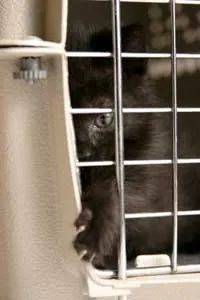
You already know a tag is non-negotiable. A carrier is just as essential. But do not assume the box sitting in your closet is ready for a cross-country flight. You need to inspect it with a critical eye. Is it actually safe for an extended journey?
Start with the doors. Check the latches. Does your dog scratch at the plastic when you crate him for a vet visit? Has he ever chewed through? If he has escaped, even once, that carrier is a liability. Replace it. Grated metal doors offer the best security. They are chew-proof. Plastic doors give way under determined teeth.
Ventilation is the next check. Air openings need to be plentiful. But there is a limit. Do not open the vents so wide that your pet can shimmy out. Balance safety with airflow.
Airline Rules and Carrier Myths
Thinking of flying? Stop looking for an “airline-approved” label. The U.S. Department of Agriculture (USDA) explicitly warns against companies that use this term. It is a marketing gimmick. Most airlines do not allow wheeled carriers in the cabin anyway. There is no such thing as a pre-approved type of carrier.
The truth is harsher. Pet travel rules differ among airlines. One carrier fits one airline, but fails another. You must contact your specific carrier for their exact specifications. Do not guess. Do not assume.
Opt for the strongest, most comfortable crate you can find. Comfort matters. Security matters more. Your pet’s safety during the flight depends on your diligence before you even pack the bag.
Related HowStuffWorks Articles
-
How Pet Microchipping Works
-
6 Pets that Traveled Long Distances to Get Home
-
Do pets suffer jet lag?
-
Top 5 Risks When Driving with a Pet
-
How Pet Shipping Works
More Great Links
-
USDA: Pet Travel
-
Humane Society: Caring for Your Pets When You Travel
Sources
-
American Association of Veterinary Medicine. “Pet Travel Tips.” Updated Dec. 2, 2008. (Jan. 8, 2009)http://www.cvm.umn.edu/newsandevents/facts/petsafety/Pet_Travel_Tips/index.htm
-
“Caring for Your Pets When You Travel.” The Humane Society of the United States. (Jan. 8, 2009)http://www.hsus.org/pets/pet_care/caring_for_pets_when_you_travel
-
“Dog Tip: First Aid Kits and Emergency Treatments — Prepare Now!.” Paw Rescue. (Jan. 8, 2009)http://www.paw-rescue.org/PAW/PETTIPS/DogTip_FirstAid.php
-
“First Aid for Pets.” American Red Cross. (Jan. 8, 2009)http://www.redcross.org/SERVICES/disaster/beprepared/firstaid.html
-
“Industry Statistics & Trends.” American Pet Products Association. (Jan. 8, 2009)http://www.americanpetproducts.org/press_industrytrends.asp
-
“Pet Travel.” U.S. Department of Agriculture. Updated Oct. 1, 2008. (Jan. 8, 2009)http://www.aphis.usda.gov/animal_welfare/pet_travel/pet_travel_tips.shtml