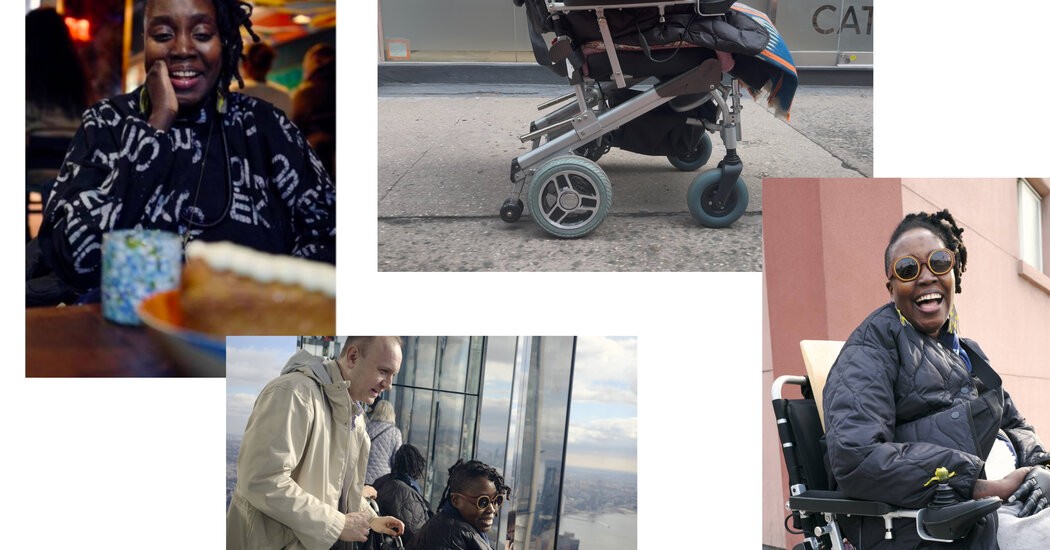
For many, travel is defined by the distance covered from the familiar. But for one long-term New Yorker, travel has undergone a radical transformation. It is no longer about crossing borders, but about navigating the inches and obstacles that lie just beyond her front door.
Following a traumatic hospitalization in late 2023 marked by medical errors, the author returned to her Brooklyn home in mid-2024 as a bilateral below-the-knee amputee. Now, her primary connection to the world is an electric wheelchair, operated with a single remaining digit. This physical shift has fundamentally altered her relationship with the city she has called home for nearly two decades, turning her familiar neighborhoods into foreign, often impenetrable, landscapes.
The Friction of Urban Living
The transition from a pedestrian to a wheelchair user reveals a stark reality: the “built environment” is often designed for a specific type of body. For someone navigating a wheelchair, the city is a series of negotiations.
The author highlights several systemic barriers that turn simple outings into logistical hurdles:
– Physical Obstacles: Craggy sidewalks, constant construction, and steep thresholds.
– Transit Gaps: The “unchasm” between subway platforms and trains that makes public transit unreliable.
– Inaccessible Entrances: Establishments where the only accessible door is a full block away, making spontaneous visits impossible.
This experience highlights a broader urban challenge: accessibility is often treated as an afterthought rather than a fundamental right. Even when “accessible” labels are applied, they frequently fail to meet the nuanced needs of individuals, such as the specific requirements for bathroom fixtures or the physical strength needed to operate heavy glass doors in museums.
A Three-Day Test: Resident vs. Tourist
To confront the feeling of disconnection, the author embarked on a three-day “tourist” itinerary in Manhattan. By adopting the mindset of a visitor, she sought to measure how New York’s cultural and public spaces accommodate—or fail—those with different physical abilities.
Successes in Inclusion
Some spaces provided much-needed ease of movement, allowing for genuine engagement with the city:
– Little Island: The paved, meandering pathways offered a rare sense of freedom from the constant mental scanning for obstacles.
– The Sofitel: While the hotel struggled with specific bathroom needs, its broad sidewalks and helpful staff provided a baseline of comfort.
– Summit One Vanderbilt: A multisensory experience that provided a sense of total inclusion, allowing her to feel part of the city’s vast, visceral skyline.
– The Studio Museum in Harlem: Its renovated, open galleries offered an empowering sense of space.
The Emotional Toll of Barriers
Despite these successes, the journey was not without friction. The author notes a profound sense of grief when faced with physical limitations—such as the inability to stand eye-to-eye with a painting in a museum or the frustration of encountering a bathtub where a shower was required.
At Summit One Vanderbilt, a moment of catharsis occurred in a room filled with silver spheres. As she struck the balloons, the physical act served as a release for the anger and trauma stemming from her medical ordeal. It was a reminder that accessibility is not just about ramps; it is about the emotional dignity of being able to participate in life without constant struggle.
Finding a New Way Forward
The journey through Manhattan was more than a logistical test; it was a psychological recalibration. Through the lens of food, music, and art, the author began to find her footing again. Whether through the rhythm of live jazz at Birdland or the familiar Caribbean flavors at an East Village restaurant, the city began to feel like “home” once more.
The realization reached is both personal and profound: while the city’s infrastructure may be flawed, the individual must find a way to adapt.
“I realized that I do not need the city to be a kinder place to me. I need to be kinder to myself.”
Conclusion
The author’s experience serves as a poignant reminder that urban accessibility is a matter of human dignity. While the city’s physical flaws are inevitable, the ability to navigate them with grace and inclusion remains a vital goal for any functioning society.