As Royal Jordanian modernizes its fleet with the latest generation of Embraer E190/195-E2 regional jets, a surprising and controversial new cabin configuration has emerged. While the airline aims to upgrade its service, a recent review of the new business class product suggests that a “creative” approach to seat design may actually be undermining the passenger experience.
The Staggered Layout: Intent vs. Reality
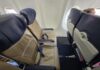
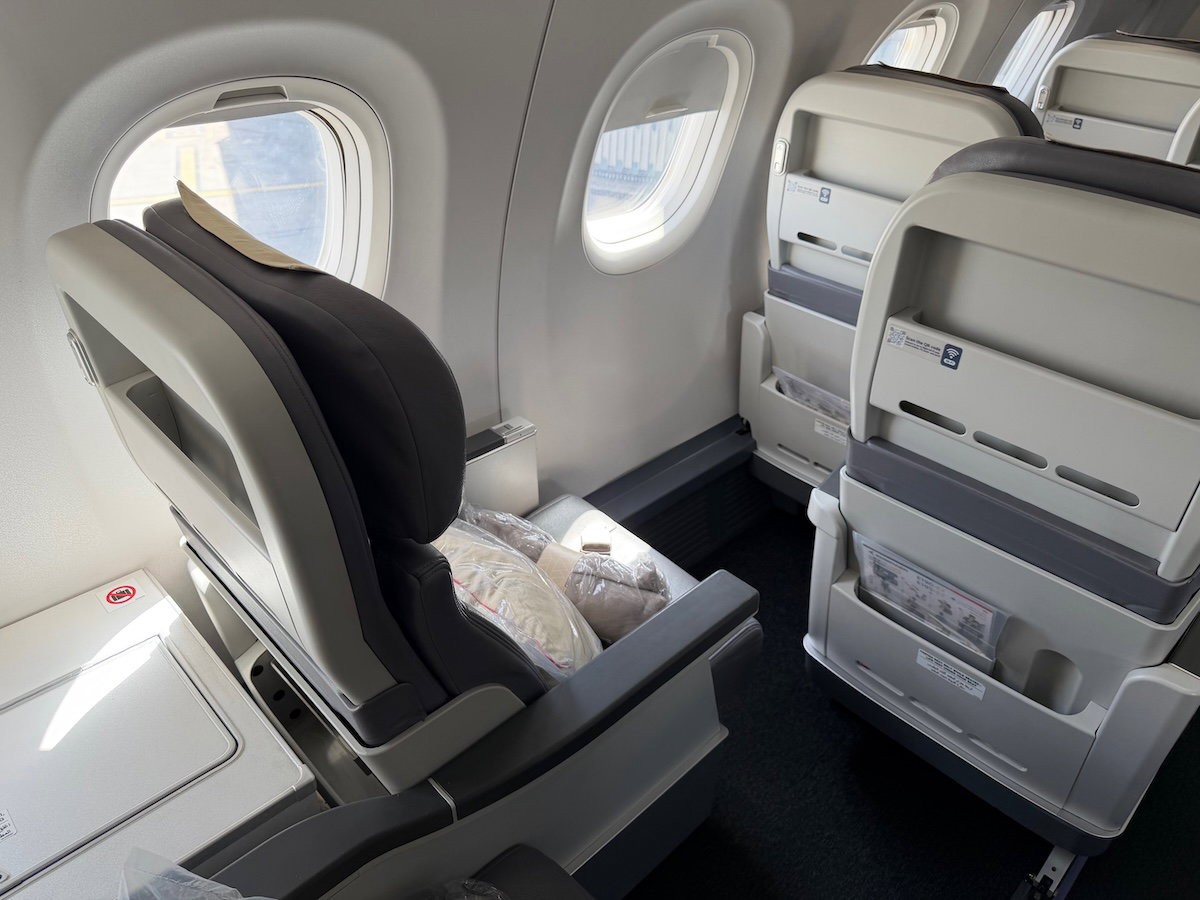
On these newer Embraer jets, Royal Jordanian has moved away from the traditional 1-2 business class layout, opting instead for a 2-2 configuration. To maximize space and privacy within this denser setup, the airline has implemented a staggered design.
In this arrangement, the window and aisle seats are offset. The window seat is positioned halfway between the aisle seats of the adjacent row. This design was likely intended to achieve two goals:
– Increased Privacy: Providing a sense of separation between passengers.
– Enhanced Width: Utilizing the offset to squeeze slightly more width out of each seat compared to a standard economy layout.
However, the execution creates significant practical hurdles. Because the seats feature a “shell” design—where reclining involves sliding the seat forward—the gap between rows becomes nearly non-existent. This makes accessing the window seat a physical challenge, requiring passengers to step over the person in the aisle seat, even when the seat is fully upright.
The “Privacy” Paradox
The most significant flaw in this design is not the lack of physical space, but the psychological discomfort it creates.
While the staggered layout aims to offer privacy, it inadvertently creates an awkward social dynamic. Because the window seat is offset, the passenger in the aisle seat is positioned just inches behind the person in the window seat. Rather than feeling private, the window passenger often feels “on display,” as if they are being watched by the person seated directly behind them.
“It’s not that they’re eavesdropping; it’s that you feel like you’re being watched because the person is seated so close to your shoulder.”
Without privacy partitions to break the line of sight, the layout feels more intrusive than a traditional side-by-side seating arrangement.
A Mismatch for Long-Haul Missions
This design choice is particularly problematic when considering the changing role of the Embraer fleet. Historically, these regional jets were used for short, intra-regional hops. Today, Royal Jordanian is using them for much longer missions, including five-hour flights to Europe (such as Amman to Frankfurt).
This shift creates a service gap:
1. Increased Duration: Passengers are spending significantly more time in a seat that lacks the comfort and ergonomic flow of traditional business class.
2. Competitive Disadvantage: On European routes, Royal Jordanian is competing against major carriers that offer standard intra-European business class products. By opting for a cramped, staggered regional configuration, the airline may be underserving passengers who expect a higher standard of comfort for mid-haul flights.
Conclusion
Royal Jordanian’s attempt to innovate with a staggered 2-2 business class layout on its Embraer fleet has resulted in a product that prioritizes seat density over passenger dignity and comfort. While the design attempts to solve the problem of space, it creates new issues regarding accessibility and social awkwardness, making it a questionable choice for long-duration regional flights.