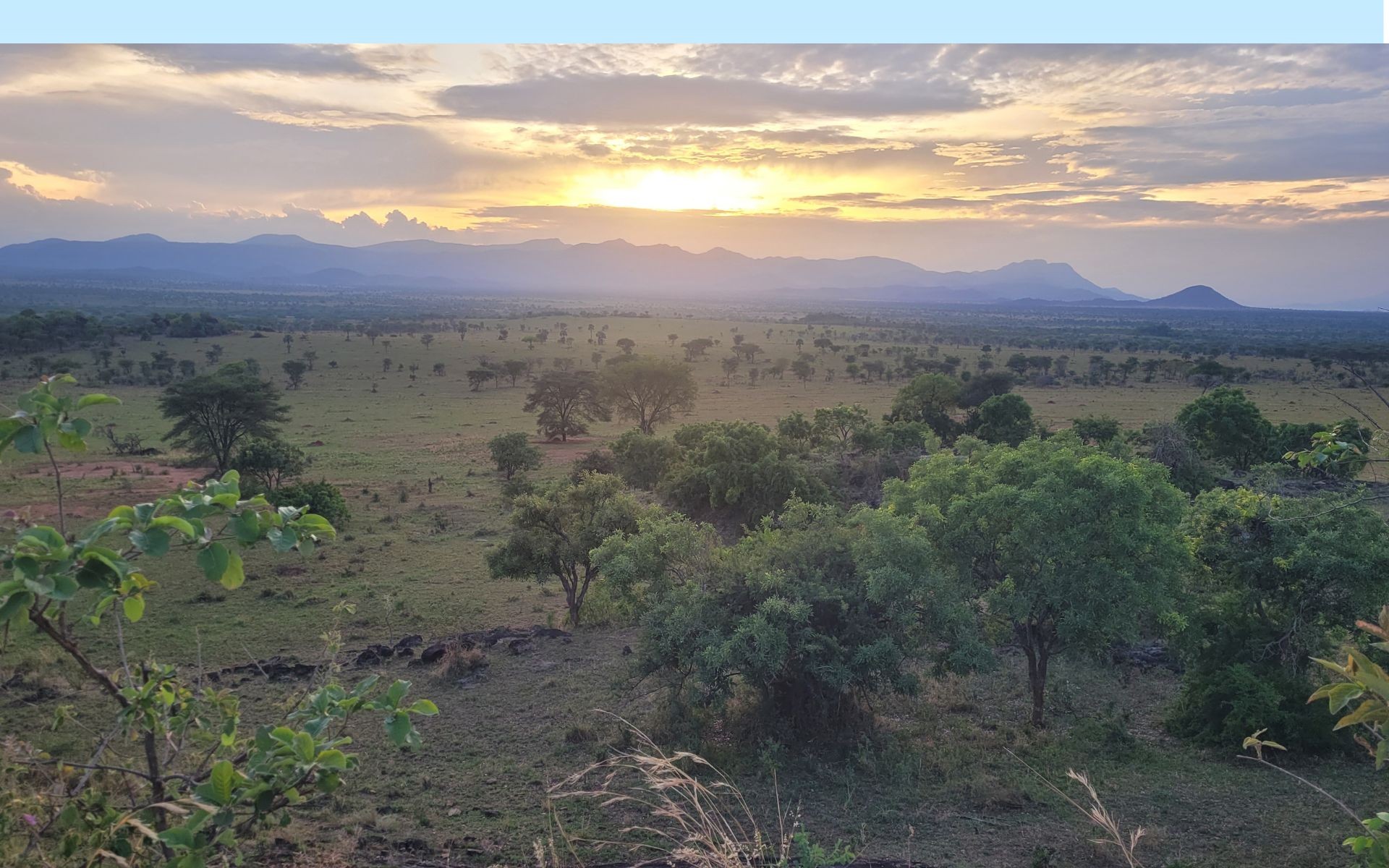
Alfred points.
Beyond the savannah, something waits.
New rhinos. Coming home.
It hasn’t happened here in four decades. Forty years since poachers wiped out every single wild rhino in Uganda. The last one died in 1983, right in Kidepo. Total zero. Silence.
Then, March 17, 2 26. The news drops while I’m still halfway across the country. Two southern white rhinos moved in. Just two. But they’re here.
They’ll join the lions. The leopards. Elephants. Buffalo.
Once the fences come down and these rhinos walk the park proper, Uganda has something it hasn’t had in decades. The Big Five. All of them. Together.
**
The brand matters, even if it’s nonsense
Let’s be real about “Big Five.” The name is a colonial relic. Brits hunting on foot in the late 19th century just wanted the animals hardest to kill. Dangerous to approach. That was it. Nothing to do with size. Or beauty. Or being cool to look at.
Buffalo make the list because their horn plates are like judge’s wigs. Giraffes don’t? Too safe? Hippo kills hundreds of humans a year, eats you if you look wrong, yet somehow misses the cut because they stay underwater? Absurd.
But tourists love the list. Parks market the hell out of it. Kidepo gets the title, the badge, the bragging rights. Does it change the biology? No. But it changes the money flow. Maybe that matters too.
“The Big Five status will enhance the park’s biodiversity. Boost tourism. And the rhinos prune the grass.”
— Alfred Abcondo
Grass pruning. Who thought of that? I didn’t.
**
The hardest park to love, easiest to ignore
Kidepo is remote. Brutally so. Northeast Uganda, dust, heat, sky stretching forever. It’s the least visited park in the country. Most people bypass it entirely for Bwindi or Murchison. Big mistake.
I’ve been there. Twice. The light hits different. The Karamojong roam semi-nomadic, the Ik gather in the foothills, 500 bird types sing at dawn, and the semi-arid valleys feel older than memory.
Patrick Okwelle knows every track. He’s guided there since forever. Relocated giraffes before. Eland before. Now rhinos. He wants the tourists. Wants the locals employed. Wants this isolated jewel to shine.
“We hope tourism booms,” he says. Simple wish. Heavy lift.
**
From ranch to wilderness
These two came from Ziwa. Private ranch just outside Kampala. Twenty years of breeding programs since they brought four founders from Kenya in 2005. Now Ziwa is thinning its herd, sending pairs further afield.
Eight rhinos planned for Kidepo in total. This pair? Step one.
The site is locked down tight. Perimeter fence. Rangers on bikes. Camera traps. Roads cut in for vet checks. The International Union for Conservation of Nature says southern white rhino is ‘Near Threatened’ now. Under 16,00 left globally. Still vulnerable. Still wanted by poachers who see horns and not animals.
Translocation is messy. Stressful. Logistics nightmare. No date yet for when they open up into the wide landscape. Patience. Security comes first. Survival comes first.
James Musinguzi, head of the Uganda Wildlife Authority, called it “a new story.” First chapter, he said. Restoration begins here.
He probably believes it. Do you?
The fence is up. The grass grows high.
Somewhere behind us, dust rises again.
Alfred smiles. Says nothing.
Just lets us drive on.