
For many travelers, Athens is the gateway to Greece, but the real magic often lies just beyond the city limits. While the Acropolis and Plaka offer undeniable historical weight, the Saronic Gulf islands provide a different rhythm: salt air, pine-scented breezes, and a chance to escape the urban bustle without spending hours in transit.
These five islands—Aegina, Agistri, Hydra, Poros, and Spetses—are accessible from the port of Piraeus (just outside Athens) in under three hours. They cater to different tastes, from ancient history buffs to those seeking quiet coves or car-free artistic havens. Here is how to choose the right island for your day trip.
1. Aegina: The Pistachio Capital & Ancient Ruins
Travel Time: ~40 minutes (fast ferry)
Best For: History lovers and foodies who want efficiency.
Aegina is the closest island to Athens, making it the most popular choice for a quick escape. Its proximity means high ferry frequency—up to 20 crossings a day in summer—but this also means it can get crowded. To enjoy the experience, aim for an early morning departure or a late afternoon return.
The island’s identity is defined by two things: its pistachios and its antiquity. As you step off the ferry, vendors will offer you bags of fresh pistachios, pistachio ice cream, and pastries. This isn’t just a souvenir; Aegina is famous for the high-quality Aegina pistachio, a protected geographical indication product in the EU.
Key Highlights:
* Temple of Aphaia: Located on a hilltop overlooking the sea, this Doric temple dates back to 500 BCE. It forms part of the “Sacred Triangle” along with the Parthenon and the Temple of Poseidon at Sounion. Twenty-five of its original 32 columns remain standing, offering a powerful visual connection to classical Greece.
* Temple of Apollo: Near the port, these ruins sit adjacent to a sandy beach that remains surprisingly tranquil despite its accessibility.
* Logistics: Rent a scooter at the port to navigate between sites comfortably. The ride through the pistachio orchards is scenic and efficient.
Why it matters: Aegina demonstrates how accessible ancient history can be when integrated into modern infrastructure. It’s perfect for travelers who want to check off a major historical site without sacrificing their evening in Athens.
2. Agistri: The Secret Beach Escape
Travel Time: ~55 minutes (fast ferry)
Best For: Solo travelers, couples, and anyone seeking tranquility.
If Aegina is the bustling neighbor, Agistri is its quiet sibling. Located just 10 minutes by ferry from Aegina, Agistri sees far fewer international tourists. It is primarily a retreat for locals, which keeps the atmosphere relaxed and authentic.
The island is small enough to explore on foot or by bicycle, but its draw is the coastline. The western side is dominated by dense pine forests that descend almost to the water’s edge, creating shaded, intimate coves.
Key Highlights:
* Dragonera Beach: The main beach is split into an organized section with sunbeds and a bar, and a wilder section with black pebbles and clear water. The contrast offers flexibility depending on your comfort level.
* Seclusion: Unlike the resort-heavy islands, Agistri lacks large hotel complexes. Instead, you’ll find family-run tavernas and small guesthouses.
* Logistics: You can easily combine Agistri with Aegina in a single day. Take the short hop between islands to experience both the historical and the natural sides of the gulf.
Why it matters: In an era of overtourism, Agistri represents the “slow travel” trend. It proves that a rewarding island experience doesn’t require luxury resorts or long transit times—just clean water and a lack of crowds.
3. Hydra: The Car-Free Artistic Haven
Travel Time: ~1 hour 10 minutes (fast ferry)
Best For: Art lovers, writers, and those who dislike motor traffic.
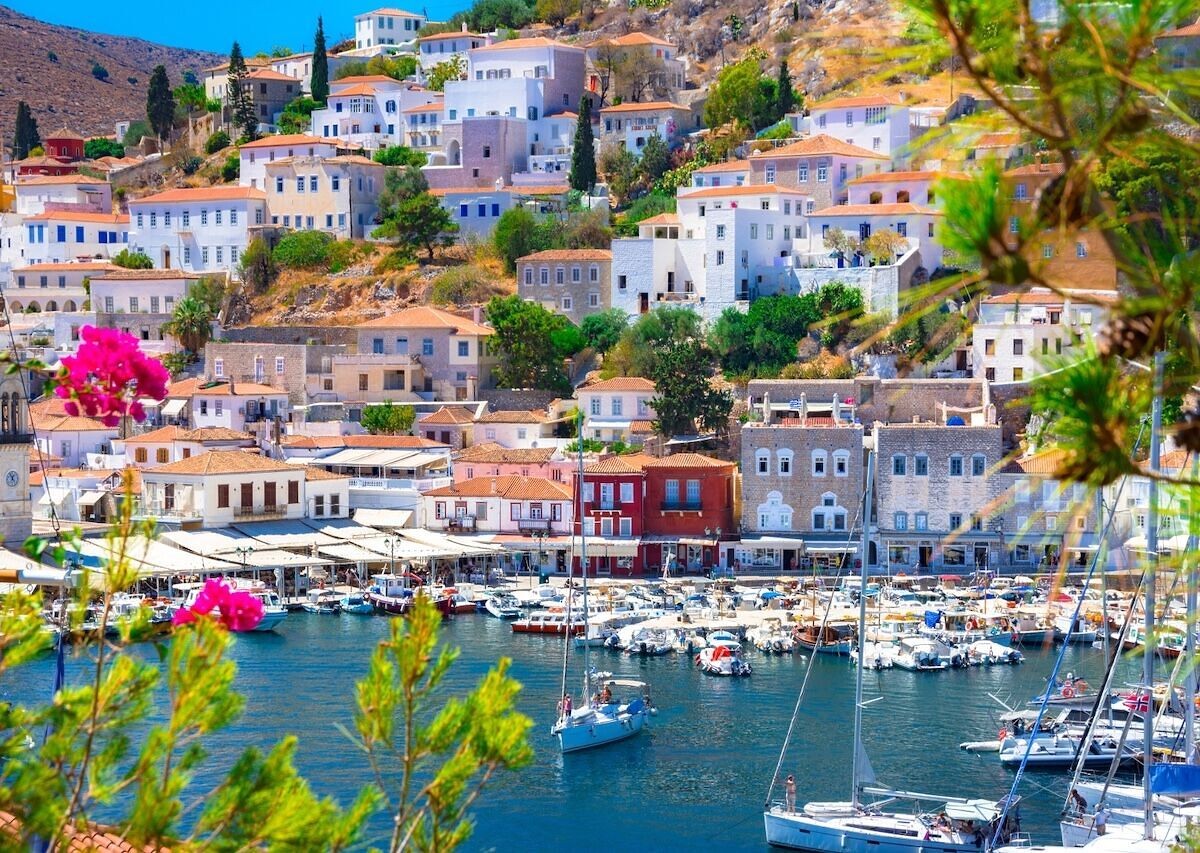
Hydra is unique among Greek islands because it prohibits motor vehicles. There are no cars, buses, or scooters in the town. This restriction has preserved its neoclassical architecture and created a pedestrian-friendly environment where the only sounds are footsteps, church bells, and the lapping of waves.
The island’s history is tied to the Greek War of Independence, where wealthy shipowners funded the revolution. Their legacy is visible in the stone mansions lining the crescent-shaped harbor. Today, Hydra attracts artists and intellectuals, maintaining a bohemian charm that feels distinct from typical tourist destinations.
Key Highlights:
* The Harbor Town: Spend your afternoon browsing boutique jewelry studios and art galleries. The craftsmanship here is often high-end and custom-made.
* Kamini & Leonard Cohen’s Bench: A 15-minute walk west leads to Kamini, a small fishing village. Here, you’ll find a bench dedicated to Leonard Cohen, who lived on Hydra in the 1960s. It’s a quiet spot for reflection.
* Amygdalota: Try the local almond sweets, a traditional delicacy sold in the harbor shops.
* Logistics: Since you can’t drive, plan your itinerary around the harbor. For beaches further out, water taxis are available. Consider staying overnight to see the island transform after the day-trippers leave.
Why it matters: Hydra challenges the notion that island travel requires motorized transport. It offers a sustainable, low-impact model of tourism that preserves cultural heritage while enhancing visitor safety and comfort.
4. Poros: The Gateway to the Peloponnese
Travel Time: ~55 minutes to 1 hour (fast ferry)
Best For: Hikers, history enthusiasts, and those who want a mainland feel.
Poros is geographically unique: it sits just 200 meters from the Peloponnese peninsula. This proximity gives it a distinct character—it feels less like an isolated island and more like a hillside town overlooking the sea. The view from the island includes the mountains of the mainland, offering a dramatic backdrop.
The island is named after the mythical nymph Poros, but its modern identity is shaped by its clock tower and ancient sanctuaries. It’s a great base for exploring both island life and nearby mainland history.
Key Highlights:
* The Clock Tower: Built in 1927 on Sferia Hill, this landmark offers panoramic views of the bay, the strait, and the lemon groves on the opposite shore. The 15-minute climb is worth it for the sunset view.
* Sanctuary of Poseidon: Located on the northern side, these ruins date to 520 BCE. Legend says the orator Demosthenes took poison here in 322 BCE rather than surrender to Macedonian forces. It’s a poignant reminder of the island’s strategic and political importance in antiquity.
* Beaches: Monastiri and Russian Bay offer easy access to the water. Monastiri is particularly popular for its organized facilities.
* Logistics: Poros connects easily to Hydra and Spetses, making it a natural hub for island-hopping itineraries.
Why it matters: Poros illustrates the interconnectedness of Greek geography. It serves as a bridge between the urban center of Athens and the rural, mountainous regions of the Peloponnese, offering a hybrid experience of island relaxation and mainland accessibility.
5. Spetses: The Elegant Weekend Retreat
Travel Time: ~2 hours 30 minutes (fast ferry)
Best For: Luxury travelers, history buffs, and those seeking a sophisticated atmosphere.
Spetses is the farthest island on this list, but its longer journey is justified by its refined character. Like Hydra, it restricts private cars in the town center, but it adds a twist: horse-drawn carriages are a common mode of transport. The island has long been a weekend escape for Athens’ elite, and this history is evident in its Belle Époque architecture and high-end amenities.
Spetses played a crucial role in the Greek Revolution, producing many leaders and admirals. This legacy is preserved in its museums and historic buildings, blending political history with leisure.
Key Highlights:
* Agioi Anargyri Beach: A long sandy beach on the western side with excellent facilities. From here, a path leads to Bekiri Cave, a sea cave with a hidden beach inside. Accessible by swimming or a short cliff walk, it’s a rewarding adventure.
* Poseidonion Grand Hotel: Built in 1914, this seafront hotel is an architectural landmark. Its restaurant, On the Verandah, uses produce from the hotel’s own organic farm, showcasing the island’s commitment to local sourcing.
* Harborfront at Dusk: Watch the horse-drawn carriages return as the sun sets. The neoclassical mansions reflect in the water, creating a picturesque scene.
* Logistics: Book ferries in advance for summer weekends. Alternatively, drive to Porto Heli on the mainland and take a 15-minute water taxi for a faster, more flexible option.
Why it matters: Spetses represents the evolution of Greek island tourism from rustic escapes to curated luxury experiences. It shows how historical preservation and modern hospitality can coexist, offering a high-end alternative to mass-market destinations.
Final Thoughts
Choosing among these five islands depends on what you seek: Aegina for history and efficiency, Agistri for peace and nature, Hydra for art and tranquility, Poros for views and hiking, and Spetses for elegance and luxury.
Each island offers a distinct flavor of Greek life, proving that you don’t need to leave the Attica region to experience the diversity of Greece. Whether you have four hours or a full day, the Saronic Gulf provides a seamless escape from the city, enriching your Athens visit with sea breezes, ancient stones, and local flavors.