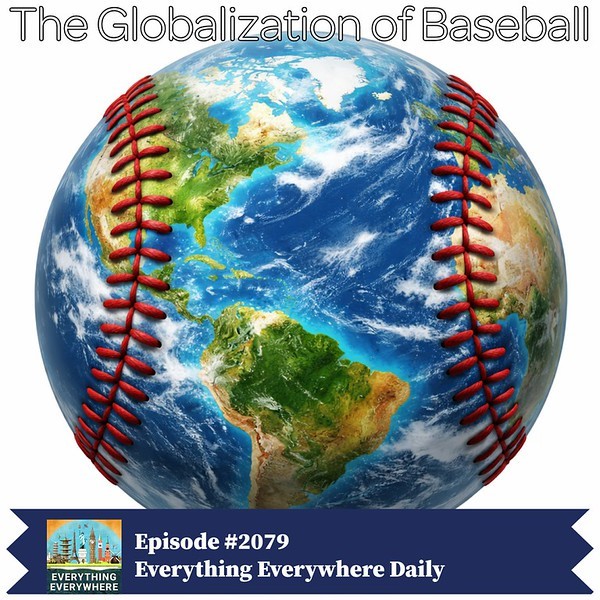
Baseball, once a quintessentially American sport, has undergone a remarkable transformation. Today, it thrives on nearly every continent, showcasing talent from the United States, Japan, the Dominican Republic, Venezuela, Korea, and beyond. This expansion wasn’t always guaranteed; for much of its history, baseball lacked a truly international championship. The creation of the World Baseball Classic in the 21st century filled that void, establishing a stage for the world’s best baseball nations to compete for dominance.
The American Roots and Global Spread
Baseball’s precise origins remain somewhat mythical, but its capture of the American imagination is undeniable. From those early days, the sport steadily spread worldwide, becoming a global favorite. Over the past two decades, foreign-born players have dominated Major League Baseball, with ten MVP awards going to international stars—most notably Shohei Ohtani, a four-time winner who has redefined the game with his two-way talent.
Japan’s Embrace: From Schoolyards to Global Dominance
No country has embraced baseball with more fervor than Japan. Introduced in 1872 by American schoolteacher Horace Wilson, the sport rapidly permeated Japanese schools and became the nation’s most popular pastime. This adoption wasn’t accidental: Japan’s Meiji Restoration prioritized Westernization, and baseball served as a perfect vehicle for modernization.
The arrival of Babe Ruth, Lou Gehrig, and Jimmie Foxx in 1934 ignited baseball fever across Japan. Millions flocked to see these American legends, and the visit spurred the creation of the Japanese Baseball League (JBL) in 1936, which later evolved into Nippon Professional Baseball (NPB).
After World War II, baseball became a symbol of Japan’s recovery, championed by General Douglas MacArthur himself, who recognized the sport’s value in rebuilding national spirit. Today, NPB stands as the second-best league globally, consistently producing elite talent. Players like Sadaharu Oh (with a record 868 home runs) and Ichiro Suzuki have left an indelible mark on the game. Japan currently ranks first in the World Baseball Softball Confederation (WBSC) rankings, boasting three World Baseball Classic titles—more than any other nation.
Baseball’s Diffusion Through Asia
Japan’s baseball success fueled its spread throughout Asia, particularly in Taiwan. Initially introduced through Japanese settlements during the colonial period, the sport quickly gained traction among Taiwanese communities. Even after the Kuomintang’s retreat to Taiwan in 1949, baseball flourished. Taiwan’s Little League teams dominated the Little League World Series, winning 15 titles between 1969 and 1991. Though political constraints force them to compete as “Chinese Taipei,” the nation ranks second in the WBSC.
South Korea has also embraced baseball, establishing a thriving professional league and consistently performing well in international competitions.
The Latin American Connection: From Cuba to the Dominican Republic
Just as Japan served as Asia’s gateway, Cuba became the entry point for baseball in Latin America. The sport took root in the 19th century, initially among elite Cubans educated in the United States and later among workers exposed to the game through American sailors. Despite Spanish colonial bans, baseball became a symbol of rebellion and national identity.
The Cuban League, founded in 1878, thrived until the Castro regime abolished it in 1961. Today, Cuba’s National Series continues to showcase exceptional talent, though players face restrictions on leaving the island. Despite these limitations, Cuban baseball has produced Hall of Famers like Tony Pérez and Minnie Miñoso.
The Dominican Republic and Venezuela followed suit, with baseball becoming deeply ingrained in their cultures. The Dominican Republic, in particular, has become a prolific producer of MLB talent, including Juan Marichal, Albert Pujols, and Juan Soto. American oil interests in Venezuela and the nation’s early success in the Amateur World Series further cemented the sport’s popularity there. The rise of winter leagues in these countries also became critical for American player development.
The World Baseball Classic: A Global Stage
The desire for a premier international championship led to the creation of the World Baseball Classic in the early 2000s. Co-organized by Major League Baseball and the WBSC, the tournament provides a platform for the world’s best players to compete on a global stage. Though the name was chosen to avoid confusion with existing competitions, the WBC has become a symbol of baseball’s worldwide reach and talent.
Baseball may never rival soccer’s global dominance, but the success of the World Baseball Classic proves that the sport’s international presence is undeniable. The game continues to evolve, drawing talent from every corner of the world and cementing its place as a truly global phenomenon.