
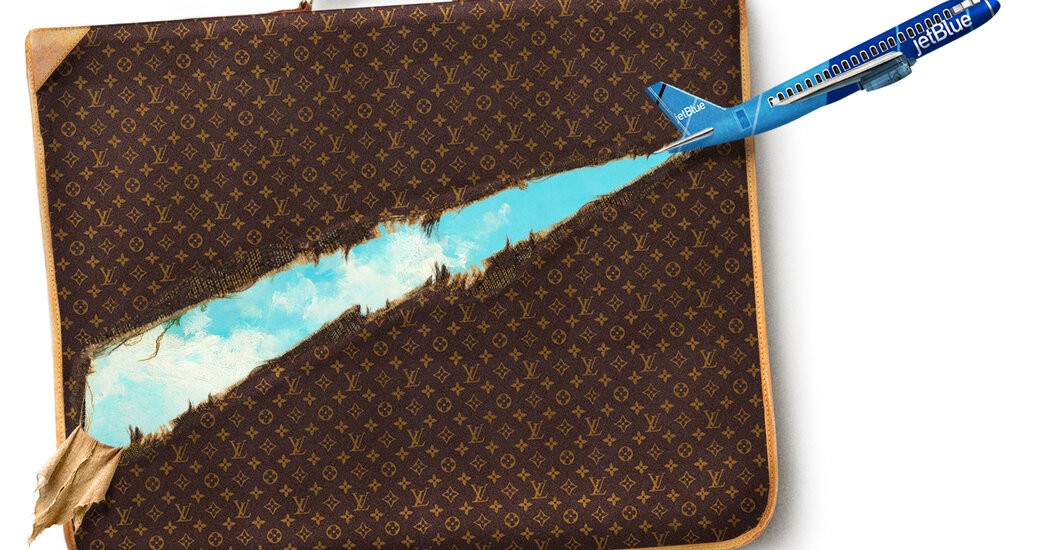
A New York woman, Jamee, has been fighting with JetBlue after the airline damaged her vintage Louis Vuitton bag during a February flight from Palm Beach, Florida, to Long Island MacArthur Airport. The bag, a family heirloom purchased in Paris in the 1970s, was ripped apart in transit. Despite filing a claim and providing photographic evidence, JetBlue has stalled payment, demanding impossible documentation like a 50-year-old receipt.
The Claim and JetBlue’s Response
Jamee initially hesitated to ship her suitcases via FedEx, opting instead to check them with JetBlue. This decision proved costly. After the bag finally appeared, it was severely damaged beyond reasonable repair. Both Louis Vuitton Moët Hennessy (LVMH) and American Express confirmed they do not retain records from that era, making JetBlue’s demand for the original receipt unrealistic.
Jamee ultimately had the bag partially repaired by a local shoe repair shop for $600, a cost she believes JetBlue should cover. The airline’s response has been frustrating, with rejections based on technicalities (incorrect photo formats) and impossible requests.
U.S. Regulations on Airline Liability
U.S. Code of Federal Regulations clearly states airlines are liable for damages to passenger property. The legal limit for domestic flights is $4,700 per passenger, and comparable vintage Louis Vuitton bags currently sell for between $1,000 and $2,000 on eBay. Despite this, airlines often exploit the word “provable” to avoid payouts, demanding excessive documentation while using opaque formulas to calculate compensation.
The case highlights a common issue: while legal liability exists, airlines frequently make it unreasonably difficult for passengers to claim damages. The availability of before-and-after photos should suffice as proof of damage, yet JetBlue insists on documentation that no reasonable passenger could provide.
Conclusion
Airlines are legally responsible for damaged luggage, but enforcement relies on passengers navigating complex bureaucratic processes. Jamee’s case is a stark reminder that even with clear legal protections, obtaining compensation often requires fighting against an airline’s deliberate obstruction.