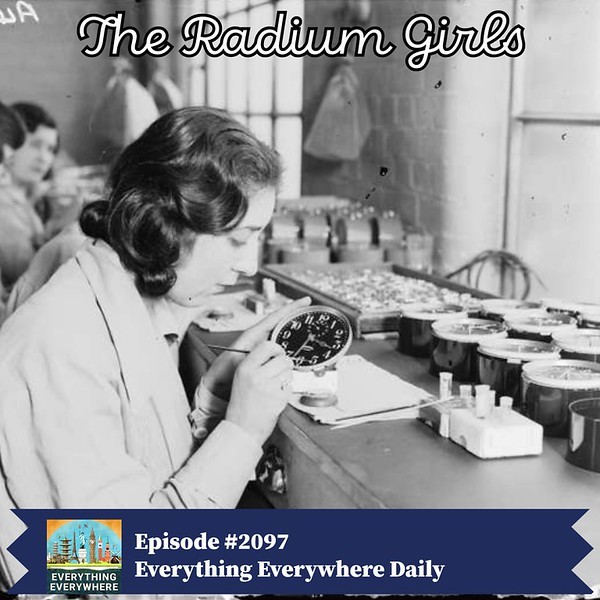
In the early 20th century, radium was hailed as a scientific miracle. Discovered in 1898 by Marie and Pierre Curie, this highly radioactive element emitted a spontaneous, mesmerizing light that promised a new era of progress. It was used in everything from cosmetics to toothpaste, marketed as a health additive. However, this “miraculous” glow masked a lethal reality that would eventually cost dozens of lives and fundamentally rewrite the laws governing industrial labor.
The Illusion of Safety
As the demand for luminous products grew, the United States Radium Corporation (USRC) became a major player, specializing in radium-infused paints for watch dials. These watches were highly coveted, particularly by the military for use on the battlefield.
To manufacture these dials, USRC hired young women—later immortalized as the “Radium Girls” —believing their small hands were ideal for the delicate work. The factory environment was defined by a stark, dangerous hypocrisy:
- Expert Protection: Scientists and managers at the plants used lead screens, tongs, and masks to avoid exposure, acknowledging the known risks of radiation.
- Worker Negligence: The women were told the radium was entirely safe. To maintain the precision of their camel-hair brushes, supervisors encouraged them to use the “lip, dip, paint” technique—moistening the brush tip with their lips to keep it sharp.
By ingesting the radium directly, these women were bypassing the body’s natural defenses. While alpha radiation is relatively easy to block externally, once ingested, it becomes a silent killer within the bone structure.
A Slow and Painful Decay
The consequences of this exposure were gruesome. By the early 1920s, the women began experiencing systemic physical collapse. The most notorious symptom was “radium jaw,” a condition where radium deposits in the bone caused necrosis, leading to the literal death of the jawbone, skin, and muscle.
Other symptoms included:
* Severe anemia and bone fractures.
* Ulcers and lesions that refused to heal.
* Sterility and various forms of cancer.
As the death toll rose, USRC engaged in a systematic campaign of corporate gaslighting. When workers fell ill, the company attempted to deflect blame by suggesting the women had contracted syphilis—a move designed to smear their reputations and avoid legal liability. They even pressured medical professionals to withhold findings that linked their illnesses to radium exposure.
The Fight for Justice
Despite their deteriorating health, several women refused to remain silent. Led by Grace Fryer, a group of workers filed a lawsuit against USRC in 1927. The legal battle was grueling; many of the plaintiffs were bedridden or dying by the time they reached the courtroom.
The media dubbed them the “living dead,” highlighting the tragedy of women fighting for their lives while their bodies were being consumed from the inside out. While USRC eventually settled out of court to avoid further scandal, the legal fight extended to other companies, such as the Radium Dial Company.
The tide finally turned in the mid-1930s. Following years of litigation and advocacy, the legal landscape shifted:
1. New Legislation: In 1936, the Illinois Occupational Diseases Act was passed, requiring employers to cover cases of industrial poisoning.
2. Legal Precedent: This allowed workers like Catherine Donohue to successfully sue, proving that corporations could be held liable for the long-term health impacts of their products.
A Lasting Legacy
The tragedy of the Radium Girls was not merely a localized industrial accident; it was a catalyst for the modern labor movement. Their suffering laid the groundwork for the creation of the Occupational Safety and Health Administration (OSHA) and established the principle that workers have a right to a safe environment.
The legacy of the Radium Girls serves as a permanent reminder that corporate profit must never supersede human safety, and that even the most “miraculous” scientific advancements require rigorous ethical oversight.
The Radium Girls’ struggle transformed the relationship between employer and employee, turning workplace safety from a privilege into a fundamental legal right.