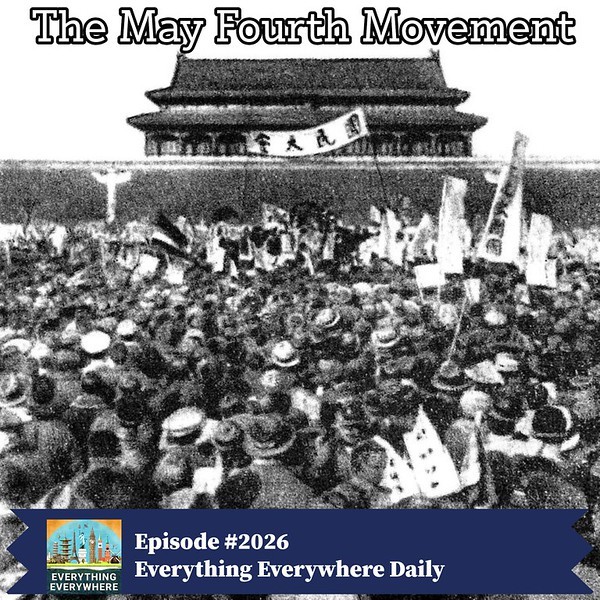
The May Fourth Movement stands as a pivotal moment in modern Chinese history, a confluence of student protest, nationalist fervor, and ideological shifts that ultimately shaped the nation’s political trajectory. Born from outrage over Western powers’ betrayal at the 1919 Paris Peace Conference, it evolved from a call for liberal democracy into a breeding ground for the Chinese Communist Party. The movement’s legacy is both celebrated by the current regime and invoked by its critics—a testament to its enduring impact.
The Roots of Discontent: China’s Humiliation in the Early 20th Century
To understand May Fourth, one must first grasp the context of late Qing and early Republican China. The 19th century had been a period of relentless foreign interference, marked by the Opium Wars, unequal treaties, and internal rebellions that weakened the empire. The collapse of the Qing dynasty in 1911 didn’t bring stability; instead, China descended into warlordism and political fragmentation.
World War I briefly offered hope. China contributed over 150,000 laborers to the Allied war effort, anticipating a reward at the peace table. This expectation was brutally dashed when the Treaty of Versailles handed the German concessions in Shandong province—a crucial region for China—to Japan. This betrayal ignited widespread anger, particularly among students and intellectuals who had embraced Western ideals of self-determination.
The Spark in Tiananmen: Student Protest and Nationalist Awakening
On May 4, 1919, roughly 3,000 students marched in Tiananmen Square, denouncing both the Chinese government’s weakness and the imperialist powers’ arrogance. The protests were not merely about Shandong; they represented a deeper disillusionment with the existing political order. The movement’s leaders, many of whom were educated in Western-style universities, demanded fundamental change.
Initially, the focus was on Western liberal democracy. Intellectuals like Hu Shi advocated for embracing Western ideas to modernize China, rejecting what they saw as the stagnation of Confucian tradition. The movement’s early rhetoric was fiercely anti-Confucian, viewing the ancient philosophy as a barrier to progress. The protestors accused the government of abandoning its people in favor of foreign influence.
From Liberalism to Communism: A Radical Turn
The movement quickly radicalized. Protests escalated into violence, with activists targeting pro-Japanese officials. The failure of the government to address their grievances led many to question Western models altogether. The Russian Revolution of 1917 loomed large in their thinking.
Vladimir Lenin’s theories on imperialism resonated with a new generation of Chinese intellectuals who felt betrayed by the West. Figures like Chen Duxiu, a key leader of the New Youth movement, began to explore Marxist and communist ideas. The May Fourth Movement, initially rooted in nationalism and liberalism, became the ideological incubator for the Chinese Communist Party.
The Legacy: A Double-Edged Sword
The first general secretary of the CCP was none other than Chen Duxiu, a direct product of the May Fourth intellectual ferment. Even Mao Zedong, later the dominant figure in Chinese Communism, emerged from this movement, criticizing Confucianism and advocating for revolutionary change.
The irony is stark: the same movement that initially sought Western-style democracy laid the groundwork for a communist dictatorship. Seventy years later, in 1989, students in Tiananmen Square once again invoked the spirit of May Fourth, calling for political reform. This time, however, the protests were brutally suppressed by the same communist government that had risen from the movement’s ashes.
Today, the Chinese Communist Party celebrates May Fourth as a foundational moment in its own history, while dissidents continue to invoke its legacy as a call for accountability and change. The movement’s enduring relevance lies in its demonstration of how nationalist outrage can be channeled into radical ideological transformations, with lasting consequences for a nation’s future.