The ongoing partial US government shutdown has led to an unusual move: the deployment of Immigration and Customs Enforcement (ICE) agents to major airports across the country. While presented as a solution to staffing shortages and delays, the move is already raising concerns about passenger anxiety, potential for increased tension, and whether it truly improves airport efficiency.
Why ICE is at Airports Now
The situation stems from the fifth week of a government shutdown, triggered by an impasse between Democrats and Republicans in Congress. Democrats seek limits on ICE authority following public outrage over recent killings of US citizens by federal agents. Republicans, under President Trump’s leadership, have refused to compromise, citing an “America-first” agenda.
In response, the administration deployed ICE officers to assist with airport operations, arguing it would help stabilize travel amid TSA staffing challenges. Despite the shutdown, federal law allows reassignment of personnel within the Department of Homeland Security (DHS), which oversees both TSA and ICE.
What Will ICE Agents Do?
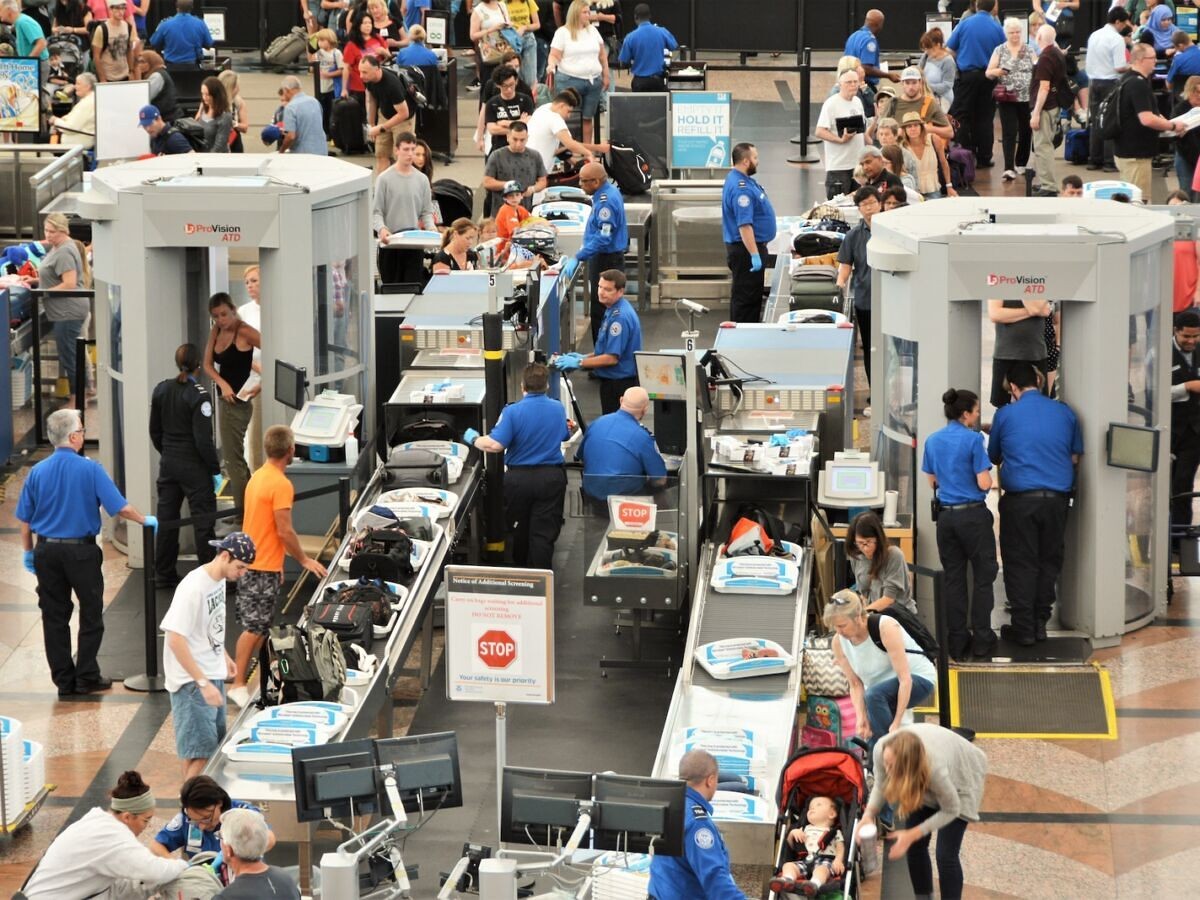
The role of ICE agents will be broader than their traditional airport presence. They will assist with tasks like ID checks, passenger direction, and access monitoring, but will not replace TSA officers in core security duties like operating X-ray machines. Airports still advise passengers to arrive early, and whether the ICE deployment will significantly reduce wait times remains uncertain.
Currently, ICE agents are present at the following airports:
- Chicago O’Hare (ORD), Illinois
- Cleveland Hopkins International Airport (CLE), Ohio
- Hartsfield-Jackson Atlanta International Airport (ATL), Georgia
- Houston’s William P. Hobby Airport (HOU), Texas
- John F. Kennedy International Airport (JFK), New York
- New York’s LaGuardia Airport (LGA), New York
- New Orleans International Airport (MSY), Louisiana
- Luis Muñoz Marin International Airport (SJU), Puerto Rico
- Newark Liberty Airport (EWR), New Jersey
- Philadelphia International Airport (PHL), Pennsylvania
- Phoenix Sky Harbor Airport (PHX), Arizona
- Pittsburgh International Airport (PIT), Pennsylvania
- Southwest Florida International Airport (RSW), Florida
The Bigger Concerns: Anxiety and Tension
The most immediate impact may be psychological. Advocates warn that the visible presence of ICE could heighten anxiety among travelers, particularly those who perceive themselves as vulnerable to questioning or detention – including non-white individuals or those with limited English proficiency.
“A visible ICE presence could intensify that anxiety, making routine travel feel riskier for many millions of travelers.”
Experts also worry that this could increase tension in already stressful airport environments, potentially leading to confrontations. Critics point to the agency’s controversial history, including recent killings of US citizens by Customs and Border Patrol and ICE agents, further eroding trust.
Will It Work?
The effectiveness of the deployment is debated. Some argue that any additional federal personnel during a staffing crisis is beneficial, even if the ICE agents aren’t fully trained in airport security. Others warn that deploying armed immigration officers without proper training could increase risks and create alarm.
The shutdown itself isn’t new, but the ICE deployment represents a shift toward a more generalized role for immigration enforcement in everyday travel. The situation is unlikely to resolve quickly; lawmakers are scheduled to go on break March 27, 2026, making an immediate vote to end the shutdown unlikely.
In conclusion, the deployment of ICE agents to airports is a direct result of the ongoing government shutdown, and while it may temporarily address staffing shortages, it raises serious questions about passenger safety, anxiety, and the long-term implications of increased immigration enforcement in travel.