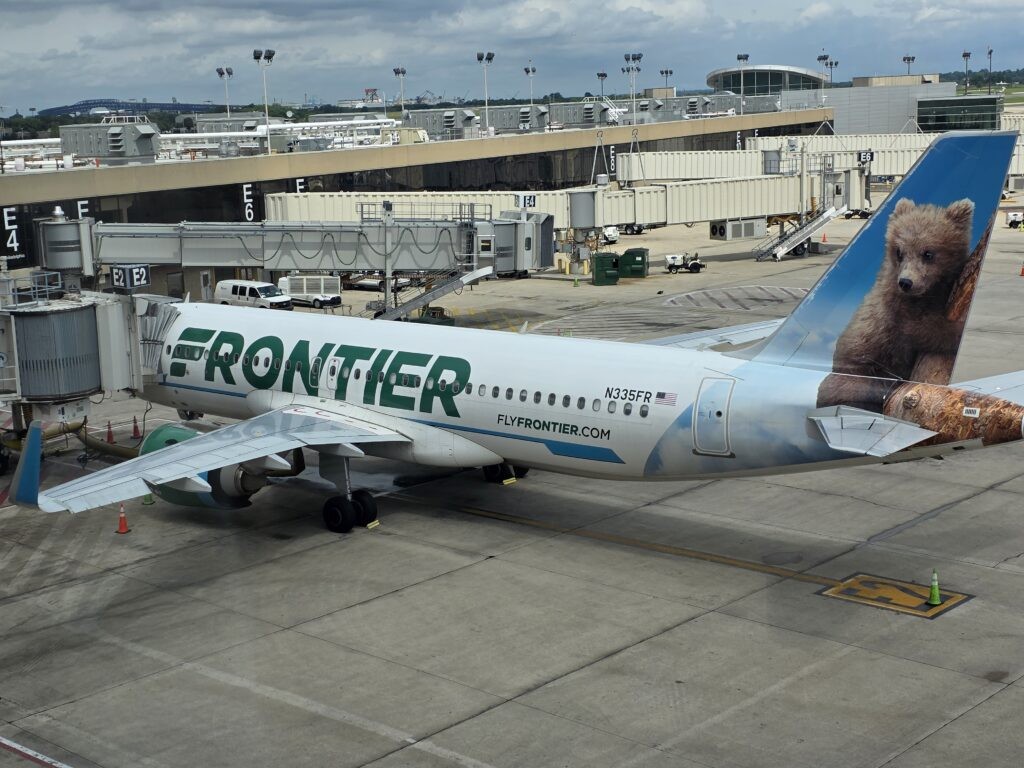
A Frontier Airlines flight from Columbus to Atlanta was delayed Sunday after a passenger threatened to kill a seatmate and repeatedly claimed there was a bomb on board. The incident, described as a “level 3 threat,” forced the Airbus A320 to land in a remote area of the airport, where it sat for an hour while law enforcement assessed the situation.
Threat Escalation and Emergency Response
According to communications between the pilot and air traffic control, the passenger in seat 3A made multiple bomb threats without providing any specific details about the device’s location or type. He also threatened physical violence against another passenger with whom he had been arguing. The pilot reported that flight attendants had managed to calm the passenger, but the threats persisted.
“He has calmed down and is sitting in his seat at this point, but he repeated multiple times about the bomb threat,” the pilot told air traffic control.
To ensure safety, the pilots shut down both engines while law enforcement approached the aircraft. The situation highlights the serious protocols in place for handling credible threats, even those lacking specifics.
Second Incident: American Airlines Diversion
The incident on Frontier Flight 2539 was not isolated. Earlier on Sunday, an American Airlines flight from New York to Chicago was diverted to Detroit due to a “reported disturbance.” That plane was also isolated while authorities investigated.
Context and Concerns
These incidents raise questions about the rising frequency of disruptive behavior on flights. While isolated incidents have always occurred, the combination of threats and assaults suggests a potential increase in passenger aggression. The lack of details in the Frontier case – no bomb was found – does not diminish the severity of the threat, as credible threats require immediate and thorough investigation.
The inclusion of moon phases in the original article appears unrelated to the aviation incidents and may indicate a careless or irrelevant editorial addition.
The priority for airlines and law enforcement remains clear: ensuring passenger safety by taking all threats seriously and responding swiftly.