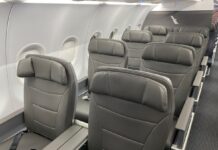
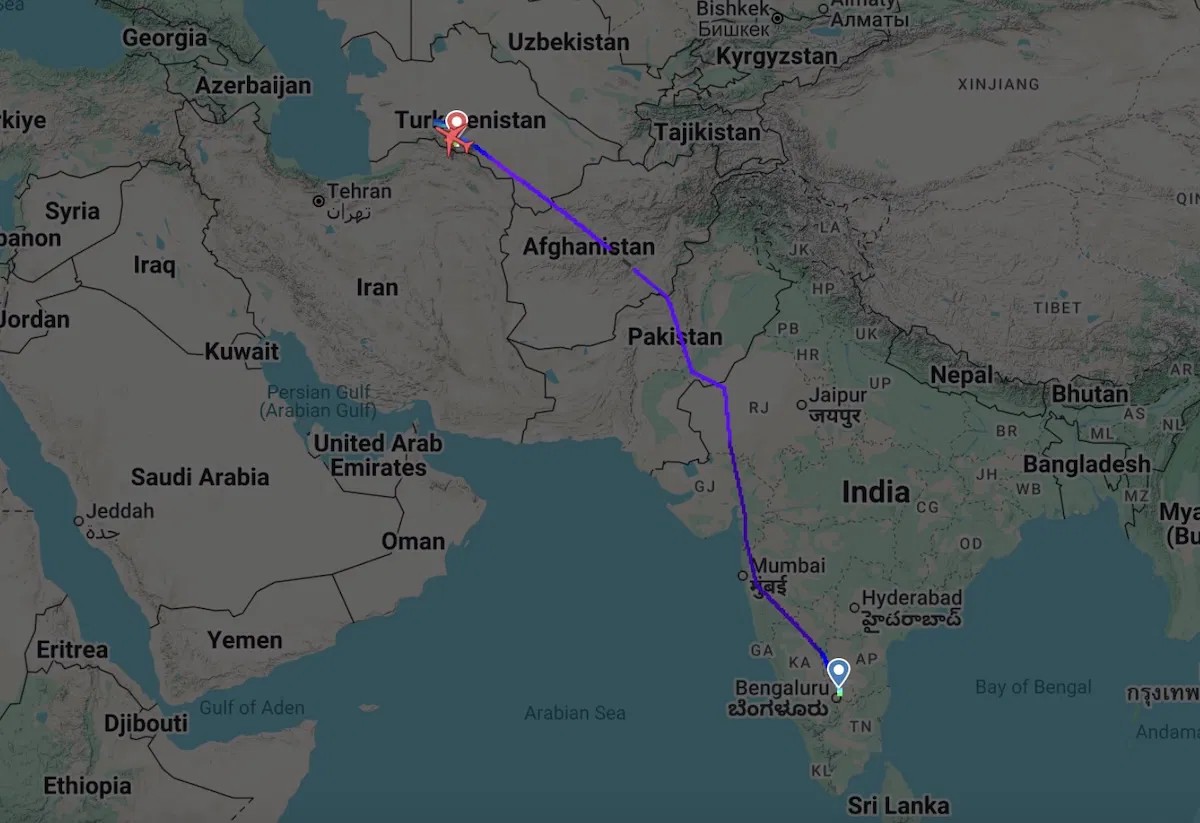
An Air France flight from Bengaluru, India, to Paris, France, experienced a dramatic ordeal involving a 21-hour delay followed by an emergency diversion to Ashgabat, Turkmenistan, one of the world’s most isolated nations. The incident, which occurred on January 12, 2026, left passengers stranded for nearly two days and raised questions about appropriate airline compensation.
The Unfolding Delay
The flight, AF191, was initially delayed for two hours due to a technical issue. This quickly escalated into a 21-hour delay, forcing Air France to provide hotel accommodations for passengers. When the flight finally departed, approximately four hours into the journey over Turkmenistan, the crew announced an engine malfunction and diverted to Ashgabat (ASB).
Stuck in Turkmenistan
Turkmenistan’s strict visa policies presented an immediate challenge. Passengers were effectively stranded for five hours on the aircraft and another two in the terminal while French and US embassies scrambled to secure emergency one-day visas. The airline eventually arranged lodging, but the situation meant a total delay of 48 hours for one passenger, Shashank, who was en route to Houston.
Compensation and Recourse
Air France offered only €400 in flight credit as compensation, a figure deemed insufficient by Shashank given the extent of the disruption. EU261 regulations do not apply in this case because the flight was a transit route, not an origin or destination within the EU. Despite this, the severity of the delay and the extraordinary circumstances raise questions about whether airlines should provide more substantial compensation in such situations.
The Bigger Picture
The incident highlights the challenges of international air travel, especially when unexpected events occur in politically sensitive regions. Turkmenistan’s closed-off nature made an already chaotic situation even more complex. While Air France managed to coordinate emergency visas, the ordeal underscores the lack of standardized compensation for extreme delays and diversions, leaving passengers with limited legal or contractual recourse.
Ultimately, passengers traveling on this flight experienced a rare and frustrating ordeal. The airline’s handling of the situation, while seemingly proactive in securing visas, did not extend to providing adequate financial compensation for the inconvenience. This incident serves as a reminder that even with modern logistics, travel plans can be dramatically disrupted by unforeseen circumstances.