


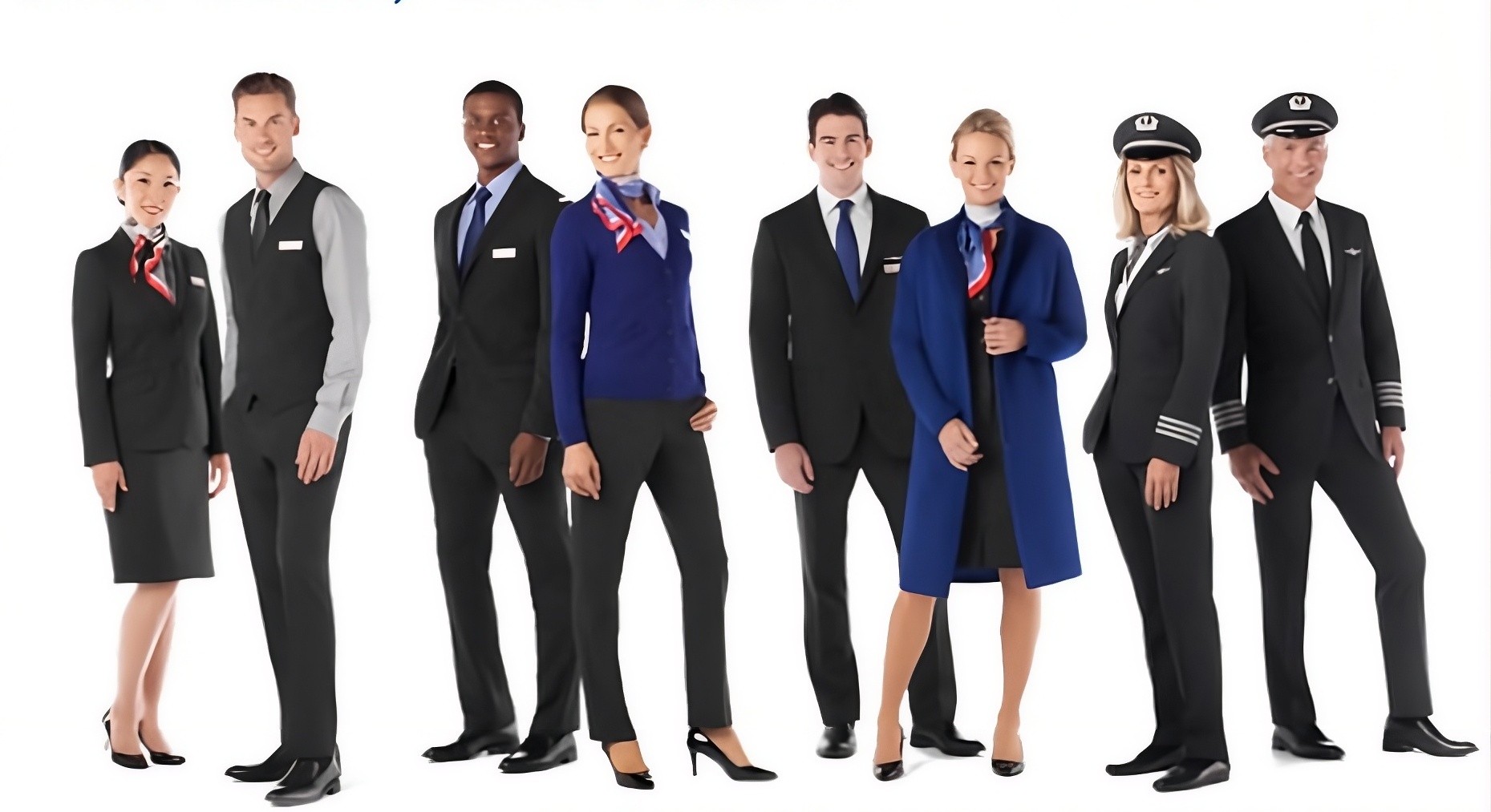
American Airlines is fighting to avoid a class-action lawsuit filed by employees who claim that new uniforms introduced in 2016 caused widespread skin reactions and health problems. After ten years of litigation, the case is now before the Seventh Circuit Court of Appeals, with the potential for final dismissal.
The Initial Complaints
In 2016, American Airlines switched to grey uniforms manufactured by Twin Hill, following previous issues with similar uniforms at Alaska Airlines. Within months, employees reported rashes, itching, and other dermatological symptoms. Internal records show approximately 2,000 to 2,500 complaints related to irritation.
The plaintiffs argue that American Airlines knew about potential problems with Twin Hill’s manufacturing process, citing prior field-test reports from pilots who experienced adverse reactions. Despite this, the airline proceeded with the rollout.
Scientific Testing & Findings
American Airlines commissioned Intertek to test both the new and old uniforms, as well as standard retail clothing. While some potential irritants were identified across all garments, Intertek concluded that none were unique to the Twin Hill uniforms and likely to cause widespread reactions beyond those already prone to allergies.
The National Institute for Occupational Safety and Health (NIOSH) also investigated, finding that textile chemicals could contribute to skin issues, but no specific chemical was identified as the culprit. The government concluded that the uniforms were unlikely to be the primary cause of the reported symptoms.
The Legal Challenge & Dismissal
In April of last year, a district court granted summary judgment in favor of American Airlines, ruling that the plaintiffs’ expert testimony was insufficient under legal standards. The court found that neither expert could establish a clear causal link between the uniforms and the reported health issues.
One expert attempted to infer causation from the correlation between the uniform rollout and employee complaints, combined with the presence of irritants in the clothing. However, they could not pinpoint a specific chemical or dosage responsible for the reactions. Another expert argued that certain chemicals found in the uniforms had no legitimate manufacturing purpose, but conceded that they could be common textile processing components. The court refused to accept this as evidence of a defect.
The Core of the Dispute
The plaintiffs contend that circumstantial evidence—the timing of the uniform change and the surge in complaints—should be enough for a jury to infer a defect and causation, even without identifying the specific chemical responsible. The defense argues that expert methodology is required, testing has not supported a causal link, and no government agency has identified a definitive cause.
The court has consistently held that expert testimony must meet strict scientific standards under Rule 702. This requires qualified experts using reliable methods grounded in data, not speculation. The court found that the plaintiffs’ experts failed to meet this threshold.
Current Status & Implications
American Airlines replaced the problematic uniforms with new designs in 2020. The case now hinges on whether the Seventh Circuit will overturn the lower court’s decision, potentially allowing the plaintiffs to take their claims to a jury. The plaintiffs are arguing that res ipsa loquitur —the principle that negligence can be inferred from the nature of an event—should apply, meaning causality can be assumed even without specific scientific proof.
This case highlights the difficulty of proving causation in mass-tort litigation, particularly when scientific evidence is inconclusive. It also underscores the strict standards courts apply to expert testimony, ensuring that juries are not swayed by speculation rather than verifiable facts.


