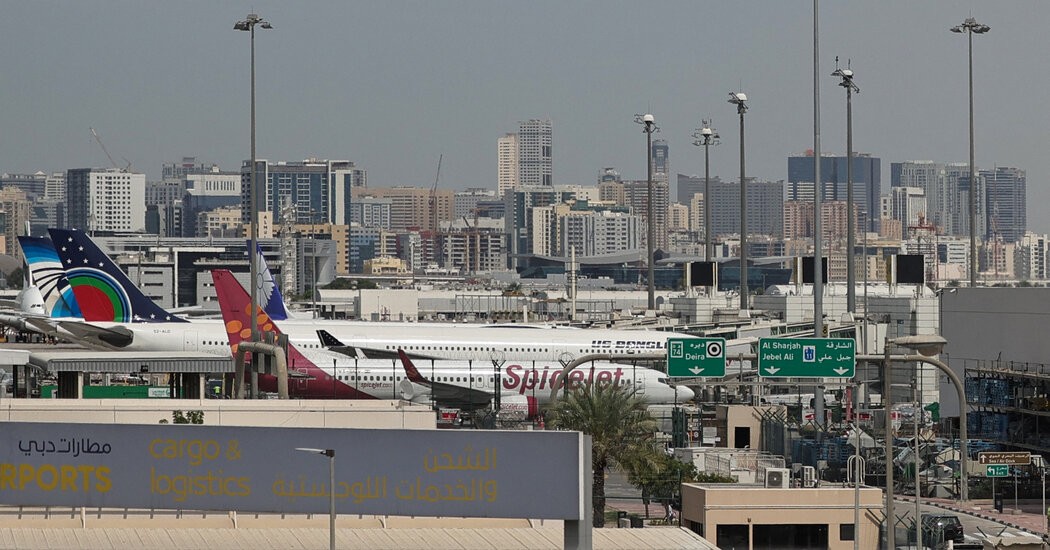
The ongoing conflict in the Middle East has dramatically reduced the airspace available for commercial flights traveling between Europe and Asia, creating a critical bottleneck for international air travel. Since early March, many airlines have been forced to funnel traffic through a corridor over Azerbaijan as narrow as fifty miles wide – a consequence of airspace closures triggered by regional tensions and drone strikes.
The Escalating Constraints
This airspace squeeze didn’t appear overnight. The situation began tightening following the outbreak of the recent war, which led to widespread airspace closures across the region. The corridor over Azerbaijan was already constrained from the north by restrictions imposed after Russia’s invasion of Ukraine in 2022. Now, with further airspace limitations, flights are almost entirely routed through Azerbaijan, Georgia, and Turkey – or alternatively, through Saudi Arabia and Egypt.
This isn’t just an inconvenience; it has real implications for flight times, fuel consumption, and airline costs. The shrinking space forces airlines to fly longer routes, burning more fuel and potentially driving up ticket prices. The geopolitical instability makes the situation unpredictable, with airlines constantly monitoring for further airspace closures.
Why This Matters
The narrowing of flight corridors highlights how deeply intertwined global aviation is with international security. Conflicts don’t just impact the immediate region; they ripple through the world economy, affecting trade, tourism, and supply chains. The reliance on just two viable routes demonstrates the fragility of current aviation infrastructure in the face of geopolitical instability.
The situation underscores the need for more diversified and resilient flight path options, but such alternatives are costly and depend on international cooperation, which is often lacking during times of conflict.
The current situation is unlikely to resolve quickly. Until a lasting peace is established in the Middle East, airlines and passengers will continue to navigate these increasingly constrained skies.