A former airline executive has publicly criticized IndiGo after missing a domestic flight due to what he calls a poorly managed rolling delay. Vijay Gopalan, ex-CFO of AirAsia India, alleges the airline left him stranded despite continuous changes to the departure time and inadequate communication. The incident highlights a growing tension between rigid airline policies and real-world operational challenges.
The Incident: A Cascade of Delays
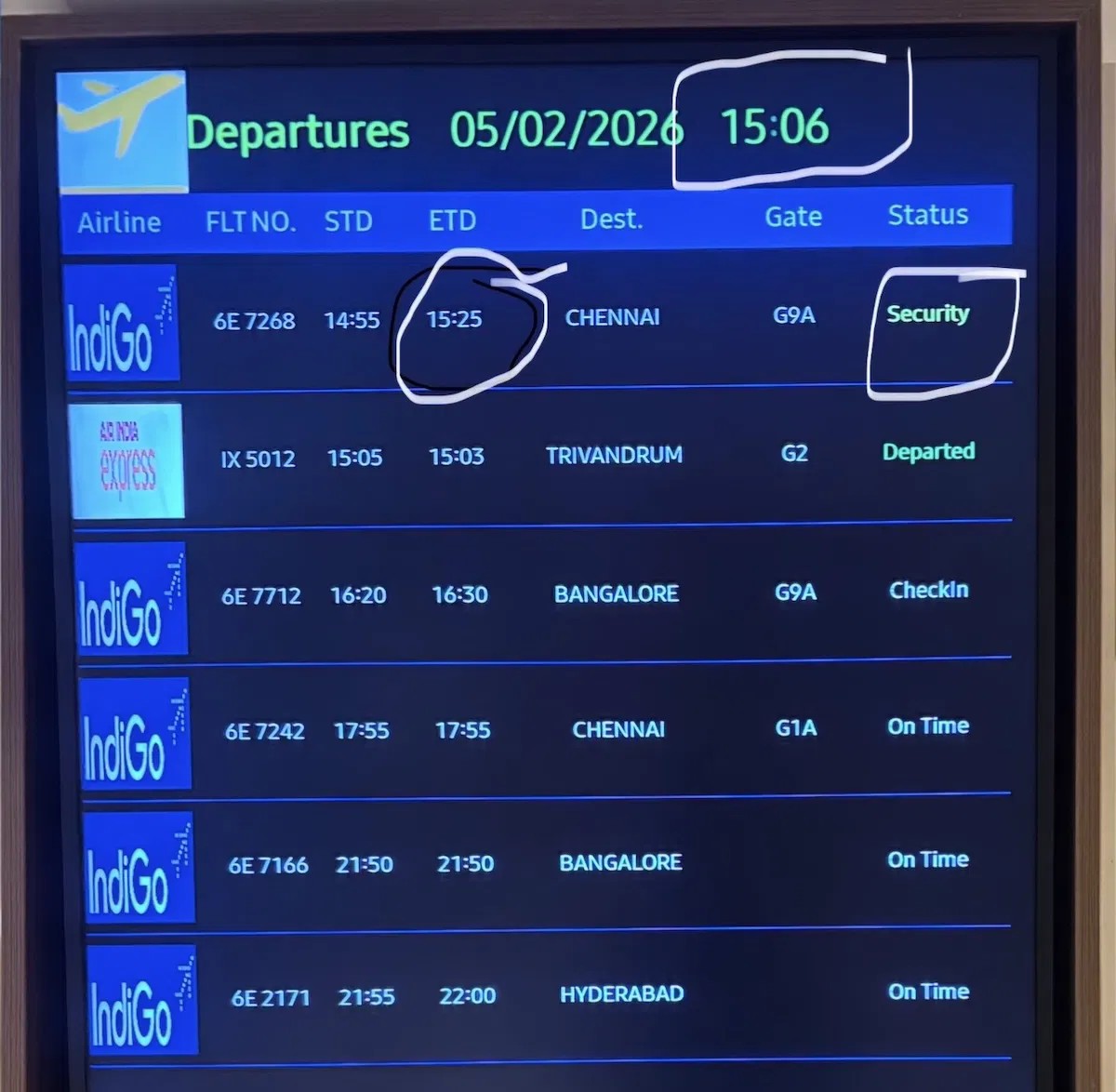
On February 5, 2026, Gopalan was scheduled to fly IndiGo flight 6E7268 from Tiruchirappalli (TRZ) to Chennai (MAA). Checking in online, he arrived at the airport around 1PM for a scheduled 2:55PM departure. He proceeded to the airport lounge, where he continued working while monitoring the flight status.
The departure time shifted repeatedly: first to 3:10PM, then 3:15PM, and finally 3:25PM. The flight display showed “security” as the status, leading Gopalan to assume boarding hadn’t begun. He remained in the lounge, reasoning that the gate was nearby and the situation was still fluid.
At 3:05PM, an IndiGo staff member called to inform him the flight had already departed. The call wasn’t a warning to hurry, but a confirmation he’d missed it. Upon reaching the gate, Gopalan was met with accusations from a gate agent, who suggested his lounge visit was an excuse for delaying the flight.
The Core Issue: Communication Breakdown
The incident reveals a critical flaw in how airlines handle rolling delays. While IndiGo’s policy requires passengers at the gate 20 minutes before departure, the executive argues that such rules are unreasonable when departure times are unstable.
“If you have a rolling delay, and the departure monitor doesn’t show a flight as boarding, it’s not unreasonable to assume you still have time.”
The airline’s delayed notification is also questionable. Calling a passenger after the flight has left serves no practical purpose and exacerbates frustration. The blunt response from gate staff further illustrates a lack of customer empathy.
Systemic Pressures on Frontline Staff
The confrontation may stem from broader operational pressures on IndiGo employees. The airline is known for its low-cost model, which often translates to minimal customer service flexibility. Furthermore, frontline staff may be demoralized after recent incidents where passengers misdirected anger at them.
The executive’s measured response to the situation suggests that the airline’s failure wasn’t a violation of policy, but a failure of basic communication. The incident underscores how inflexible policies, combined with poor real-time updates, can create unnecessarily frustrating experiences for passengers.
In conclusion, the IndiGo flight delay incident highlights the tension between airline policies and practical operational realities. While the airline technically followed its guidelines, the lack of clear communication and customer service sensitivity left a passenger stranded and sparked a public outcry.