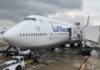
American Airlines CEO Robert Isom acknowledged widespread operational failures during a recent earnings call, including thousands of flight cancellations and crew members being stranded in airports. However, he framed these issues as an unavoidable consequence of the airline industry, stating that flight attendants sleeping on airport floors “comes with the business.”
Operational Meltdown and Crew Stranding
Over 9,000 American Airlines flights were canceled during winter storm Fern, while other airlines recovered more efficiently. The disruption heavily impacted major hubs like New York, Charlotte, Washington D.C., and Dallas-Fort Worth. The airline reportedly lost track of its crews, even when they were available to fly.
Flight attendants faced extreme difficulties securing accommodations, often unable to reach hotel desks or obtain rooms. Even when hotels were secured, delays in relaying information to operations led to situations where planes were ready with pilots and passengers, but lacked rested flight crews to legally operate the flights. Crew members reported waiting on hold with scheduling for up to 12 hours, only to be disconnected after exceeding the system’s time limit.
CEO’s Response: Acceptance Over Solutions
During the earnings call, Isom acknowledged the challenges but dismissed the crew hardships as an inherent part of the industry.
“I know throughout the rest of our system, some of our crew members didn’t have a place to stay last night… I also know it comes with the kind of business we run. This isn’t the only storm that we’ve ever had. It’s not going to be the last storm we’ve had.”
Despite calling the situation “unacceptable,” Isom’s statement suggests a resignation to the conditions rather than a commitment to fixing them.
Blaming External Factors and Profit Margins
Isom also attributed American Airlines’ near-zero profit margin (0.002%) to external factors such as the government shutdown (costing $325 million in revenue) and an earlier flight incident. He further claimed that competitors flying excessive capacity contributed to the financial strain.
Comparative Labor Costs and Union Demands
Isom defended American’s labor practices by highlighting that 73% of unionized employees earn more than their counterparts at United Airlines. He used this as leverage, suggesting that while American’s profitability may be low, its employees are still better off than those at United, where some flight attendants haven’t received a raise in five years.
However, this argument overlooks the fact that Delta Airlines’ higher profitability allows for more substantial profit sharing (equivalent to 8 weeks of pay for employees). The flight attendants’ union has called for Isom’s removal, citing his dismissive attitude towards crew hardships and the airline’s poor financial performance.
Ultimately, American Airlines’ CEO has demonstrated a willingness to accept severe operational failures and crew hardship as inevitable consequences of running an airline rather than prioritizing solutions for improved conditions.