When evaluating an airport, many travelers focus on the wrong metrics. We tend to praise shiny new terminals and luxury shopping, but an airport is not a shopping mall—it is a transit hub.
The true measure of a great airport lies in utility and velocity : How quickly can you reach it? How efficiently can you move through security? How much time do you waste traversing massive concourses before you even board your plane?
By prioritizing “passenger experience” through retail and aesthetics rather than infrastructure and transit, many American airports have traded functional efficiency for superficial beauty.
The Gold Standard: Efficiency and Access
The best airports in the U.S. share a common trait: they respect the traveler’s time by providing seamless connections to the city and compact, logical layouts.
Top Performers
- Washington National (DCA): The benchmark for urban accessibility. Its direct Metro connection and proximity to downtown make it incredibly easy to reach. Despite the complexities of operating near the nation’s capital, it remains a highly efficient hub with premium lounge options.
- San Francisco (SFO): Offers excellent direct rail access via BART. While runway configurations can cause delays during poor visibility, its overall connectivity remains a strength.
- Portland (PDX): A model of usability, featuring a direct MAX Red Line connection and intuitive signage that makes navigating the terminal effortless.
- San Diego (SAN): Highly valued for its compact footprint, which minimizes the “schlepp” factor once you arrive.
Other notable mentions that balance transit access with operational reliability include Chicago Midway, Houston Hobby, Boston Logan, Minneapolis, and Detroit.
The Infrastructure Crisis: America’s Worst Airports
At the other end of the spectrum are airports that fail at their primary mission: moving people. These facilities often suffer from “geographic isolation”—being located too far from city centers—and “internal sprawl,” where the walk to a gate feels like a marathon.
The Bottom Tier
- Denver (DEN): Perhaps the most significant failure in U.S. aviation. It is geographically isolated, relies on a frequently unreliable shuttle system to reach concourses, and has a long history of baggage handling and security issues.
- Newark (EWR) & JFK: Both suffer from fragmentation. JFK, in particular, is a logistical nightmare where terminals are disconnected, often forcing passengers onto buses just to move between gates.
- Los Angeles (LAX): Despite recent improvements, it remains plagued by terrible traffic and a disconnected rideshare system that requires long shuttle rides to an off-site lot.
- Charlotte (CLT): A victim of its own growth. The airport has outgrown its physical footprint, resulting in cramped corridors and gate areas that feel overcrowded and inefficient.
- Washington Dulles (IAD): Struggles with a disconnect between its transit stops and its primary gates, leaving passengers stranded in transit within their own hub.
The LaGuardia Paradox: Why “Pretty” Isn’t Better
The most controversial trend in modern aviation is the rise of the “overrated” airport —facilities that are visually stunning but functionally inferior to their predecessors.
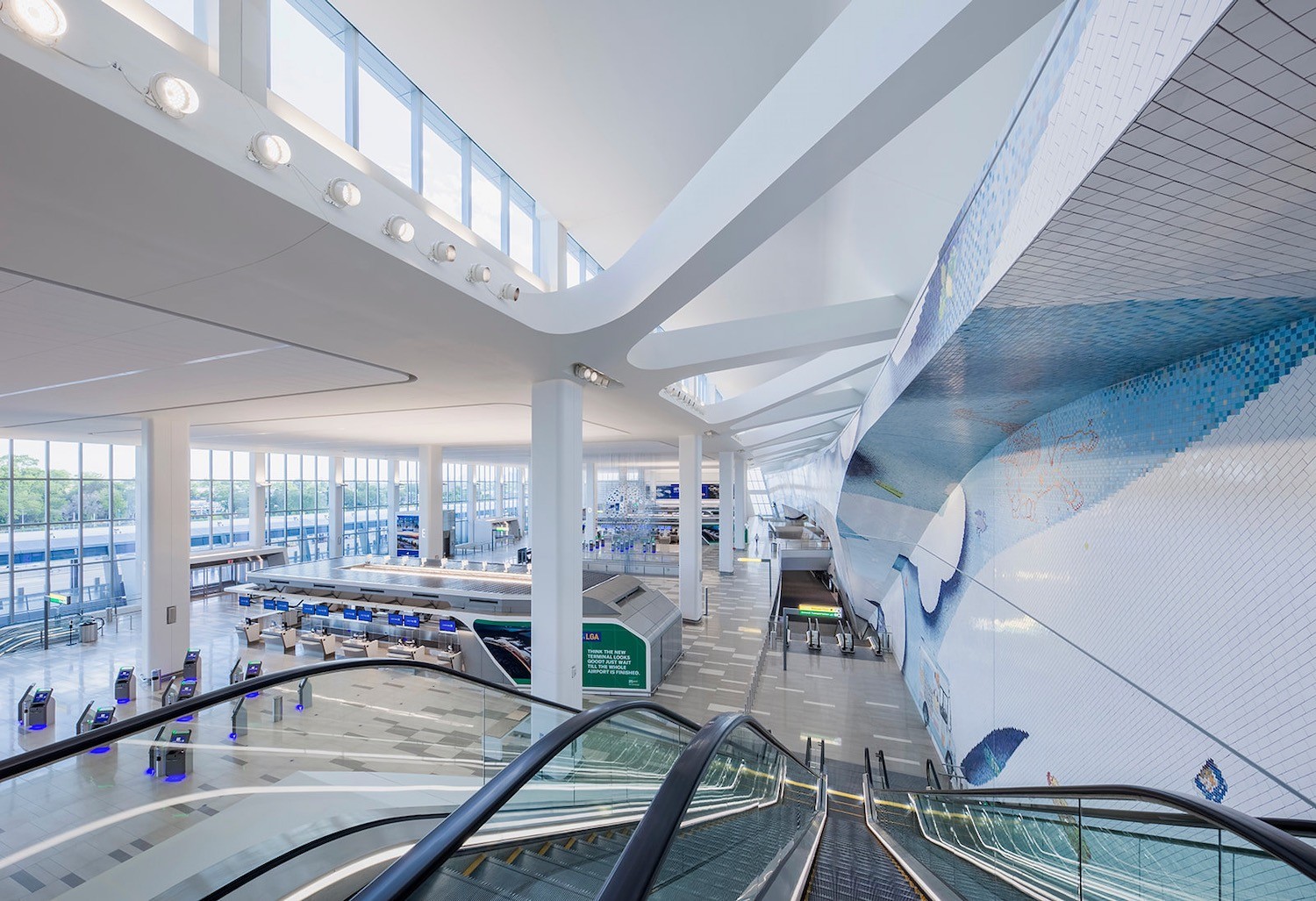
New York LaGuardia (LGA) is the prime example. While its recent multi-billion dollar renovation has been hailed as a triumph, it represents a fundamental misallocation of resources.
“The renovation did not solve the core problem: there is still no direct rail service into the terminal complex. We traded the future stream of retail income for more attractive buildings.”
By focusing on upscale aesthetics and retail-heavy layouts, LaGuardia has become a “suburban shopping mall” with much longer walking distances than the old, dilapidated, but more compact terminal. It has become more pleasant to sit in, but significantly harder to use.
Conversely, Chicago Midway remains a highly underrated gem. Because it is compact and features direct rail access, it fulfills the fundamental purpose of an airport far better than many of its more “glamorous” counterparts.
Conclusion
A successful airport should prioritize transit connectivity and passenger throughput over luxury retail. Until American hubs focus on getting travelers in and out of the terminal rather than keeping them in the gift shop, the most “beautiful” airports will continue to be the most frustrating.