


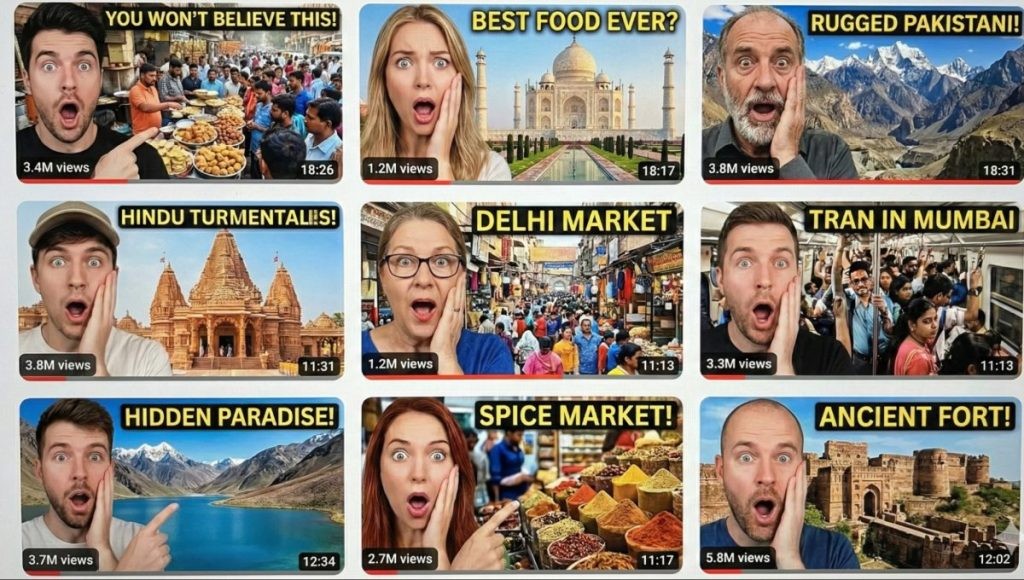
A new dynamic is reshaping content creation on platforms like YouTube: Western travel vloggers and lifestyle commentators are increasingly finding their largest audiences not in their home countries, but in South Asia, particularly India and Pakistan. This trend highlights a growing “validation economy” where Western perspectives on South Asian experiences are heavily consumed by South Asians themselves.
The Creator Pipeline: Attention as Currency
The model is surprisingly simple. Creators such as Hugh Abroad, a Scottish street food vlogger, document everyday experiences – like eating inexpensive food in Delhi – and garner millions of views, overwhelmingly from South Asian viewers. Similarly, American Sierra Lilian’s documentation of her spiritual journey in India draws immense engagement from Indian audiences who express gratitude for her perceived authenticity.
This isn’t about Western audiences consuming content about South Asia; it’s South Asians consuming content from Westerners about their own regions. The key ingredients are English narration with a foreign accent, familiar video formats (“first time,” “didn’t expect”), and a framing that positions Western experiences as novel or insightful.
Why This Matters: The Power of Outsider Perspective
The appeal lies in the validation an outside perspective provides. For many South Asians, seeing their cultures documented by Westerners carries a certain weight. It’s a form of external affirmation, a confirmation that their lives and places are worthy of attention. This dynamic isn’t new: for decades, Western media has shaped global perceptions of the East. But now, the audience is driving the demand.
The implications are complex. On one hand, it provides exposure to niche creators. On the other, it reinforces existing power dynamics where Western voices remain dominant in shaping narratives about the Global South. This cycle perpetuates a system where attention is monetized by exploiting cultural fascination rather than genuine exchange.
The Future of Hyper-Localized Content
The trend suggests a future where content creation will become increasingly hyper-localized, yet globally consumed through the lens of foreign creators. As more platforms emerge, the validation economy will likely expand, driven by audiences seeking external approval for their own cultures and experiences. The key question remains: will this lead to more meaningful cultural exchange, or further entrench the power imbalances in digital storytelling?
Ultimately, this shift underscores a fundamental truth about the modern attention economy: audiences will seek validation wherever they can find it, even if it means looking to outsiders for recognition of their own


