Starlux Airlines, Taiwan’s ambitious newcomer to the global aviation stage, has spent the last few years aggressively expanding its transpacific footprint. With routes connecting Taipei to major U.S. hubs like Los Angeles, San Francisco, Seattle, Phoenix, and Ontario, the carrier is positioning itself as a high-end player.
Central to this identity is their Airbus A350 First Class. However, a closer look at their strategy reveals a puzzling disconnect between luxury branding and economic reality.
A “First Class” Without a Cabin?
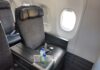
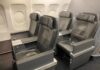
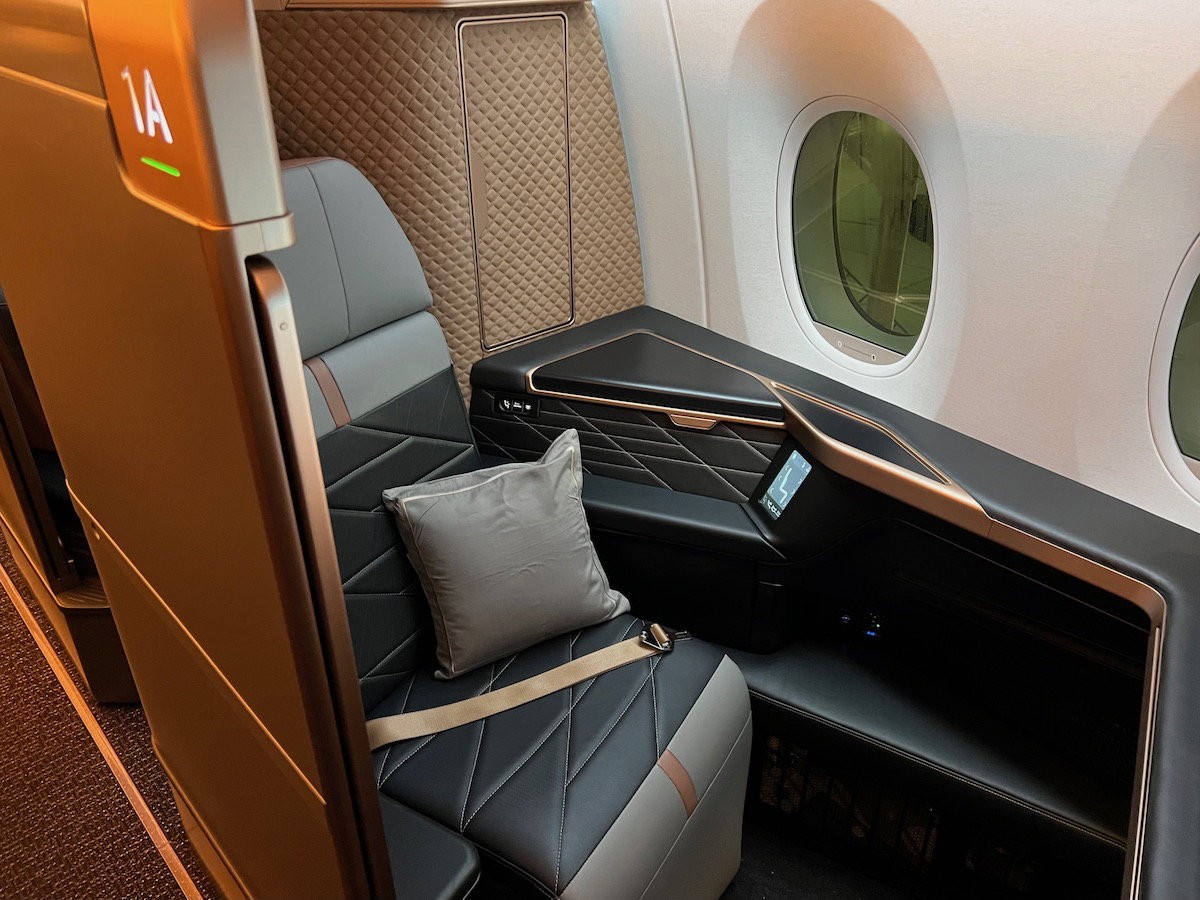
On paper, Starlux is the only Taiwanese airline to offer a true First Class product. In practice, the “cabin” is somewhat unconventional. On their A350-900 aircraft, the First Class section consists of just four seats in a 1-2-1 configuration.
Crucially, these seats are not housed in a separate, walled-off cabin. Instead, they occupy the first row of the Business Class section, lacking even a privacy curtain to separate them from the rest of the premium passengers. While the hardware is respectable—featuring 32-inch 4K screens, privacy partitions, and “zero-gravity” settings—it feels more like a “Business Class Plus” than a traditional, elite First Class experience.
High-End Service vs. High-End Pricing
Where Starlux truly excels is in its “soft product” —the service and amenities. The airline has invested heavily in a premium ground and inflight experience:
- Ground Luxury: In Taipei, passengers enjoy chauffeur service and access to the Huan Yu VIP Terminal. In Los Angeles, they can utilize “PS,” a private suite service that allows travelers to bypass the main terminal entirely.
- Inflight Elegance: The onboard service includes premium touches like caviar service and La Mer luxury gifts.
Despite this high level of service, the pricing remains a significant barrier. Starlux maintains a steep premium, often charging roughly triple the price of a Business Class ticket. For a transpacific flight, one-way First Class fares rarely dip below $8,000.
The Empty Seat Problem
The most glaring issue is whether anyone is actually buying these seats. An analysis of flight inventory for upcoming routes suggests a massive struggle with monetization. For several upcoming transpacific legs, the load factor for First Class is remarkably low :
- Taipei to San Francisco: ~3.0% occupancy
- San Francisco to Taipei: ~1.2% occupancy
- Seattle to Taipei: 0% occupancy
In the airline industry, empty seats represent lost revenue that can never be recovered. For a carrier aiming for profitability, leaving these seats vacant is a strategic failure.
Is There a Better Way?
The current model presents a missed opportunity for revenue maximization. Because the First Class seats occupy space that could otherwise be used for more Business Class seats, the “opportunity cost” is relatively low.
To turn this around, Starlux could consider several more efficient strategies:
1. Aggressive Upgrades: Instead of holding out for $8,000 tickets, the airline could offer Business Class passengers more affordable upgrades (e.g., $1,000–$1,500) to fill the seats.
2. Rebranding: They could rebrand the product as an elite “Business Class Plus,” aligning the price more closely with the actual physical layout of the aircraft.
3. Improved Accessibility: Creating more opportunities to redeem miles or offering more competitive connecting fares would help tap into a wider market of premium travelers.
The Bottom Line: Starlux has successfully built a brand defined by luxury and prestige, but their First Class strategy feels more like a “prestige project” than a profitable business model. Until they find a way to better monetize these four seats, they will continue to leave significant revenue on the table.