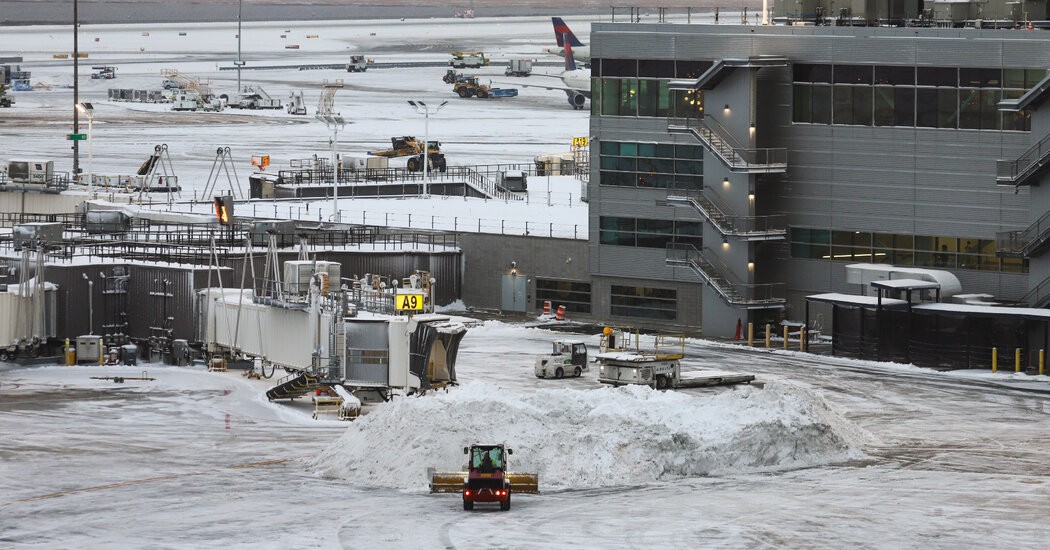
Airlines across the United States preemptively canceled hundreds of flights on Friday and Saturday in anticipation of a massive winter storm poised to disrupt travel across a vast swathe of the country. The cancellations, concentrated in the South and Midwest, are a direct response to forecasts of heavy snow, ice, and hazardous conditions.
Widespread Disruptions Expected
As of Friday afternoon, major carriers had already axed a significant portion of their weekend schedules. American Airlines canceled 19% of Saturday flights, while Southwest Airlines cut 17%, according to flight tracking data from FlightAware. The impact is especially severe at Dallas Fort Worth International Airport, where roughly two-thirds of Saturday’s flights were grounded. Delta Air Lines also issued warnings of cancellations extending into the Midwest and South.
The preemptive action isn’t about individual airport disruptions. This storm’s danger lies in its scale. According to industry consultant Bob Mann, a former airline executive, “You have a storm that’s going to progress from the center of the country all the way to the East Coast…The area of impact and the duration of the impact is far longer than the standard weather event.” This breadth makes logistical workarounds harder.
Timing and Flexibility
The timing of the storm is somewhat convenient for airlines. The current period is statistically one of the slowest for air travel, based on Transportation Security Administration (TSA) screening data. This slower pace gives airlines more room to manage cancellations and reallocate resources without the same level of chaos as a peak travel season disruption. Airlines can absorb these losses with less pressure.
The disruptions highlight how weather events can cripple major transportation infrastructure, even with proactive measures. Passengers are advised to check flight statuses directly with their airlines before traveling.
The scale of this storm will likely cause significant ripples in air travel over the weekend. Airlines have chosen to cancel now, rather than risk leaving passengers stranded or facing even more severe delays as the storm intensifies.